 THE AFRICAN COURIER. Reporting Africa and its Diaspora! The African Courier is an international magazine published in Germany to report on Africa and the Diaspora African experience. The first issue of the bimonthly magazine appeared on the newsstands on 15 February 1998. The African Courier is a communication forum for European-African political, economic and cultural exchanges, and a voice for Africa in Europe.

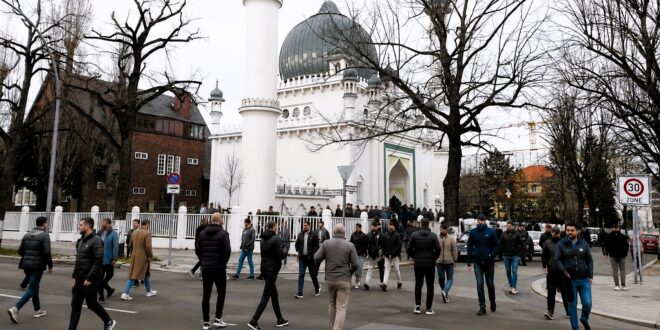
Germany’s Muslim population has reached between 6.6 and 7 million people, according to a new projection by the Federal Office for Migration and Refugees (Bundesamt für Migration und Flüchtlinge, BAMF). This represents 8.0 to 8.5 percent of the total population, a figure that challenges persistent public misperceptions, with surveys consistently showing that Germans dramatically overestimate the actual proportion of Muslims in the general population.
Behind the raw data lies a fascinating story of increasing diversity. For a long time, the perception of Islam in Germany was almost exclusively shaped by Turkish immigration—a legacy of the guest-worker generations of the 20th century. While people with roots in Turkey remain by far the largest single group among the Muslim faithful at 39.4 per cent, their proportion has fallen significantly in historical terms; in 2008, it still stood at over 64 per cent.
The data reveals a Muslim community in profound transformation. While people of Turkish origin remain the largest group at 39.4 percent, their dominance has eroded significantly from 64.4 percent in 2008. Meanwhile, Muslims with roots in the Middle East—particularly from Iraq, Syria and Lebanon—now constitute 21.7 percent of the population, a surge driven largely by refugee movements since 2015. Southeastern Europeans account for 19.8 percent, while 11.5 percent trace their origins to South/Central Asia (such as Afghanistan or Pakistan) and 7.6 per cent in North Africa. This shifting demographic landscape signals a community no longer defined by a single narrative or national origin.
The geographical concentration of Germany’s Muslim population remains striking: over 96 percent reside in the former West Germany, a legacy of the guest-worker programmes that first brought large-scale Muslim migration to the country.
The BAMF projection, which only counts Muslims with a migration background from predominantly Muslim countries of origin, necessarily leaves gaps. But the overall direction is clear: Germany’s Muslim community is growing more diverse, more rooted and more German with each passing year. The question now is whether German institutions and public discourse will evolve to fully embrace this reality, activists say.
Adira Kallo