 THE AFRICAN COURIER. Reporting Africa and its Diaspora! The African Courier is an international magazine published in Germany to report on Africa and the Diaspora African experience. The first issue of the bimonthly magazine appeared on the newsstands on 15 February 1998. The African Courier is a communication forum for European-African political, economic and cultural exchanges, and a voice for Africa in Europe.

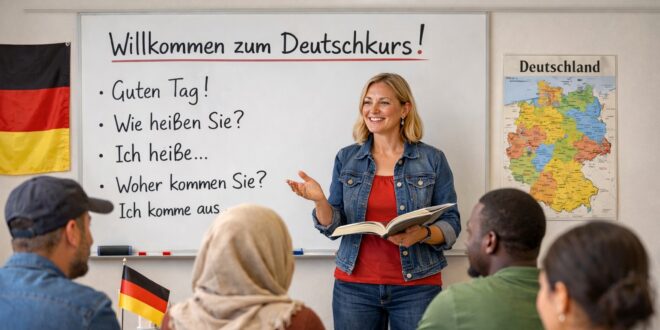
A 40 percent cut to language course funding and an 80 percent reduction in independent asylum counselling services signal a sharp shift in Germany’s approach to newcomers
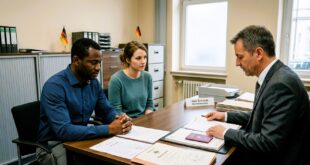
Germany’s federal government is planning major cuts to integration programmes next year, significantly reducing funding for language courses and independent asylum counselling despite continued demand for both services.
According to the draft 2027 federal budget, approved by the Cabinet on 6 July, funding for integration courses — the cornerstone of Germany’s language and orientation programme for new arrivals — will be reduced from €1 billion in 2026 to €590 million in 2027 — a cut of more than 40 percent. The cuts do not stop there. Independent asylum procedure counselling, which helps people navigate the complex German asylum system without relying on government-affiliated advisers, will receive just five million euros — roughly one fifth of the 24.5 million euros allocated in 2026.
The proposed reductions come as the government seeks to consolidate public finances while increasing spending on defence, infrastructure and economic competitiveness. The 2027 budget includes broad savings measures across several ministries.
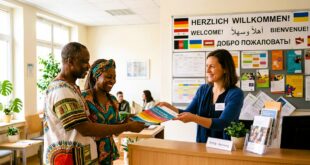
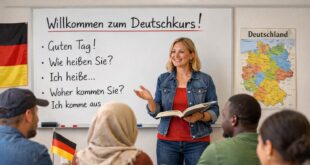
The cuts will have practical consequences for many newcomers to Germany who are already struggling to find their footing in the country. Integration courses, funded by the Federal Office for Migration and Refugees (BAMF), combine German language instruction with orientation classes on German law, history, culture and values.
The standard integration course offers 600 hours of German language instruction and 100 hours of civic orientation at a cost of around €3,000 per participant. These courses are widely regarded as one of the most important tools for helping migrants integrate into German society and enter the labour market.
The budget proposal follows months of turbulence over integration course access. Earlier this year, the Federal Interior Ministry imposed a freeze on new admissions to integration courses, citing sharply rising costs. A partial compromise was reached in May 2026, under which Ukrainians with temporary protection and EU citizens important to the German labour market regained access, but asylum seekers were restricted to a reduced introductory course of just 25 hours — a far cry from the full 700-hour programme. Thousands of asylum-seekers with uncertain residence prospects are no longer eligible for publicly funded courses.
Independent asylum procedure counselling could also be severely affected. The service, provided by charities and non-governmental organisations, helps asylum-seekers understand Germany’s asylum process, prepare for interviews with the authorities and access legal information. The counselling is independent of government agencies and is intended to ensure that applicants can make informed decisions throughout their asylum procedure.
Labour market researchers warn that reducing integration courses could leave more asylum seekers out of work or in low-paid jobs, leading to lower tax revenues and higher welfare costs that may ultimately exceed the government’s immediate budget savings.
The proposed budget has already drawn criticism from integration providers. The German Adult Education Association (DVV) has warned that the planned funding will not be sufficient to meet demand. It is calling on the federal government to increase funding for integration courses to at least €900 million and to reopen the courses to all migrants, regardless of their residence status.
The draft budget will now be debated by the Bundestag, where lawmakers can still amend the spending plans before the budget is adopted later this year. For migrants, refugees and asylum-seekers, the parliamentary discussions will be closely watched, as they could determine future access to language learning and independent support during the asylum process.
Sola Jolaoso