 THE AFRICAN COURIER. Reporting Africa and its Diaspora! The African Courier is an international magazine published in Germany to report on Africa and the Diaspora African experience. The first issue of the bimonthly magazine appeared on the newsstands on 15 February 1998. The African Courier is a communication forum for European-African political, economic and cultural exchanges, and a voice for Africa in Europe.


A new wave of laws and regulations takes effect in Germany this month, affecting everyday life — from fuel costs and wages to housing, travel, electric vehicles, short-term rentals and healthcare. Many of these measures are a direct response to the energy price shock triggered by the conflict in the Middle East. Here’s what you need to know.

Newborn Screening Expanded
From 15 May 2026, Germany’s mandatory newborn screening programme is extended to cover four additional medical conditions. Alongside the existing panel of tests, all newborns will now be screened for vitamin B12 deficiency and three rare metabolic disorders: homocystinuria, propionic acidaemia and methylmalonic acidaemia. Left undetected and untreated, all four conditions can lead to serious physical and cognitive developmental impairments.
The screening is carried out at birth via a heel-prick blood test and is covered by statutory health insurance. Parents do not need to request it separately — it is offered to all newborns as part of standard postnatal care. For families in Germany with a new baby arriving from mid-May onwards, this means broader early detection and, where needed, earlier treatment.
Fuel Gets Cheaper at the Pump
When US-Israeli strikes on Iran began in late February 2026, oil markets responded with sharp price increases. Fuel prices in Germany surged to record levels, putting household budgets under pressure across the country. In response, the Bundestag and Bundesrat both approved the Second Energy Tax Reduction Act on 24 April 2026.
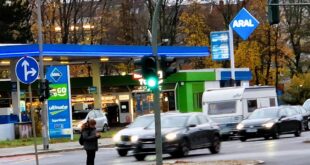
From 1 May to 30 June 2026, the energy tax on petrol and diesel will be cut by 14.04 cents per litre. Including VAT, that translates to a reduction of around 17 cents per litre at the pump. The measure is expected to cost the public purse approximately €1.6 billion and is modelled on a similar “fuel discount” introduced during the Russia-Ukraine energy crisis in 2022.
There is an important caveat: the tax reduction does not guarantee an immediate price drop at the filling station. Because energy tax is charged when fuel leaves the storage facility — not when it is sold — petrol stations may still be selling fuel purchased at the old, higher tax rate in the first days of May. Experts therefore expect a transition period of several days before the full saving is reflected in pump prices.
What this means for you: If you drive, you should see modest savings at the pump from around mid-May. If you commute long distances or use a vehicle for work, the saving will be more noticeable. Monitor prices at different stations — apps like Clever Tanken or Tankerkoenig show live comparisons across Germany.
Tax-Free Bonus of Up to €1,000
As a second pillar of the energy relief package, employers in Germany may now offer their workers a one-off, tax- and social-contribution-free bonus of up to €1,000. This “Entlastungsprämie” (relief bonus) can be paid at any point until 30 June 2027. For the employee, the full amount is received without any deductions — no income tax, no pension contributions, nothing.
There are clear rules about how it must be structured. The bonus must be paid on top of regular wages and cannot be funded by converting existing benefits: holiday pay, Christmas bonuses or other agreed extras cannot simply be relabelled as the Entlastungsprämie. The legal basis is an amendment to the Income Tax Act, similar to the earlier Inflationsausgleichsprämie introduced during the 2022–2023 inflation surge.
Crucially, there is no legal right to receive this bonus. The decision rests entirely with the employer. Public sector workers covered by collective agreements (TVoD and TV-L) are not covered by those agreements for this payment, so the bonus in the public sector depends on individual employer decisions.
Important for benefit recipients: The Entlastungsprämie is not counted as income for Bürgergeld (citizens’ income) or Grundsicherung (basic income support), so it will not reduce your benefit entitlement. Working pensioners in insurable employment or mini-jobs may also be eligible.
Pay Rises for Public Sector Workers
From 1 May 2026, salaries in the federal and municipal public sector rise by 2.8 per cent under the TVoD collective agreement. The increase applies automatically — no application is needed. More than 2.5 million employees are affected, including trainees, student workers and interns.
New Electric Vehicle Subsidies
After the previous subsidy scheme ended abruptly in late 2023, Germany is relaunching electric vehicle support in May 2026 with a more targeted, income-based model. A new online application portal opens this month, and the scheme applies retroactively to all battery-electric vehicles (BEVs) registered on or after 1 January 2026.
The subsidy is structured by household income. For households with a taxable annual income below €80,000, the base grant is €3,000. Below €60,000, it rises to €4,000; below €45,000, to €5,000. Families with children receive an additional €500 per child for up to two children, meaning lower-income families with two or more children can access up to €6,000 in support.
Plug-in hybrid vehicles (PHEVs) are included if they meet specific technical thresholds: an electric-only range of at least 80 kilometres, or CO2 emissions below 60 grams per kilometre. All subsidised vehicles must be kept for at least 36 months; selling earlier triggers a repayment demand.
How to apply: Applications are made entirely online via the BundID portal. You will need either an Elster tax certificate or the online identification (eID) function on your German ID card or residence permit. Retroactive claims for vehicles registered since 1 January 2026 can be submitted immediately.
Lufthansa Cuts Hand Luggage Allowance
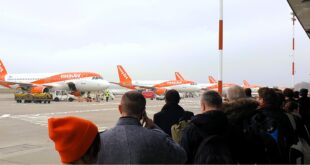
From 19 May 2026, travellers booked on Lufthansa’s lowest “Economy Basic” fare will only be entitled to bring one small personal item on board — such as a handbag or laptop bag that fits under the seat. A standard cabin bag will no longer be included and must be paid for separately, at a minimum additional cost of €15.
The rule applies across the entire Lufthansa Group: Austrian Airlines, Swiss, Brussels Airlines, Eurowings, Discover Airlines and Air Dolomiti are all affected.
Consumer protection groups have criticised the change. The European consumer organisation BEUC has called for cabin bags to remain free of charge across the industry, warning that the fees disproportionately affect budget-conscious travellers.
If you regularly fly on Lufthansa Group carriers, check your fare type carefully before travelling and budget for additional luggage fees if you are on a Basic fare.
New Traffic Restrictions in Austrian Cities
If you drive to or through Austria, be aware of a significant change to road traffic law that took effect on 1 May 2026. Austria has introduced the legal framework for automated, camera-based vehicle access controls in city centres — known as Zufahrtskontrolle zones. Around 25 cities have indicated they will implement the system, including Vienna, Salzburg and Graz.
The system works similarly to Italy’s ZTL zones: cameras read every vehicle’s number plate and cross-check it in real time against an authorisation database. Residents, delivery services and emergency vehicles are typically permitted. Unauthorised entry carries fines of up to €726, rising to €2,180 for repeat offences. Restricted zones will be marked with new signage featuring a camera symbol and road markings reading “ZUF-KONTROLLE.” Cities will need time to install systems, so activation dates will vary.
Short-Term Rental Platforms Face Tighter Rules
From 20 May 2026, EU Regulation 2024/1028 on data exchange in short-term rentals comes into force. If you rent out a property through platforms such as Airbnb, Booking.com or similar services, this change is directly relevant. The regulation does not itself set new registration requirements — those remain a matter of national and local law — but it does require platforms to systematically collect and share host data with the relevant public authorities. Listings with incomplete or incorrect registration numbers will be easier for authorities to identify and block.
In cities where short-term rental is already tightly regulated (such as Berlin, Munich and Hamburg), the practical effect will be stricter enforcement. Some hosts operating without proper registration may find their listings removed. Platforms that currently allow hosts to self-certify compliance will need to verify registration data against official records. For tenants, the change aims to provide greater confidence that a listed property is legally available.
EU Building Energy Standards Must Be Adopted by Germany
Germany faces a 29 May 2026 deadline to transpose the revised EU Buildings Directive into national law. The government is working on a new Building Modernisation Act that will partly or fully replace the existing Buildings Energy Act (Gebäudeenergiegesetz, or GEG). Whether Germany will meet the deadline is currently uncertain.
The most significant practical change is the introduction of a standardised EU energy performance certificate (EPC) scale running from A (most efficient) to G (least efficient). Many existing properties that currently carry a mid-range energy rating under the German system may be reclassified downward under the EU scale, affecting property values, financing terms and renovation obligations. Landlords and property owners should track this closely, as the detailed requirements — timelines, exemptions and technical standards — will only be fixed once the German implementing legislation is published.
© AfricanCourierMedia
READ ALSO Key Changes Taking Effect in Germany in April 2026