 THE AFRICAN COURIER. Reporting Africa and its Diaspora! The African Courier is an international magazine published in Germany to report on Africa and the Diaspora African experience. The first issue of the bimonthly magazine appeared on the newsstands on 15 February 1998. The African Courier is a communication forum for European-African political, economic and cultural exchanges, and a voice for Africa in Europe.

February 2026 may be short, but it brings wide-ranging changes—from migration and travel rules to religious life. Staying informed helps residents navigate the month with fewer surprises and better preparation. Here is a clear overview of what is new—and what it means in everyday life.

Continued School Support for Low-Income Families
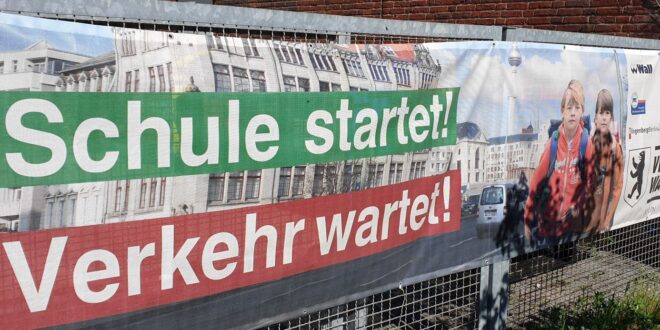
As the second half of the 2025/2026 school year begins on 1 February, children from low-income households will again receive financial assistance for school supplies. Families receiving Bürgergeld (citizens’ income) or similar social benefits are eligible under Germany’s Education and Participation Programme.
According to the Federal Ministry of Labour and Social Affairs, the allowance remains unchanged from last year: eligible pupils will receive €65 per child for personal school needs for the second semester. While there is no increase, the support continues to ease the financial burden on disadvantaged families.
New Powers on “Safe Countries of Origin”
From 1 February 2026, the federal government gains the authority to designate “safe countries of origin” through executive regulation rather than a full legislative process. The government says the move will speed up decisions on asylum applications, ease pressure on authorities and courts, and send a clear signal that asylum applications from certain countries have little chance of success. Critics, however, warn that the reform weakens parliamentary oversight and risks undermining fundamental rights.
UK Entry: ETA Becomes Strictly Enforced
Travelling to the United Kingdom is no longer possible without prior digital clearance. Since April 2025, visitors have needed an Electronic Travel Authorisation (ETA) to enter the UK. The system is now entering its strict enforcement phase.
From 25 February 2026, proof of a valid ETA or a recognized exemption will be mandatory. Airlines, ferry operators and other transport companies are instructed not to carry passengers who cannot present this authorisation.
Tougher Penalties for ATM Explosions
The government has tightened criminal laws related to the use of explosives, responding to a rise in attacks on cash machines. These crimes not only cause major property damage but also pose serious risks to the public. The revised legislation increases penalties and strengthens prosecution options.
Hedge Cutting Restricted After February
Gardeners and property owners should take note: heavy pruning or removal of trees, hedges and shrubs is only allowed until the end of February. From 1 March to 30 September, only gentle maintenance cuts are permitted, in order to protect nesting birds and wildlife. The rule is anchored in Germany’s Federal Nature Conservation Act.
Bulgaria Fully Adopts the Euro
From 1 February 2026, the euro is the sole legal currency in Bulgaria. Although the country joined the eurozone on 1 January, the former currency, the lev, remained in circulation during a one-month transition period.
For travellers, including from from Germany, this is a major simplification: no currency exchange, clearer price comparisons, and easier card and cash payments. Visitors should still watch for potential fees at ATMs or terminals, especially where “dynamic currency conversion” is offered. The general advice remains: choose payment in euros without additional conversion and read fee notices carefully.
A Short Month with Packed Schedules
February 2026 has just 28 days, translating to roughly 20 working days. While this is routine, it has practical implications: deadlines, subscriptions, travel planning and family logistics tend to feel more compressed.
Looking at the bigger picture, 2026 has more working days overall than 2025, due to less favourable placement of public holidays. This means tighter annual planning for leave, childcare and commuting. Adding to the complexity, winter school holidays vary widely by federal state, affecting travel demand, traffic congestion and accommodation prices.
Ramadan Expected to Begin Mid-February
The Muslim fasting month of Ramadan is expected to begin around 18 February 2026, depending on the sighting of the new moon. As the Islamic calendar follows lunar cycles, the exact start date may vary slightly.
For many Muslims, Ramadan is a time of spiritual reflection, prayer, charity and community—not only abstention from food and drink during daylight hours. Daily routines often shift, with early morning meals (suhur), evening fast-breaking (iftar), and increased social and religious activities after sunset.
Islam provides clear exemptions from fasting, including for children, the elderly, travellers, pregnant or breastfeeding women, and those who are ill. In schools and workplaces, awareness of Ramadan can help ensure realistic expectations, especially as concentration may dip late in the afternoon while social activity increases in the evenings. The month concludes with Eid al-Fitr, a major celebration marked by prayers, family visits and shared meals.
Femi Awoniyi

READ ALSO Major changes for people living in Germany in 2026