 THE AFRICAN COURIER. Reporting Africa and its Diaspora! The African Courier is an international magazine published in Germany to report on Africa and the Diaspora African experience. The first issue of the bimonthly magazine appeared on the newsstands on 15 February 1998. The African Courier is a communication forum for European-African political, economic and cultural exchanges, and a voice for Africa in Europe.

Beijing has scrapped import tariffs on goods from 53 African countries, in what it calls an unprecedented act of economic solidarity. The figures are striking. But an analysis of who exports what — and at what rates — reveals a more complicated picture. For Africa to convert market access into economic transformation, far more than a tariff change will be required.
__________
On 1 May 2026, China commenced the implementation of zero-tariff policy on all products imported from 53 African nations with which it maintains diplomatic ties. The move was announced by President Xi Jinping on 14 February, in a message to African heads of state at the 39th African Union Summit in Addis Ababa, and formalised on 28 April by China’s Customs Tariff Commission. It makes China, according to Beijing, the first major economy to unilaterally extend full zero-tariff coverage to the entire African continent.
The policy has two components. For 33 poorer African nations, designated as least developed countries (LDCs), China had already eliminated tariffs on 100 per cent of product lines since December 2024. The new announcement extends the same treatment to the remaining 20 African nations with diplomatic ties that are not classified as LDCs — a group that includes South Africa, Nigeria, Egypt, Morocco, Kenya, Algeria, Ghana, Côte d’Ivoire and Ethiopia. The one country left out is Eswatini, which maintains diplomatic recognition of Taiwan rather than the People’s Republic.
China has been Africa’s largest trading partner for 17 consecutive years. Total trade between China and the 53 eligible African nations reached a record $348 billion in 2025, a rise of 17.7 per cent year-on-year. In the first quarter of 2026 alone, bilateral trade reached $92.16 billion, up 26.8 per cent compared with the same period in 2025 — nearly nine percentage points above China’s overall foreign trade growth rate.
China-Africa trade at a glance, 2025
| Indicator | Figure |
| Total China-Africa trade (2025) | $348 billion (record high) |
| Chinese exports to Africa | $225 billion (+25.8%) |
| African exports to China | $123 billion (+5.4%) |
| China’s trade surplus with Africa | $102 billion (+65% year-on-year) |
| Q1 2026 bilateral trade | $92.16 billion (+26.8% year-on-year) |
Source: China General Administration of Customs; China-Global South Project analysis
The Optimists: Real Gains for Agriculture and Processing
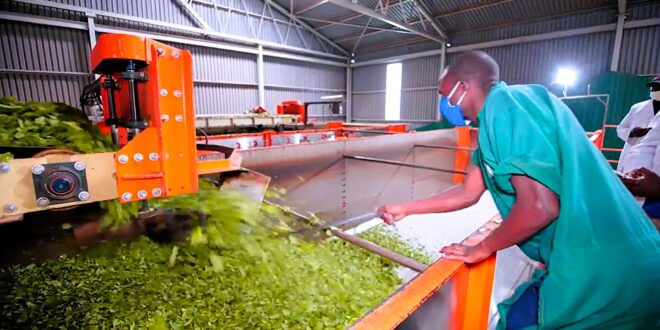
For sectors that actually faced meaningful tariff barriers, the new policy delivers tangible relief. African agricultural exporters stand to gain the most. Fresh fruit, coffee, tea, cocoa, cashew nuts, sesame, ginger and processed food products from countries such as Kenya, Ethiopia, Uganda, Ghana and Nigeria have carried tariffs of between five and 25 per cent under China’s most-favoured-nation schedule. These will now be zero.
Business groups in Nairobi were quick to note the significance. The Kenya National Chamber of Commerce and Industry described the opportunity for Kenyan exporters as “virtually limitless” if firms act decisively. For coal exporters in Mozambique and Zimbabwe, which faced tariffs of between three and six per cent, the removal also represents a genuine cost reduction.
A Senegalese trader based in China, Sourakhata Tirera, who has been active in China-Africa commerce since 2003, told Chinese state media that the policy “opens access to the world’s largest consumer market” and could drive industrial development and job creation if African governments support private-sector exporters in responding.
The Sceptics: Most African Exports Were Already Tariff-Free
Independent analysts urge caution. A detailed examination of China’s customs tariff schedule, published by the China-Global South Project and authored by economist Thierry Pairault, concludes that the bulk of what Africa currently sells to China was already entering duty-free before 1 May 2026.
The principal exports from Africa to China are minerals and hydrocarbons. Iron ore, copper ore, refined copper, gold and iron scrap — which together account for the lion’s share of exports from the DRC, South Africa and Zambia — already entered China at zero tariff under the WTO’s most-favoured-nation (MFN) schedule. Crude oil from Angola, Nigeria and Congo-Brazzaville likewise carries an MFN rate of zero. These products will continue to enter duty-free, unchanged by the new policy. Six commodity categories account for 90 per cent of Africa’s exports to China; six countries account for three-quarters of the total. The tariff announcement touches neither of these structural realities.
The trade imbalance is itself telling. Chinese exports to Africa grew by 25.8 per cent in 2025 to reach $225 billion, while African exports to China grew by just 5.4 per cent to $123 billion. Beijing’s trade surplus with the continent reached $102 billion last year — a 65 per cent increase in a single year. The zero-tariff announcement eases political discomfort without correcting the mechanisms driving that imbalance.
The Structural Challenge: From Raw Materials to Value Addition
Both advocates and critics of the policy agree on one point: tariff-free access, on its own, is insufficient. Africa’s ability to capture value from open Chinese markets depends on domestic industrial capacity that, in most countries, does not yet exist at scale.
Manufacturing contributes only around 11 per cent of Africa’s GDP on average, according to the African Development Bank, which has long emphasised industrialisation as central to economic transformation. Processing raw commodities before export — refining copper, packaging coffee, producing textiles — is where the real gains lie, but it requires investment, energy infrastructure, logistics and skills.
China’s own statement acknowledges this, calling on African governments to “promote a shift from raw material exports to higher value-added manufacturing.” Beijing has also announced it will upgrade “green channel” fast-track customs lanes for African agricultural and food products, and continue negotiating longer-term economic partnership agreements with individual countries. Critics note, however, that the two-year implementation window for the new 20-country tranche runs only until April 2028 — a short horizon for structural trade transformation.
The Geopolitical Dimension
The timing of the announcement is not incidental. China is engaged in an escalating trade dispute with the United States, which has imposed broad tariffs across multiple sectors. The zero-tariff offer to Africa lands as a pointed contrast: while Washington tightens market access, Beijing opens it. Chinese officials have been explicit about the framing, with the Foreign Ministry describing the move as a contribution to “multilateralism” in the face of rising protectionism.
Unlike the US African Growth and Opportunity Act (AGOA), which carries annual eligibility reviews linked to governance and human rights criteria, or the EU’s Everything But Arms (EBA) scheme, which can be suspended on political grounds, China’s offer attaches no stated political conditions beyond maintaining diplomatic relations with Beijing. Eswatini’s exclusion, however, makes clear that recognition of the “one China” principle remains a non-negotiable prerequisite.
For African leaders and trade negotiators, the policy represents a genuine, if partial, opportunity. Exporters in agriculture, processed goods and coal-producing LDCs have new incentives to develop Chinese market connections. But realising the deeper promise of industrial transformation will require African governments to invest in the domestic capacity to manufacture, process and certify goods that meet Chinese market standards — and to reduce a trade imbalance that, for now, continues to widen.
Femi Awoniyi/© AfricanCourierMedia