 THE AFRICAN COURIER. Reporting Africa and its Diaspora! The African Courier is an international magazine published in Germany to report on Africa and the Diaspora African experience. The first issue of the bimonthly magazine appeared on the newsstands on 15 February 1998. The African Courier is a communication forum for European-African political, economic and cultural exchanges, and a voice for Africa in Europe.

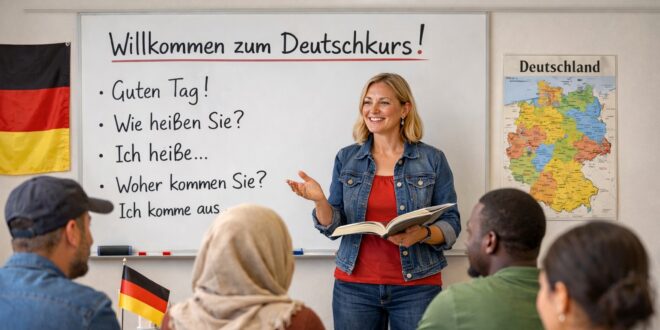
The Bundesrat, the upper chamber of the German parliament, has called on the federal government to reverse its recent decision to restrict access to integration courses, warning that the policy shift risks weakening one of Germany’s key integration instruments at an early stage.
In a formal resolution, the body, which represents the country’s 16 federal states (Bundesländer), criticised the narrowing of eligibility criteria and urged that access to language and orientation courses be restored for a broader group of migrants. The Bundesrat argued that integration begins with language acquisition and that limiting participation undermines long-term social and labour market inclusion.
The decision comes amid a continued decline in participation in Germany’s integration courses. According to federal figures, around 307,000 people began the courses in 2025, which is significantly fewer than the roughly 363,000 new participants recorded in each of the two previous years. At the same time, cases of “inactive exits” have increased, suggesting a rise in dropouts or unfinished courses.
Integration courses, which combine German language training with civic education on law, history and society, have long been a central instrument of integration policy. As previously reported by The African Courier, the system has recently come under pressure following a series of administrative and political measures that significantly tightened access for new participants.
These developments began with a quiet suspension of new admissions by the Federal Office for Migration and Refugees (BAMF), followed by a broader confirmation that voluntary participation would no longer be funded for many groups of migrants.
Subsequent explanations from BAMF clarified that the suspension and restrictions were linked to budgetary constraints and an effort to better align course admissions with migrants’ long-term residence prospects in Germany. As a result, groups such as asylum seekers with uncertain status, tolerated residents and some temporarily protected groups have been increasingly excluded from state-funded access to courses.
The federal government has justified the approach by pointing to the high costs of the courses, which can amount to several thousand euros per participant.
The Bundesrat’s intervention reflects growing resistance from the federal states, many of which argue that restricting early access to language training risks creating longer-term integration barriers. State integration ministers and municipal associations have also warned that delays in language acquisition can reduce employment opportunities and increase reliance on public support systems.
The debate follows earlier reporting by The African Courier, which documented confusion among course providers and migrants after BAMF halted new admissions, leaving many prospective participants uncertain about access and eligibility.
With the Bundesrat now formally demanding a policy reversal, the dispute between federal and state authorities highlights a widening divide over the direction of integration policy in Germany—between fiscal and administrative control on one side, and early, inclusive access to language learning on the other.
Femi Awoniyi
READ ALSO BAMF Explains Suspension of Integration Course Admissions