 THE AFRICAN COURIER. Reporting Africa and its Diaspora! The African Courier is an international magazine published in Germany to report on Africa and the Diaspora African experience. The first issue of the bimonthly magazine appeared on the newsstands on 15 February 1998. The African Courier is a communication forum for European-African political, economic and cultural exchanges, and a voice for Africa in Europe.


A new Bertelsmann Stiftung study finds that despite chronic labour shortages, thousands of qualified migrants in Germany are working far below their skill level, highlighting a costly mismatch that affects both the economy and migrant communities. For Africans among the country’s 5.9 million foreign workers, the findings confirm a familiar frustration.
Germany urgently needs skilled workers, yet a new study by the Bertelsmann Stiftung suggests the country is failing to make the most of the talent already within its borders. The report finds that many immigrants, including those with recognised university or professional qualifications, remain trapped in low-skilled jobs because of language barriers, bureaucratic hurdles and discrimination.
According to the study, foreign employees earn on average 19.6% less than their German counterparts. Nearly 36% of migrant workers are employed as helpers, while among migrants from refugee-origin countries the figure rises to almost 45%. Even more striking is that almost one in three migrants with recognised vocational qualifications is employed below their skill level.
The findings come at a critical moment for Germany. As the country’s population ages, one in four German workers is expected to retire within the next decade. Migrants are already playing an indispensable role in keeping essential sectors running. Almost half of all workers in cleaning services hold foreign citizenship, while migrants account for around 44% of employees in food production, 36% in hospitality and tourism, and more than one in five workers in the care sector.
For Africans living in Germany, the report confirms what many professionals have experienced for years. Engineers driving delivery vans, teachers working as cleaners and accountants working in warehouses rather than the jobs they trained for because of complicated recognition procedures are familiar stories across migrant communities. While Germany increasingly recruits skilled workers from African countries, many who are already here continue to face systemic obstacles to fully contributing their expertise.
The study also points to substantial untapped potential within Germany’s migrant population. While 65.8% of German citizens in working age are in social security-contributing employment, the figure for foreign nationals is significantly lower at 52.4%. The gap is even more pronounced along gender lines. Among migrants, around 59% of men are employed compared with just under 45% of women. The disparity is particularly stark among people from refugee-origin countries: eight years after arriving in Germany, 73% of men are in work, but only 31% of women. The researchers say this highlights the need for targeted measures, including better access to language courses, childcare and employment support, to enable more migrant women to participate fully in the labour market.
Encouragingly, welfare dependency has declined among several migrant groups, demonstrating that integration efforts are producing results. However, many employed migrants still rely on income support because they are concentrated in low-paid occupations.
Bertelsmann labour market expert Tobias Ortmann argued that fixing these barriers is now an economic necessity, not simply a matter of fairness, since safeguarding Germany’s prosperity depends on integrating migrants into work that matches their skills.
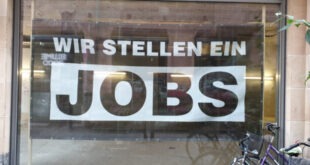
The Bertelsmann researchers argue that Germany’s response should not be to reduce migration but to improve integration. They recommend expanding language programmes, simplifying the recognition of foreign qualifications, speeding up asylum procedures and creating a “one-stop shop” where migrants can access employment, qualification recognition and administrative services more efficiently. Ironically, they warn that recent federal cuts to integration and job-related German language courses send precisely the wrong signal at a time when employers continue to report more than one million vacant jobs.
For Germany, unlocking migrants’ skills is more than an integration challenge—it is an economic necessity. For African professionals and other newcomers, it represents the opportunity to contribute fully to society while receiving the recognition their qualifications deserve.
Sola Jolaoso