 THE AFRICAN COURIER. Reporting Africa and its Diaspora! The African Courier is an international magazine published in Germany to report on Africa and the Diaspora African experience. The first issue of the bimonthly magazine appeared on the newsstands on 15 February 1998. The African Courier is a communication forum for European-African political, economic and cultural exchanges, and a voice for Africa in Europe.

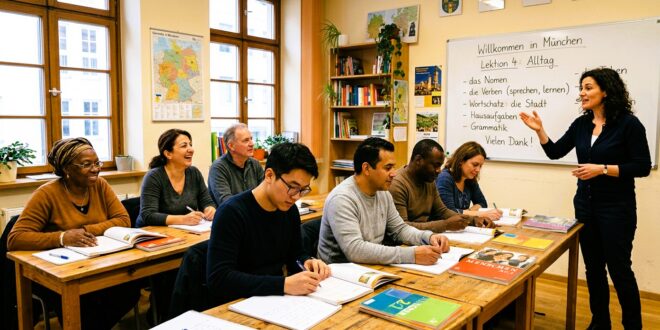
Germany has partly lifted its months-long freeze on voluntary admissions to Integrationskurse (integration courses), but the reopening — which takes effect on 1 August — offers little relief to asylum-seekers and people living with a Duldung (toleration permit).
This is a follow-up to our earlier reports on the funding crisis affecting integration courses, including our last week’s story on warnings from Germany’s adult education body that funding cuts risked “dismantling” the courses.
A quick recap: what happened in February
In February 2026, the Federal Office for Migration and Refugees (BAMF) quietly stopped approving new applications for voluntary participation in integration courses — technically, applications under Section 44 (4) of the Residence Act (AufenthG). The Interior Ministry, led by Alexander Dobrindt (CSU), cited rising costs: spending on integration courses had climbed from under €500 million in 2021 to around €1.3 billion in 2025.
That freeze mainly hit people who have no automatic right to a course and must apply to BAMF for a place — chiefly asylum-seekers still in the procedure, people with a Duldung, refugees from Ukraine, and EU citizens. Almost 30,000 applicants were reportedly turned away in the following months.
Importantly, the freeze did not touch two other groups, who could continue enrolling throughout:
- People legally entitled to a course under Section 44 (1) — this includes most holders of a residence permit for employment, family reunification or humanitarian/protection grounds, among others.
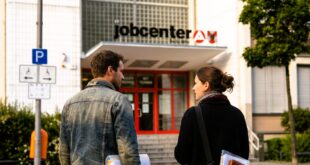
- People obliged to attend under Section 44a, typically because a Jobcenter or immigration office (Ausländerbehörde) has instructed them to.
What changes from 1 August
Under a cabinet decision amending the Integration Course Ordinance, BAMF will now, from 1 August, resume approving some voluntary applications — but on a priority basis, and only within available course places and budget. Priority goes to:
- People with a residence permit under Section 24 AufenthG — in practice, mostly refugees from Ukraine;
- German nationals and EU citizens whose German is not good enough to take up work;
- Certain family members in the same situation.
There is no guarantee of a place even for people in these priority groups — approval still depends on funding and available course capacity.
Asylum-seekers and Duldung holders: little changes
For asylum-seekers with an ongoing application and people with a Duldung, the reopening brings almost no improvement. They are not among the newly prioritised groups, and officials say approvals for them will remain limited to justified individual cases, again subject to money and space. The stated rationale is that scarce funds should go first to those seen as most likely to enter the job market soon.
Government migration commissioner Natalie Pawlik (SPD) called the partial reopening “an important signal” but pushed for secure, long-term financing. Critics, including the German Adult Education Association (Volkshochschulverband), argue the changes let residence status and “market usefulness” — rather than actual language need — determine who gets to learn German.
READ ALSO Erstorientierungskurse, the Alternative for Asylum-Seekers and Duldung Holders
As an alternative, asylum-seekers and Duldung holders can look into Erstorientierungskurse (initial orientation courses) — shorter, more basic courses covering everyday German and life in Germany, but far less comprehensive than a full integration course.
The bigger picture: deeper cuts ahead
Even this limited reopening comes against a backdrop of shrinking budgets. Government spending on integration courses, which stood at roughly €1.24 billion in 2024, is set to fall to around €590–600 million under draft 2027 budget plans — still to be debated in the Bundestag, likely from September. Course providers, including Volkshochschulen (adult education centres), have already warned of cancelled classes, understaffing and reduced capacity nationwide.
What this means for you
- If you hold a residence permit for work, family reunification or humanitarian/protection reasons, or have been instructed by a Jobcenter or immigration office to attend: the February freeze never applied to you, and you can still apply for a course as before.
- If you are an asylum-seeker or hold a Duldung: the 1 August change does not open new doors for you in most cases. You may still ask your local BAMF office or course provider about individual exceptions, and consider an Erstorientierungskurs in the meantime.
- If you are unsure of your status or entitlement, ask your caseworker, immigration office, or a trusted advice service — including organisations such as YANA Berlin — to check which category you fall under before applying.
We will continue to follow developments on integration course access and funding as they affect African communities in Germany.
Vivian Asamoah
READ ALSO German govt plans deep cuts to integration funding in 2027 budget