 THE AFRICAN COURIER. Reporting Africa and its Diaspora! The African Courier is an international magazine published in Germany to report on Africa and the Diaspora African experience. The first issue of the bimonthly magazine appeared on the newsstands on 15 February 1998. The African Courier is a communication forum for European-African political, economic and cultural exchanges, and a voice for Africa in Europe.


September 2026 brings a mixture of new laws, EU rules and other regulatory changes that will affect everyday life in Germany. Some concern consumer protection and digital products, while others are relevant to employees, taxpayers and travellers. It is worth noting that not everything in this overview is technically a new law. For example, the increase in pay for temporary workers comes from a collective agreement, while the nationwide warning day is a test of Germany’s emergency warning system. Here are the most important changes.

Higher pay for temporary workers
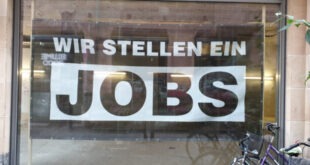
Around 650,000 people working in temporary agency employment (Leiharbeit/Zeitarbeit) are set to receive another pay increase from 1 September 2026.
Under the collective agreement negotiated between the DGB trade union confederation and the Association of Personnel Service Providers (GVP), wages increase by 2.5 per cent from September. A further increase of 3.5 per cent is scheduled for 1 April 2027. Together with the 2.99 per cent increase introduced in January 2026, the three stages amount to about nine per cent over the 24-month agreement. The agreement covers more than 90 per cent of temporary agency workers in Germany.
The exact increase in euros depends on the worker’s pay group. For example, the lowest DGB/GVP pay group rises from €14.96 to €15.33 per hour in September.
__________
Nationwide warning test on 10 September
On Thursday, 10 September, Germany will conduct its annual Bundesweiter Warntag, or nationwide warning day.
At 11am, the Federal Office of Civil Protection and Disaster Assistance (BBK) will send a test warning through the national Modular Warning System (MoWaS). Depending on the available systems, people may receive warnings through Cell Broadcast, warning apps, radio, television, digital displays, sirens and other channels. At around 11:45am, the test warning will be followed by an all-clear.
This is only a test and does not mean that there is an emergency. The exercise is important because Germany wants people to recognise official warnings and authorities to identify technical or organisational weaknesses before a real disaster occurs. The warning system has been tested annually on the second Thursday of September in recent years.
__________
New EU information on guarantees and warranties
From 27 September, consumers will see new standardised EU information concerning their rights when they buy goods.
There is an important distinction here. The new rules do not create a new two-year legal guarantee. Consumers already have statutory rights against sellers when goods are defective. In Germany, these rights generally apply for two years for new goods.
What changes is the way these rights must be highlighted. A harmonised EU notice will remind consumers of the legal guarantee of conformity, while a separate GARAN label is intended for products covered by a manufacturer’s additional commercial durability guarantee. The EU has adopted standard designs for both, including a QR code giving consumers access to further information.
The distinction is useful for consumers: Gewährleistung is a legal right against the seller, whereas a Garantie is normally a voluntary additional promise by a manufacturer or seller.
__________
Tougher action against greenwashing
Another major change arrives on 27 September, when new EU rules on consumer protection and the green transition begin to apply in Germany.
The rules are designed to make it harder for companies to make vague or misleading environmental claims. Generic statements such as a product being “environmentally friendly”, “green” or “climate neutral” will face much stricter requirements and, where they cannot be properly substantiated or specified, can be prohibited. Environmental claims and sustainability labels must provide consumers with information that is more reliable, comparable and verifiable.
The rules also go beyond environmental claims. Information concerning product durability and reparability is becoming more important in consumer communication.
For shoppers, this means that attractive green labels and claims should increasingly have to stand up to scrutiny rather than simply serve as marketing.
__________
Connected devices must make their data easier to access
The EU Data Act reaches another important milestone on 12 September 2026.
The Data Act itself has already applied since September 2025. What changes this month is the application of its so-called “access by design” requirement to connected products and related services placed on the EU market after 12 September 2026.
In practical terms, manufacturers must design connected products so that the data they generate can, where technically relevant and feasible, be accessed by users easily, securely and free of charge, in a structured and machine-readable form.
This can affect products such as connected household appliances, vehicles, smart-home equipment, industrial machines and other Internet-connected devices.
The significance for consumers is that data generated by a device should no longer be locked away behind unnecessarily complicated procedures. Users may, for example, gain greater ability to access information generated by a connected product and potentially decide how that data is used or shared.
Importantly, the September deadline does not mean that every existing device suddenly has to be redesigned. The design obligation applies to connected products and related services placed on the market after 12 September 2026.
__________
Lohnsteuerhilfevereine can advise more people
A change to Germany’s tax advisory rules also takes effect on 1 September.
Lohnsteuerhilfevereine – tax assistance associations that provide relatively affordable help to their members – receive broader powers to advise taxpayers.
Previously, there were income limits for certain additional sources of income. In particular, people with employment or pension income could use these associations for their tax affairs only if income from areas such as renting out property, capital assets or certain private sales remained within prescribed limits.
Those limits are being abolished. The Federal Government says, for example, that the previous €18,000 limit for individuals and €36,000 for jointly assessed couples concerning rental income will no longer apply.
There are still important restrictions. Lohnsteuerhilfevereine generally cannot take over tax matters for members who have income from agriculture and forestry, business activities or self-employment, subject to specific statutory exceptions.
For employees, pensioners and other people with relatively straightforward tax affairs, the reform could therefore make professional tax assistance available to a wider group.
__________
New cybersecurity reporting duties
From 11 September 2026, another important EU rule begins to apply: reporting obligations under the Cyber Resilience Act (CRA) for actively exploited vulnerabilities and serious security incidents affecting products with digital elements.
The CRA covers manufacturers of many connected and digital products. Where a manufacturer becomes aware of an actively exploited vulnerability, an initial warning must generally be submitted within 24 hours, followed by more detailed information within 72 hours, unless the relevant information has already been supplied. A final report is generally required no later than 14 days after a corrective or mitigating measure becomes available.
Similar 24-hour and 72-hour deadlines apply to serious incidents affecting the security of products with digital elements, with a final report due within one month after the incident notification.
The full Cyber Resilience Act applies from December 2027, but these specific reporting obligations start earlier, on 11 September 2026.
For ordinary consumers, the immediate effect may not be visible. The aim, however, is significant: manufacturers should respond more quickly when serious security problems are discovered, helping to make connected products safer.
__________
Alcohol ban at railway stations
One significant September change is the Deutsche Bahn’s nationwide introduction of an alcohol-consumption ban at its railway stations.
The ban begins at additional stations on 1 September, including Berlin Hauptbahnhof, Berlin Gesundbrunnen, Kiel and Braunschweig, and will be extended progressively to about 5,400 stations by 15 October 2026. It is being introduced through Deutsche Bahn’s house rules rather than as a general criminal law prohibition.
Alcohol may still be consumed in railway-station restaurants, and sealed alcoholic drinks may still be carried through the station. Violations can result in a request to leave the station and, in repeated cases, a house ban.
__________
What September means in practice
For many people, the changes will not require immediate action. But they are worth knowing: temporary workers should check their new pay; consumers should become more alert to guarantee and environmental claims; users of connected devices will gain stronger data-access rights; and a wider range of taxpayers can seek help from Lohnsteuerhilfevereine.
For everyone, 10 September is also a date to remember: if your phone suddenly sounds an official warning at 11am, it is the nationwide emergency-alert test – not a real emergency.
Femi Awoniyi