 THE AFRICAN COURIER. Reporting Africa and its Diaspora! The African Courier is an international magazine published in Germany to report on Africa and the Diaspora African experience. The first issue of the bimonthly magazine appeared on the newsstands on 15 February 1998. The African Courier is a communication forum for European-African political, economic and cultural exchanges, and a voice for Africa in Europe.


From the forests of the Congo to fishing communities in Ghana, the festival’s 2026 edition with the theme REFLECT brings powerful African stories to Berlin from 9 to 15 November.
African film lovers and the wider public have another compelling reason to head to the cinema this November. Afrikamera, Berlin’s long-running festival of contemporary African cinema, returns from 9 to 15 November 2026 with a thought-provoking programme exploring the relationship between Africa, the environment and the enduring consequences of foreign exploitation.
Under the theme REFLECT, this year’s edition turns the spotlight on climate change, the struggle for natural resources, land rights and the exploitation of African communities by powerful commercial interests. Through feature films, documentaries and short films, the festival invites audiences to consider a fundamental question: what is lost when land is valued only for the resources it contains?
The programme promises more than a week of cinema. Screenings will take place at venues including Arsenal Kino, City Kino Wedding, fsk Kino and Sputnik Kino, while the Heinrich Böll Foundation will host selected events. Miss Read Space in Berlin-Wedding will serve as a festival hub, combining an exhibition with additional screenings and discussions.
Afrikamera offers an opportunity to encounter stories that go beyond familiar headlines about the continent. Its films explore the lives, struggles, creativity and aspirations of African people, while opening up conversations about issues that affect communities across the continent and its diaspora.
Stories of land, identity and survival
Among the 2026 highlights is L’Arbre de l’Authenticité (The Tree of Authenticity), a documentary by Congolese photographer and video artist Sammy Baloji. The film examines the environmental destruction associated with Belgium’s colonial rule in the Democratic Republic of the Congo (DR Congo) and how its consequences continue to shape the country’s environment today.
The film connects colonial history with present-day ecological concerns, raising questions about the lasting costs of extracting wealth from African land without regard for the communities and ecosystems left behind.
Another major selection is One Woman, One Bra, the feature-film debut of Kenyan filmmaker Vincho Nchogu, which explores the intersection of land ownership, identity and patriarchal power.
The story follows Star, a 38-year-old orphan in the Kenyan village of Sayit, where residents receive official documents confirming land ownership through family lineage. For Star, however, the process becomes a nightmare. Unable to establish her ancestry or afford to buy her land, she faces the prospect of losing her home. Her search for proof of identity leads her into a questionable arrangement with an international non-governmental organisation (NGO), bringing her into conflict with her community.
Blending drama and black comedy, the film challenges assumptions about international aid and the idea that outside organisations always know what is best for local communities.
The film has also been selected as Kenya’s entry in the Best International Feature Film category for the 2027 Academy Awards.
Ghanaian comedy with a serious message
The environmental theme takes a more playful turn in The Fisherman, a Ghanaian comedy by filmmaker Zoey Martinson.
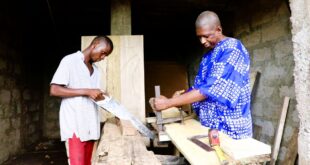
The film follows Atta Oko, a fisherman who has spent decades working in a coastal village before being forced into retirement. His fortunes change when he catches a talking fish. Together with three eccentric business partners, he travels to Accra in search of a bank loan to finance his own boat.
Beneath its magical realism and humour, the film examines the pressures facing traditional fishing communities as environmental destruction, urban expansion and commercial seaports threaten their livelihoods.
Another notable selection is Congo Boy, directed by Rafiki Fariala. Set in Bangui, the capital of the Central African Republic, the music drama follows 17-year-old Robert, who dreams of becoming a rapper while struggling to care for his four younger siblings. With his Congolese refugee parents in prison, he juggles casual jobs and preparations for his school-leaving examinations, hoping a music competition might change his life.
The film draws on the director’s own life story, bringing together music, family responsibility, displacement and the determination of a young person to pursue his ambitions despite difficult circumstances.
Reconciliation and the wounds of history
The festival opens on 9 November with Ben’ Imana (Les Enfants de Dieu) by Rwandan filmmaker Marie-Clémentine Dusabejambo.
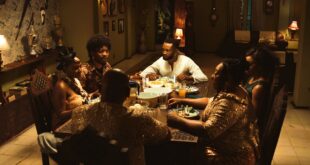
Set in Kibeho, Rwanda, in 2012, nearly two decades after the genocide against the Tutsi, the film follows Vénéranda, who supports women navigating the reconciliation process through community courts. When her daughter unexpectedly becomes pregnant, she must confront painful memories of her own past.
The film explores the difficult relationship between justice, forgiveness and healing after mass violence. It was recognised at the Cannes Film Festival, where it became the first Rwandan film selected for the Un Certain Regard section and received the section’s award for best debut, according to the festival’s press information.
Together, these films demonstrate the breadth of Afrikamera’s programme: from environmental justice and colonial legacies to personal resilience, family responsibilities and the long process of reconciliation.
Art, debate and encounters beyond the cinema
Afrikamera 2026 will extend its programme beyond conventional film screenings through a partnership with Miss Read Space in Berlin-Wedding, which will operate as a festival hub from 10 to 15 November.
Visitors can explore Sacred: Human, Animal and Plant, a photographic exhibition by Burkinabè photographer Nyaba Léon Ouedraogo. His work examines the sacred as a living space shaped by cultural, ecological and spiritual relationships between people, animals and plants.
The programme also includes opportunities for discussions and encounters with filmmakers and other guests, enabling audiences to engage more deeply with the ideas behind the films.
Organised by toucouleur e.V., Afrikamera has been held annually in Berlin since 2008. It aims to showcase the diversity of contemporary African cinema and promote cultural dialogue between Africa and Germany. Its collaborations with major African film festivals help bring a wide range of productions and perspectives to German audiences.
The festival has become a regular fixture in Berlin’s cultural calendar and has been covered by The African Courier over many years, reflecting its importance as a platform for African storytelling and cultural exchange.
For African residents of Germany, film enthusiasts and anyone interested in the continent’s changing realities, this year’s edition offers a timely invitation to watch, question and reflect.
Vivian Asamoah
AFRIKAMERA 2026 – REFLECT
- Date: 9–15 November 2026
- Venues: Arsenal Kino, City Kino Wedding, fsk Kino, Sputnik Kino, Heinrich Böll Foundation and Miss Read Space, Berlin
- Programme and tickets: www.afrikamera.de/en
READ ALSO Afrikamera 2025: Spotlighting Films Pushing for Change