 THE AFRICAN COURIER. Reporting Africa and its Diaspora! The African Courier is an international magazine published in Germany to report on Africa and the Diaspora African experience. The first issue of the bimonthly magazine appeared on the newsstands on 15 February 1998. The African Courier is a communication forum for European-African political, economic and cultural exchanges, and a voice for Africa in Europe.
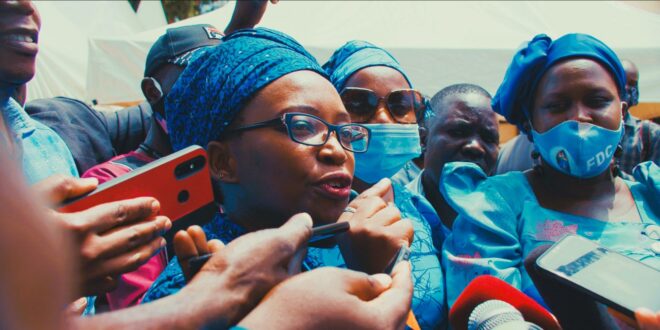
For more than two decades, Cologne has set aside ten late-summer days for African cinema to take centre stage, and this year is no exception. From 17 to 27 September, the Afrika Film Festival Köln returns for its 23rd edition, once again turning the city into a meeting point for filmmakers, audiences and stories that rarely get this kind of stage in Germany.
If last year’s edition, staged under the banner “African cinema lives — and Cologne remains its stage,” was defined by its defiance in the face of funding cuts, this year the festival explores how people rebuild their lives after conflict, displacement and personal loss.
Presented by FilmInitiativ Köln e.V., the festival has become one of Europe’s most important showcases for African cinema, introducing German audiences to outstanding feature films, documentaries and short films while fostering dialogue between filmmakers, scholars and the public.
Stories from across Africa and its diaspora
The 2026 programme brings together filmmakers from numerous African countries and the diaspora, presenting stories that challenge stereotypes and reveal the many realities of contemporary African life.
Several films explore the healing power of music. In Congo Boy, directed by Rafiki Fariala, a Congolese refugee boy living in Bangui, Central African Republic, discovers rap music as a way to process his experiences and reclaim his sense of self. El Sett by Marwan Hamed revisits the final stage performance of the gravely ill Egyptian singer Umm Kulthum, using her voice as a source of comfort for an entire nation.
Music also becomes a bridge between generations in O Profeta by Mozambique’s Ique Langa and Meu Semba by Angola’s Hugo Salvaterra, while Joy Boy: A Tribute to Julius Eastman celebrates the enduring legacy of the groundbreaking African-American composer.
Many of the festival’s films examine how individuals and communities preserve memory and confront the past.

Mahamat-Saleh Haroun’s Soumsoum, the Night of the Stars follows a young girl through the deserts of Chad, where everyday life and ancient myths intertwine. In My Father’s Scent, Mohamed Siam reflects on the complex relationship between father and son, while Memory of Princess Mumbi, directed by Damien Hauser, revisits a forgotten chapter of Kenyan history.
Collective memory also becomes an act of resistance in The People Shall. And Notes from the Underground by Chris Kets and Adrian van Wyk follows Cape Town’s hip-hop artists, for whom rap, breakdance, graffiti and the philosophy of “Knowledge of Self” are powerful tools of cultural expression and social empowerment.
Questions of identity also feature prominently. Black Burns Fast, directed by Sandulela Asanda, is a queer coming-of-age story about growing up, discovering one’s sexuality and challenging social expectations. Similar themes of belonging and personal history run through Variations on a Theme by Jason Jacobs and Devon Delmar, as well as Mohammed Sheikh’s Barni.
Other films spotlight people confronting injustice with courage and determination. In The Woman Who Poked the Leopard, Ugandan filmmaker Patience Nitumwesiga follows a woman whose resistance inspires her entire community. Trop C’est Trop (Enough Is Enough) by Elisé Sawasawa sheds light on the decades-long conflict in eastern Democratic Republic of Congo and calls for justice.
Women’s determination is also at the heart of Truck Mama by Zipporah Nyaruri and Lady by Olive Nwosu, both portraying women who carve out their own paths despite formidable obstacles.

Together, the films resist any single narrative about Africa. Instead, they present a continent whose experiences, cultures and voices are as diverse as the people who tell their stories.
More than a film festival
As in previous years, the screenings will be complemented by a rich programme of short film series, panel discussions with international guests, live music performances and an exhibition, offering audiences opportunities to engage with filmmakers and explore contemporary African cultures beyond the cinema screen.
Screenings will take place at Filmforum NRW, Rex Kino, Lichtspiele Kalk, Academy of Media Arts Cologne (KHM), Off-Broadway and Comedia Theater.
For African communities across Germany and Europe, the festival remains one of the year’s most important cultural events, an opportunity to experience outstanding African cinema while engaging in conversations about history, identity, justice and the shared search for healing.
Vivian Asamoah

Event at a Glance
- Date: 17–27 September 2026
- Venues: Filmforum NRW, Rex Kino, Lichtspiele Kalk, KHM, Off-Broadway and Comedia Theater
- City: Cologne, Germany
- Admission: Check festival website
- Website: www.afrikafilmfestivalkoeln.de