 THE AFRICAN COURIER. Reporting Africa and its Diaspora! The African Courier is an international magazine published in Germany to report on Africa and the Diaspora African experience. The first issue of the bimonthly magazine appeared on the newsstands on 15 February 1998. The African Courier is a communication forum for European-African political, economic and cultural exchanges, and a voice for Africa in Europe.

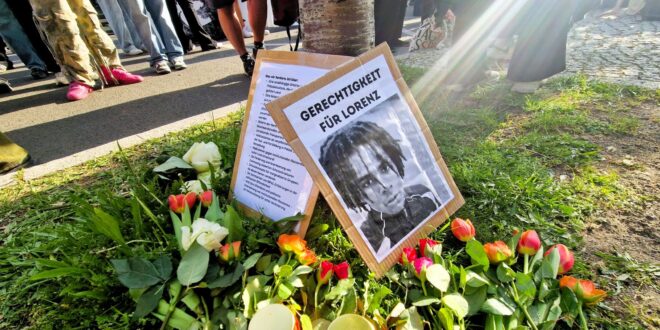
More than a year after 21-year-old Afro-German Lorenz A. was shot dead by a police officer in Oldenburg, the city’s regional court (Landgericht Oldenburg) has formally admitted charges of negligent homicide against the officer involved, clearing the way for a criminal trial.
The court decision marks a significant step in a case that has become a focal point in Germany’s ongoing debate about police accountability and allegations of racial bias.
Lorenz A., whose father was from Togo and mother German, was shot in the early hours of Easter Sunday 2025 after a dispute with security guards outside a nightclub in Oldenburg’s old town, and died shortly afterward in hospital.
According to reports, the young man was denied entry into the nightclub. Following a dispute during which he allegedly used pepper spray, he fled. Police somehow became involved, and Lorenz was shot multiple times — three times in the back, according to an official autopsy. Claims that Lorenz was armed with a knife were swiftly challenged and later disproved by the state public prosecutor, who confirmed he had no weapon on him.
Lorenz’s death triggered widespread protests and renewed scrutiny of the use of force by German police officers, particularly in encounters involving Black people and other racial minorities.
Shortly after the shooting, a civil society initiative formed by relatives, friends and supporters launched the campaign “Gerechtigkeit für Lorenz” (Justice for Lorenz). The group has consistently questioned the police account of the incident and alleged that racism may have played a role in the fatal shooting.
The court’s decision to proceed to trial matters because such cases against German police rarely reach this stage. For the “Justice for Lorenz” coalition of family and supporters, and for wider Black and migrant communities who have long alleged racial profiling by police, the case is seen as an important test of institutional accountability.
The case has also revived broader discussions about racism within Germany’s police forces. Researchers and anti-racism organisations have long argued that people from ethnic minority backgrounds are disproportionately affected by police checks and use-of-force incidents. Police authorities, however, have repeatedly rejected claims that racism is a structural problem within German law enforcement, while acknowledging the need to investigate individual cases of misconduct.
Attention now turns to when the trial will open. Lower Saxony’s interior minister has stressed the presumption of innocence applies equally to police officers, but campaigners say only a full public hearing — and consequences if warranted — can begin to restore trust.
Vivian Asamoah