 THE AFRICAN COURIER. Reporting Africa and its Diaspora! The African Courier is an international magazine published in Germany to report on Africa and the Diaspora African experience. The first issue of the bimonthly magazine appeared on the newsstands on 15 February 1998. The African Courier is a communication forum for European-African political, economic and cultural exchanges, and a voice for Africa in Europe.


Why the attacks on Kylian Mbappé reveal the persistence of colonial stereotypes in international football, writes Dr Pierrette Herzberger-Fofana* in this opinion piece
Every FIFA World Cup reminds us that football has the power to unite people across continents, cultures and languages. Yet the 2026 tournament has also revealed something far less inspiring: the persistence of colonial stereotypes in the way Black footballers, African teams and People of African Descent continue to be portrayed.
The World Cup should be a celebration of talent, fair play and diversity. Precisely for that reason, public figures politicians, former players, coaches, commentators and sports officials bear a particular responsibility for the language they use.
During this tournament, however, a troubling pattern has emerged. African football has been described as “wild” or tactically undisciplined. Black French players have again been portrayed as somehow less French than their white teammates. Comments suggesting that “it is not France playing, but Africa” have contributed to a wider normalisation of racial stereotypes in public debate. Taken separately, such remarks may be dismissed as careless language or unfortunate slips of the tongue. Taken together, they reveal something far more serious: the persistence of ideas inherited from a colonial past that our democratic societies claim to have overcome.
“That idiot didn’t even learn to write. Instead of drinking mother’s milk, he was sucking on coconuts, and the most cultured thing he has ever heard were chimpanzees. … A Cameroonian from the colonial era, desperately trying to pass himself off as French, vindictive, nouveau riche, arrogant and ugly.” — Celeste Amarilla
The racist attacks directed at Kylian Mbappé by Paraguayan senator Celeste Amarilla marked a new threshold.
Following France’s victory over Paraguay, Amarilla published a series of messages targeting the French captain’s origins, appearance, education and nationality. She described him as a “colonised Cameroonian” who was “desperately trying to pass himself off as French” and compared him to a chimpanzee.
These were not merely offensive words spoken in the heat of a football controversy. Comparing a Black person to an ape is one of the most brutal forms of racial dehumanisation. For centuries, such imagery was used to deny the humanity of African people, to justify slavery, colonial domination and pseudo-scientific theories of racial hierarchy.
The expression “colonised Cameroonian” adds another layer of violence. It does not merely insult Mbappé’s origins. It symbolically denies his French identity and presents him as an outsider, regardless of the fact that he was born in France, grew up in France and has represented his country at the highest level of international football.
Together, these two expressions reveal the full extent of the racism involved: one attacks his humanity, the other his citizenship.
This mechanism is painfully familiar to many Black French citizens and, more broadly, to People of African Descent across Europe. Their nationality is repeatedly questioned in ways that white citizens rarely experience. They are asked where they “really” come from. Their presence is treated as recent, conditional or somehow in need of justification. Even their achievements may be interpreted as those of outsiders rather than full members of the national community.
Yet citizenship has no colour. It cannot be measured by skin tone, appearance or the birthplace of one’s parents or grandparents. In a democracy governed by the rule of law, citizenship is defined by law and by equal belonging not by racial perception.
This is why the attacks on Kylian Mbappé go far beyond football.
The comparison of Black people with animals belongs to one of the darkest chapters of modern history. From the second half of the nineteenth century until well into the twentieth, women, men and children from Africa, Asia, Oceania and the Americas were displayed in colonial exhibitions, zoological gardens and so-called ethnographic villages across Europe.
They were forced to perform the role of supposedly “primitive” peoples before paying audiences and presented as living evidence of an imagined hierarchy between “civilised” Europeans and colonised populations.
These exhibitions were not harmless entertainment. They helped construct a colonial worldview in which African people were associated with savagery, animality and intellectual inferiority. They helped legitimise colonial domination by portraying conquest and exploitation as a benevolent “civilising mission”.
Human zoos have disappeared from public spaces. The ideas that sustained them have not entirely disappeared from public consciousness.
Modern science has long rejected the notion that humanity can be divided into biologically distinct and hierarchical races. Racism, however, remains a social and political reality because many of the stereotypes forged during slavery and colonialism continue to shape attitudes today.
That is why words matter.
Racism does not begin with physical violence. It begins with language, images and stereotypes that are repeated until they appear ordinary. When racist ideas are left unchallenged, the unacceptable gradually becomes normal.
Public officials, former athletes and commentators cannot ignore the influence of their words. When they portray African teams as “wild”, “undisciplined” or somehow less sophisticated, or when they reduce Black French players to their family origins, they do more than express a personal opinion. They legitimise narratives that have long sustained racial prejudice.
The responsibility is even greater when such words are spoken by an elected representative.
Freedom of expression is a fundamental principle of democracy. But it does not absolve anyone from responsibility, particularly those who hold public office. A parliamentarian helps shape laws and represents part of the population. Her words carry authority, visibility and political weight.
Racial insult, dehumanisation and the symbolic denial of a person’s nationality are incompatible with the dignity of public office.
Deleting a post does not amount to recognising the seriousness of what was written. Nor does claiming that racist expressions were common in one’s youth provide a valid defence. Every generation inherits prejudices from the past. It also has a responsibility to confront, question and overcome them.

A serious response would require an unambiguous public apology to Kylian Mbappé and to all those affected by such language. It should also prompt a broader institutional debate about the responsibility of elected officials in combating racism.
Kylian Mbappé’s own response was firm but measured. He described the senator as a “despicable woman, unworthy of her office”, while making it clear that she did not represent the Paraguayan people or the national team.
“You do not represent Paraguay, that country which has sweated passion and honour throughout the competition. Through your recklessness and your brazen racism, the entire world has already forgotten the journey and the historic effort that your players accomplished during this World Cup, making way for an incompetent woman who gives the worst possible image of her country. I will never allow people like her the freedom to spread their hatred and racism across the world,”
That distinction matters.
Condemning the racist statements of one politician does not mean condemning an entire country. The struggle against racism must never become an excuse to set peoples against one another. It is, on the contrary, a defence of a universal principle: every human being is entitled to the same dignity and respect.
Mbappé was also entitled to refuse a handshake after a tense and physical match. Whatever one thinks of a gesture on the pitch, it can never justify racist abuse.
Racism does not become acceptable because it is presented as a response to provocation. Once a person is attacked because of skin colour, origin or perceived belonging to a particular group, a fundamental line has been crossed.
Sports institutions, media organisations and political bodies must respond accordingly.
They have a duty not only to condemn racist incidents after they occur, but also to prevent the gradual normalisation of racial stereotypes. That means applying anti-racism rules consistently, protecting players and supporters, training commentators and officials, and refusing to treat discriminatory language as entertainment or cultural folklore.
The diversity of world football is not a problem to be managed. It is one of the game’s greatest strengths.
Kylian Mbappé is an exceptional footballer and a role model for many young people. But his fame should not make us forget the countless anonymous victims of racism who do not possess his visibility, his ability to respond or the support of a national federation.
Defending Mbappé therefore also means defending children, young athletes, supporters and ordinary citizens who are still denied respect because of their skin colour or origins.
The World Cup is one of the few events capable of bringing billions of people together around a shared passion. It reminds us that sport can transcend borders, languages and national histories.
That power to unite comes with a responsibility.
The Mbappé case reminds us that anti-Black racism never emerges from nowhere. It is rooted in old stereotypes which, when tolerated, repeated or trivialised, gradually become acceptable.
We express our full solidarity with Kylian Mbappé. But beyond his individual case, we are defending a universal principle: no sporting achievement, no citizenship and no human dignity should ever be questioned because of a person’s skin colour or origins.
Football belongs to everyone.
Citizenship has no colour.
Human dignity has none either.
The World Cup must remain a celebration of peoples and must never become a platform for racist prejudice.
_________________
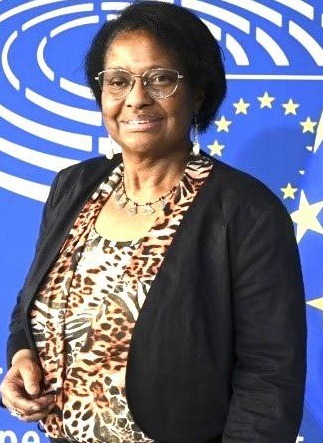
* The author, Dr Pierrette Herzberger-Fofana, is a Honorary Citizen of the city of Erlangen and former Member of the European Parliament (2019–2024), former Vice-Chair of the Committee on Development, Co-President of the European Parliament’s Anti-Racism and Diversity Intergroup (ARDI). A specialist in issues relating to racism, the duty to remember and women and Development, Dr Herzberger-Fofana holds two master’s degrees, one in German studies (German sociology) from the Sorbonne in Paris and the other in sociolinguistics from the University of Trier, (Trier, Germany). She also holds a PhD from Friedrich-Alexander University of Erlangen-Nuremberg in Francophone women’s literature. Her thesis, published under the title ‘Littérature féminine francophone d’Afrique Noire’ (Paris: L’Harmattan), was awarded the Grand Prix of the President of the Republic of Senegal for the Sciences in 2003, and she was the recipient of the Helene Weber Prize, presented by the current President of the European Commission in Berlin in 2009.