 THE AFRICAN COURIER. Reporting Africa and its Diaspora! The African Courier is an international magazine published in Germany to report on Africa and the Diaspora African experience. The first issue of the bimonthly magazine appeared on the newsstands on 15 February 1998. The African Courier is a communication forum for European-African political, economic and cultural exchanges, and a voice for Africa in Europe.

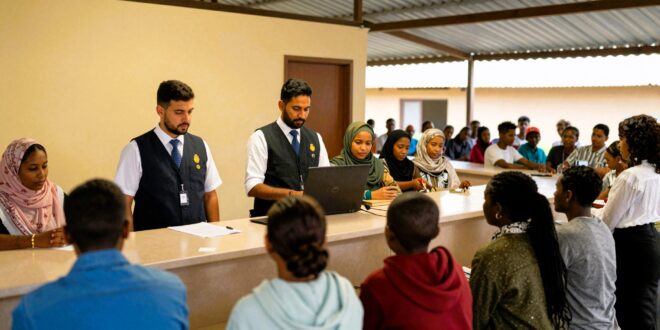
New UNHCR figures released ahead of World Refugee Day on 20 June show a four percent drop in global displacement in 2025 — the first reduction in ten years. The data offers a moment of cautious optimism, but rights groups warn that the numbers mask deepening long-term crises and deteriorating conditions across Europe.
For the first time in ten years, the number of forcibly displaced people worldwide has fallen. According to the United Nations High Commissioner for Refugees (UNHCR), total global displacement stood at approximately 117.8 million people by the end of 2025 — a reduction of around 5.4 million, or four percent, compared with the previous year. The figures were published this week ahead of World Refugee Day on 20 June.
While the decline marks a genuine turning point after a decade of unbroken growth, UNHCR was measured in its assessment. The agency’s newly appointed High Commissioner, Barham Salih, warned that millions of refugees remain trapped in protracted displacement with no clear path forward. “Asylum and protection are life-saving and not up for debate,” he said, “but we cannot accept a future in which millions of refugees remain trapped for years or decades without realistic prospects of rebuilding their lives.”
Returns Drive the Numbers Down
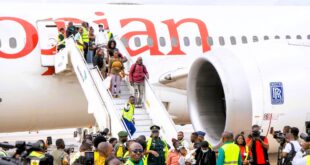
The primary driver of the decline was a dramatic surge in returns. Around 14.7 million refugees and internally displaced persons (IDPs) went back to their places of origin during 2025 — a fifty percent increase on 2024 and the largest wave of returns recorded by UNHCR since 1965. Over ninety percent of these returns were concentrated in just six countries: the Democratic Republic of the Congo (3.6 million), Sudan (3.6 million), Syria (3.3 million), Afghanistan (2 million), Ukraine and Myanmar.
Syria accounted for a particularly striking shift. Following the collapse of the Assad government in December 2024, around 1.3 million Syrians returned home — nearly triple the figure from 2024 — reducing the global Syrian refugee population from six million to 4.9 million.
However, UNHCR cautions that these returns should not automatically be interpreted as evidence of improved conditions. Many refugees returned under difficult circumstances, often driven by changing policies in host countries, deteriorating living conditions in exile, or deportation measures. Reintegration into communities affected by conflict remains a major challenge, with limited access to housing, education, healthcare and livelihoods.
Despite the headline decline, the scale of the crisis remains staggering. Of the 117.8 million displaced persons, 41.6 million are refugees or in refugee-like situations, including six million Palestinian refugees. A further 68.7 million remain internally displaced within their own countries. Seven out of ten refugees worldwide originate from just six nations: Afghanistan, South Sudan, Sudan, Syria, Ukraine and Venezuela.
Africa at the Centre of the Crisis
The burden of hosting refugees continues to fall disproportionately on low- and middle-income countries. Nearly 68 per cent of the world’s refugees live in these countries, and most remain close to their countries of origin. Countries such as Iran, Pakistan, Chad, Uganda, Türkiye, Colombia and Germany host some of the largest refugee populations globally.
Africa continues to bear a disproportionate share of global displacement. Sudan alone accounts for 3.6 million of the world’s returnees, yet the country remains engulfed in conflict, and the circumstances of many of those returns have been disputed. The Democratic Republic of the Congo similarly saw mass movement of displaced people, though security conditions across much of the country’s east remain volatile. Uganda, Chad and Kenya remain among the world’s largest refugee-hosting countries, carrying significant humanitarian burdens with limited international support.
For Africa, the refugee situation remains particularly significant. Several African countries continue to produce large numbers of refugees due to ongoing conflicts and instability, while others shoulder substantial responsibilities as host nations. Sudan, South Sudan and the Democratic Republic of Congo remain among the world’s major displacement crises.
Europe Tightens Its Grip
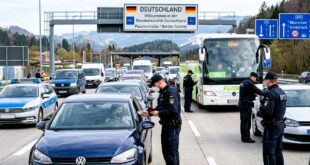
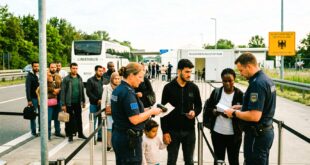
In Europe, the statistical decline in asylum seekers has been matched by a sharp tightening of policies across the continent. The EU’s new Pact on Migration and Asylum — which entered into force on 12 June 2026 — introduces accelerated border procedures, expanded biometric data collection and new mechanisms that permit member states to reduce or withdraw financial support from applicants required to be present in another member state.
Across the EU as a whole, protection was granted to 361,325 asylum seekers in 2025, a seventeen percent fall compared with the year before. The main beneficiaries were Afghans, Venezuelans, Syrians and Ukrainians. For African nationals navigating European asylum systems, the landscape is increasingly demanding: shorter processing windows, higher evidentiary thresholds and a political climate in which the right to protection — while legally intact — is under sustained pressure.
As World Refugee Day reminds us, behind every statistic is a human story of loss, resilience and hope. While the decline in global refugee numbers offers cautious optimism, durable solutions require more than returns. They demand sustained efforts towards peacebuilding, international solidarity, and policies that protect the dignity and rights of those forced to flee.
Collins Obi