 THE AFRICAN COURIER. Reporting Africa and its Diaspora! The African Courier is an international magazine published in Germany to report on Africa and the Diaspora African experience. The first issue of the bimonthly magazine appeared on the newsstands on 15 February 1998. The African Courier is a communication forum for European-African political, economic and cultural exchanges, and a voice for Africa in Europe.

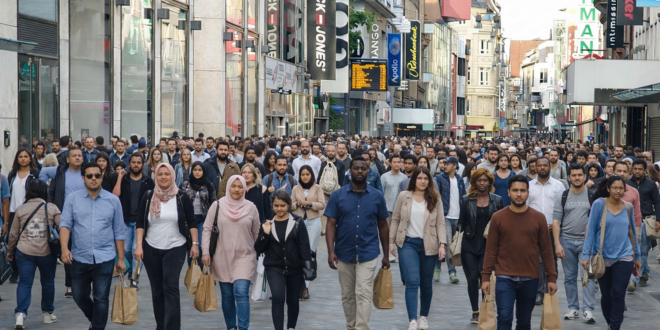
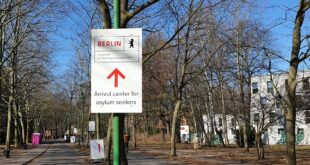
Germany has long wrestled with its identity as a nation shaped by migration. Now, new data from the Federal Statistical Office — known by its German acronym Destatis — has put a sharper number on just how profoundly that transformation has taken hold: more than one in four people living in the country has an immigration history.
According to the 2025 microcensus, 21.8 million residents — 26.3 percent of Germany’s population of approximately 83.5 million — either immigrated themselves or were born to two immigrant parents. That represents a rise of half a percentage point compared to 2024, when the figure stood at 25.6 percent, continuing a long upward curve that has seen the migrant-background population nearly double since 2005, when it totalled around 13 million.
Who Is Counted and How?
Destatis defines a person as having a migration background if they immigrated to Germany themselves after 1950, or if both parents did so. First-generation immigrants — those who moved to the country themselves — account for 16.4 million people, or just under 20 percent of the population. A further 5.4 million, representing 6.5 percent, are second-generation: born in Germany but with two immigrant parents.
The pace of growth slowed noticeably in 2025. The first-generation category rose by just 1.7 percent — a marked deceleration from the annual average increase of around 6.2 percent seen between 2021 and 2024, a period driven largely by mass displacement from Ukraine and Afghanistan. The second-generation population, however, grew slightly faster at 3 percent, underlining the longer-term demographic embedding of migrant communities.
Who Is Coming and Why?
Among first-generation immigrants, the largest national groups come from Poland and Turkey, each with approximately 1.5 million people. Ukraine, from which over a million people fled following Russia’s full-scale invasion in 2022, now accounts for 1.3 million, while nationals from Russia and Syria each number around one million. Together, these five countries account for 39 percent of all immigrants currently living in Germany.
When asked about their primary reasons for coming to Germany, nearly a third of survey respondents cited protection-related grounds — fleeing conflict, persecution, or seeking asylum. Employment opportunities accounted for around a quarter, while family reunification brought another fifth. Education and vocational training, particularly among those who arrived after 2015, was cited by a smaller but significant share.
The African Diaspora in the Numbers
Germany’s official statistics do not disaggregate immigration data by continent in the headline Destatis figures. However, complementary data from Germany’s Central Register of Foreigners shows that close to 800,000 people of African national origin reside in the country — a figure that has grown sharply over the past decade. When German citizens of African descent are included, community advocacy organisations estimate the broader Black German and African diaspora population at well over one million.
African communities are concentrated in Germany’s major cities. Berlin and Hamburg host the largest populations, while Frankfurt, Cologne and Munich have also seen their African diaspora communities expand considerably. For this community, Germany’s migration statistics are not abstract — they represent a daily reality navigated through integration bureaucracies, labour market access, discrimination, and a political climate that has grown increasingly fraught.
A Younger, Changing Population
People with a migration background tend to skew significantly younger than the general population. Data from previous Destatis cycles found their average age to be close to nine years younger than that of residents without a migration background — a demographic fact with profound long-term implications for Germany’s pension systems, labour force, and school populations. More than a third of those aged between 20 and 39 have an immigrant background, according to earlier surveys.
This generational dimension is particularly pronounced for the second generation. Children born in Germany to immigrant parents are a growing share of the country’s youth, and their social outcomes — in education, employment, and civic participation — will be central to Germany’s future social cohesion.
Data in the Shadow of a Hostile Politics
The Destatis figures were published at a time when Germany’s political mood has shifted sharply on migration. Chancellor Friedrich Merz, whose CDU-led coalition came to power after the February 2025 elections, has repeatedly signalled a tougher approach to asylum and border policy. The far-right Alternative für Deutschland (AfD), the main opposition party in the federal parliament, has continued to surge in polls, at times overtaking the CDU as Germany’s most supported party. It calls for sweeping restrictions on immigration and ‘remigration’ — a coded term for mass deportation. That a party built on rejecting Germany’s multicultural reality can command such support, even as new data confirms that over a quarter of Germany’s residents have immigrant roots, highlights the widening gap between demographic reality and a significant strand of political discourse.
For the migrant communities, the message in the Destatis figures is both empowering and sobering. Empowering, because the numbers are impossible to dismiss: Germany’s diversity is structural, not incidental, and has been built over generations. Sobering, because the political conversation increasingly seeks to frame that diversity as a problem to be reversed rather than a foundation to be built upon.
Femi Awoniyi