 THE AFRICAN COURIER. Reporting Africa and its Diaspora! The African Courier is an international magazine published in Germany to report on Africa and the Diaspora African experience. The first issue of the bimonthly magazine appeared on the newsstands on 15 February 1998. The African Courier is a communication forum for European-African political, economic and cultural exchanges, and a voice for Africa in Europe.

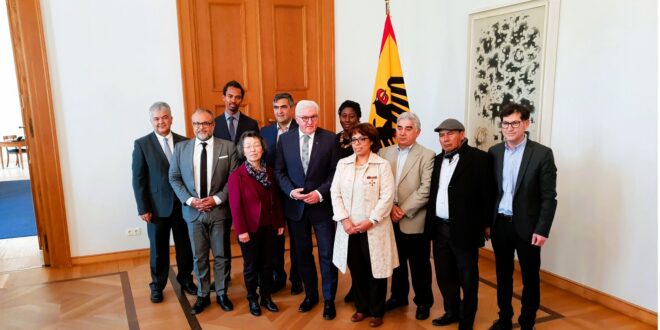
The BKMO, a nationwide network of more than 70 migrant and post-migrant groups, calls for secure funding for counselling services, emergency support for people facing threats and arrangements to help vulnerable residents relocate to other federal states.
The Federal Conference of Migrant Organisations (BKMO) has called on Germany’s federal and state governments to strengthen protection, counselling and participation for people with a migration background following recent election gains by the far-right Alternative for Germany (AfD).
In a press release issued recently, the umbrella organisation warned that the election results in Mecklenburg-Western Pomerania and Berlin raised wider questions about the security of fundamental and human rights across Germany. It urged political leaders to take preventive action rather than wait until people experience threats or discrimination.
In Mecklenburg-Western Pomerania, the AfD won 38.2 per cent of the vote, compared with 16.7 per cent in the 2021 election, making it the strongest political force in the state. In Berlin, the party secured 16.3 per cent, up from 9.1 per cent in 2023, finishing behind the Left Party, with 25.7 per cent, and the Christian Democratic Union (CDU), with 18.8 per cent.
The results followed the state election in Saxony-Anhalt, where the AfD had emerged as the strongest party with 43.8 per cent of the vote.
The BKMO said the developments should not be viewed as isolated regional events. Although the AfD performed less strongly in Berlin than in the eastern German states, the organisation argued that its substantial increase in support was no reason for complacency.
“Election results must be respected. However, government action remains bound by the constitution and fundamental rights, regardless of the majorities that emerge,” the organisation said.
Growing anxiety among migrant communities
The BKMO pointed to reports from the Saxony-Anhalt Migrant Organisations Network (LAMSA), which had received significantly more enquiries since the election about residence status, personal safety and future prospects.
In Mecklenburg-Western Pomerania, the Refugee Council had also warned before the election that counselling services and voluntary support networks were under considerable pressure, with funding from the state for 2027 still unconfirmed in many cases.
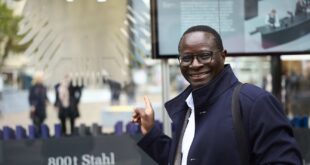
Karen Taylor, co-chair of the BKMO, said people contacting member organisations were concerned less about political negotiations than about their personal safety and future in Germany.
“They ask: Am I still safe here? Who will help me if I am threatened? Can I start again somewhere else with my family if necessary?” she said, stressing that answers were needed before incidents occurred, not afterwards.
Her fellow co-chair, Ehsan Djafari, said protection and reliable counselling should not depend on where a person lives. He called on the federal states to secure support services over the long term and establish binding procedures to ensure that people facing threats could obtain assistance quickly.
Three key demands
The BKMO has outlined three main areas for action.
First, it wants every federal state to designate an accessible contact point for people who feel threatened. It is also calling for coordinated responses through the conferences of state premiers, interior ministers and integration ministers. The organisation supports an open letter from LAMSA to the Bundesrat, Germany’s upper house of parliament, which it says has received little response from the states.
Second, the organisation wants the federal states to examine voluntary admission arrangements and relocation assistance for people who no longer feel safe where they live. Such support could include help with moving costs, access to housing, school and childcare places, recognition of existing employment arrangements and the prompt lifting of residence restrictions in exceptional cases.
Third, it is demanding secure, multi-year funding for anti-discrimination services, victim support, asylum procedure counselling and community-based advice services in both Mecklenburg-Western Pomerania and Berlin.
The BKMO is also calling on the federal government to reverse proposed cuts in the draft 2027 budget. These include a planned reduction of 79.6 per cent in funding for asylum procedure counselling and 96.1 per cent for the programme Menschen stärken Menschen (“People Strengthening People”).
Calls for political clarity and voting rights
In Mecklenburg-Western Pomerania, where the AfD emerged as the strongest party, the BKMO is urging democratic parties to rule out coalition arrangements, tolerance agreements or parliamentary majorities that depend on AfD votes.
In Berlin, the organisation has renewed its call for voting rights for all long-term residents, regardless of nationality. According to the BKMO, more than 600,000 Berlin residents who are nationals of countries outside the European Union were unable to vote in elections to the state parliament or district assemblies.
The organisation argues that political participation is essential to ensuring that people with a migration background have a voice in decisions affecting their lives.
The BKMO is a nationwide network of more than 70 migrant and post-migrant initiatives campaigning for equal participation, social justice and an open, democratic society.
Its appeal comes amid growing debate over how Germany can protect democratic institutions while ensuring that people with a migration background continue to feel safe, supported and included in society.
Source: BKMO press release, 21 September 2026. Read the original press release.