 THE AFRICAN COURIER. Reporting Africa and its Diaspora! The African Courier is an international magazine published in Germany to report on Africa and the Diaspora African experience. The first issue of the bimonthly magazine appeared on the newsstands on 15 February 1998. The African Courier is a communication forum for European-African political, economic and cultural exchanges, and a voice for Africa in Europe.

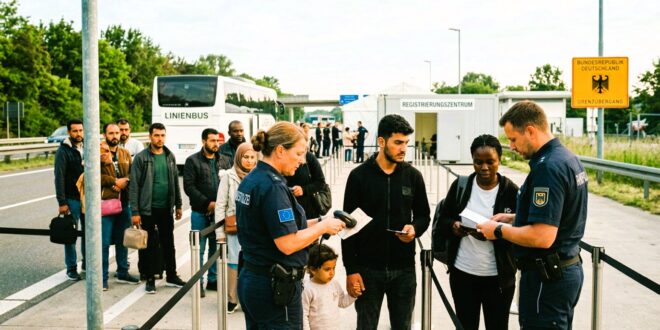
The number of people entering Germany without authorisation fell by 24 per cent in the first nine months of 2026. Border rejections also declined, according to new Federal Police figures.
The number of people entering Germany without authorisation has continued to fall, according to new figures from the Federal Police (Bundespolizei). Between January and September 2026, authorities recorded 36,523 cases of unauthorised entry at Germany’s borders, a decline of approximately 24 per cent compared with the same period in 2025, when 47,847 cases were registered.
The figures were obtained by Mediendienst Integration from the Federal Police. They cover Germany’s land, air and sea borders.
Border rejections and returns also decreased. Between January and August 2026, approximately 23,754 people were refused entry or returned after crossing the border unlawfully. This represents a decline of around 16 per cent compared with the corresponding period in the previous year.
Who is arriving in Germany?
The Federal Police figures show that the five most frequently recorded nationalities among people apprehended for unauthorised entry in the first nine months of 2026 were Ukrainian, Turkish, Afghan, Syrian and Algerian.
The French border recorded the highest number of unauthorised entries during this period.
The statistics also show that 655 of the people refused entry or returned between January and August were asylum seekers. This is a relatively small proportion of the total number of people affected by border measures.
What do the figures mean?
The decline comes amid intensified border controls introduced by Germany in recent years. Controls at all land borders have been in place since September 2024, while the government expanded the practice of refusing entry to certain asylum seekers in May 2025.
The latest figures therefore demonstrate a decline in recorded irregular entries and border rejections, but do not, on their own, establish how much of that decline is attributable to border controls or other developments affecting migration to Europe.
For migrants and refugees, the figures underline the increasingly restrictive environment surrounding entry into Germany, particularly for those seeking to cross its borders without the required authorisation.
Sola Jolaoso