 THE AFRICAN COURIER. Reporting Africa and its Diaspora! The African Courier is an international magazine published in Germany to report on Africa and the Diaspora African experience. The first issue of the bimonthly magazine appeared on the newsstands on 15 February 1998. The African Courier is a communication forum for European-African political, economic and cultural exchanges, and a voice for Africa in Europe.
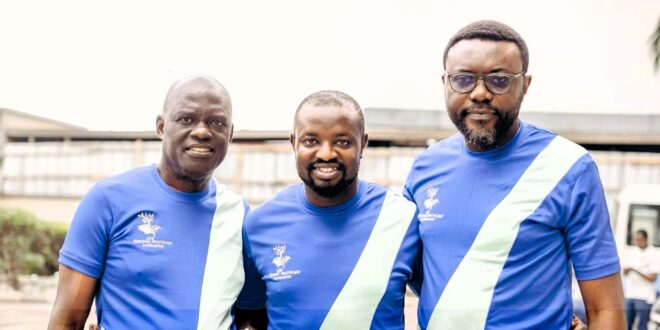
For many Nigerians living abroad, giving back to their home country is an aspiration. For Dr Adeolu Adebayo Adeboye, a US-based, board-certified trauma and general surgeon, it has become a mission – one that goes beyond providing free medical treatment to building lasting healthcare capacity in Nigeria.
Through the Shekinah Global Healthcare Foundation, which he founded and leads, Dr Adeboye mobilises doctors, nurses, other healthcare professionals and volunteers from across the world to provide free medical and surgical care to underserved communities in Nigeria. Since February 2024, the foundation and its partners have conducted four documented medical missions, reaching more than 8,500 patients and performing over 580 free surgeries.
But the numbers tell only part of the story. What distinguishes the foundation’s approach is its emphasis on working alongside Nigerian healthcare professionals, sharing expertise and strengthening local capacity so that the benefits of its interventions continue long after visiting medical teams have departed.
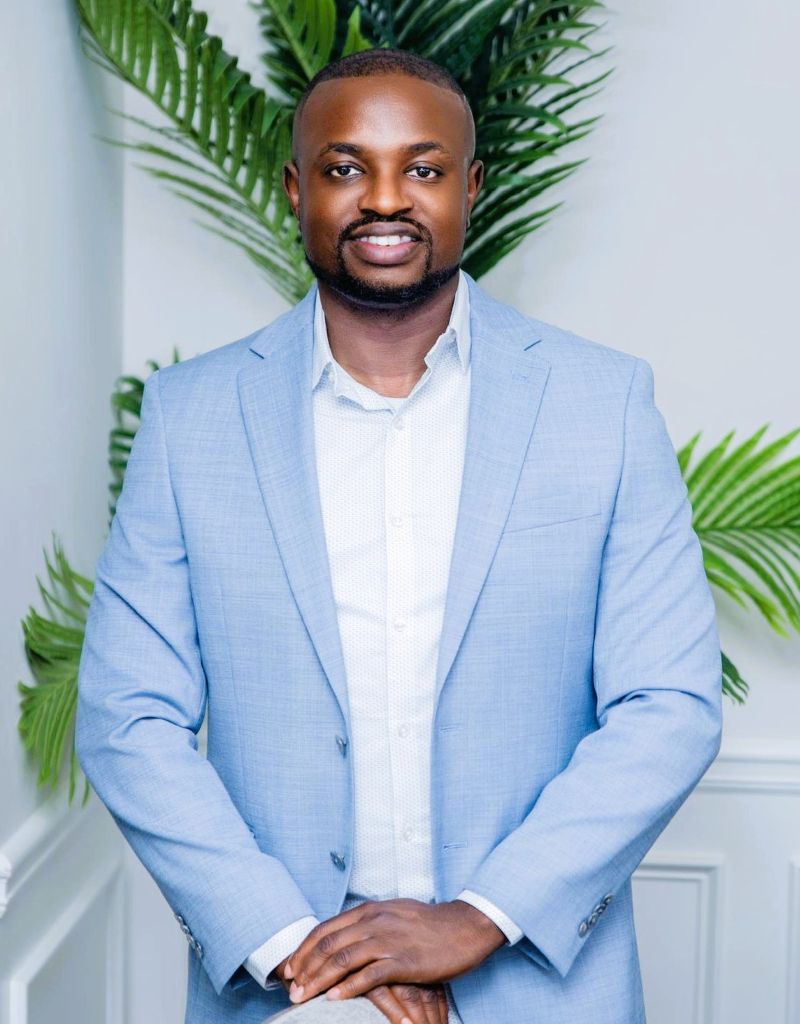
In this interview with The African Courier, Dr Adeboye discusses the personal convictions and professional experiences that inspired his work, the challenges of organising medical missions across international borders, and the importance of patient safety, accountability and sustainable funding. He also reflects on Nigeria’s efforts to mobilise its medical diaspora, including the government’s Diaspora Health Impact Initiative, and explains why meaningful diaspora engagement should not depend on professionals permanently returning home.

You are a US-based surgeon pursuing a very successful career. What was the moment that convinced you to turn that career towards free medical missions in Nigeria?
I don’t think there was one dramatic moment when I suddenly decided, “I am going to start doing medical missions.” It was more of a conviction that grew over time and eventually became impossible for me to ignore.
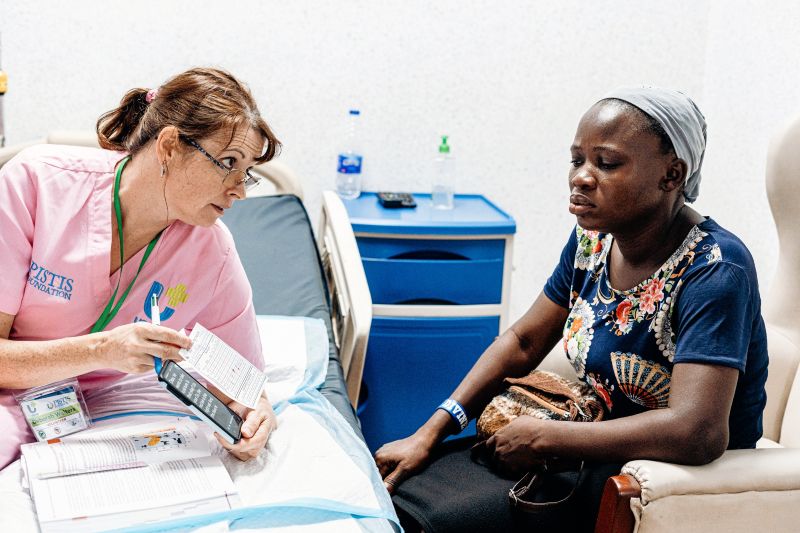
I trained and built my surgical career in the United States, where I have access to resources, technology, operating rooms and healthcare systems that allow us to treat even very complex conditions. But I was born in Nigeria, and I have never lost that connection. I knew that there were people in Nigeria living for years with conditions that were completely treatable, simply because they couldn’t afford surgery or didn’t have access to the right specialist.
As a surgeon, that is difficult to accept. When you know that someone’s hernia, fibroid, gallbladder disease, or another surgical condition can be treated, and you have the skills to treat it, it becomes very difficult to simply look away. Geography or a person’s ability to pay should not be the reason they continue to live in pain or with a disabling condition.
My Christian faith is also central to why I do this. I believe that the opportunities, expertise, relationships, and resources we have been given are not meant only for our own advancement. They also come with a responsibility to serve others.
Shekinah Global Healthcare Foundation really grew out of those convictions coming together: my connection to Nigeria, my calling as a surgeon, and my faith. I began asking a simple question: How can I take what I have been privileged to learn and the relationships I have been fortunate to build and use them to serve people who might otherwise not have access to this level of care? That question eventually became a mission, and that mission became Shekinah.
Your foundation reports that its four documented missions between February 2024 and January 2026 reached more than 8,500 patients and included more than 580 free surgeries. What impact do you think your work has had in the areas where you have operated?
First, I want to be precise about those figures because they reflect a collaborative effort. We work in partnership with Pro-Health International and other organizations, alongside many dedicated healthcare professionals and volunteers. Those numbers are not Shekinah’s alone; they represent what we have accomplished together.
Having said that, the numbers are important because they give some sense of the scale of the need and the extraordinary amount of work the volunteers have done. But I try not to think about our impact primarily in numbers, because behind every number is a person, and behind that person is often a family.
One patient has stayed with me. He came to one of our outreaches with a very large inguinal hernia that he had lived with for a long time. It had become painful enough that he could no longer do the work he depended on to provide for his family. What struck me was that he did not need anything experimental or highly sophisticated. He needed an inguinal hernia repair, an operation performed routinely in most of the world. Access to that operation was the only thing standing between him and being able to work. We repaired it during the outreach and he recovered well.
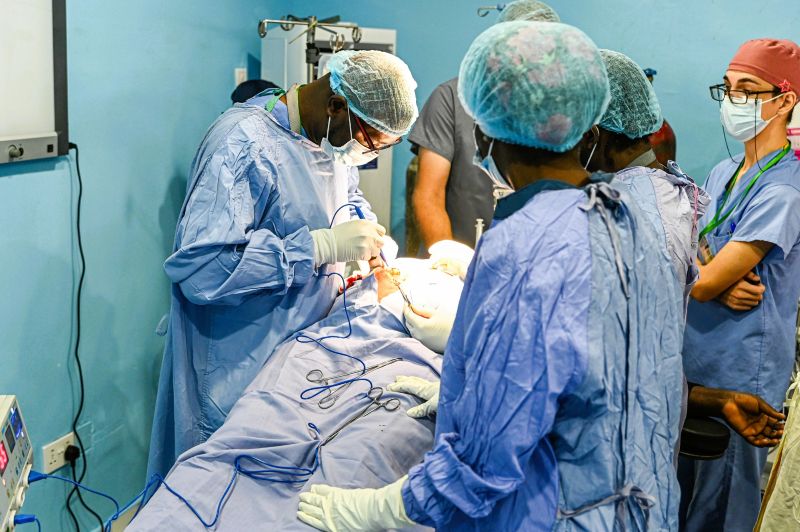
Knowing he could go back to his life and resume providing for his family meant a great deal to me, and there are many patients like him. When a woman finally receives surgery for a condition she has been unable to afford to treat, the impact reaches her children and her household. When someone’s sight is restored, you may have given that person back a degree of independence they thought they had lost. That is why I believe the true impact extends far beyond the patient we see on the operating table or in the clinic. Good healthcare has a ripple effect. It affects livelihoods, families, communities, and dignity.
But there is another part of the impact that is harder to capture in statistics. The missions bring Nigerian healthcare professionals working at home together with Nigerian and other healthcare professionals from the diaspora. We operate together, discuss difficult cases, exchange techniques, teach, learn from one another, and build professional relationships. It is a genuine exchange of knowledge and experience, and we learn from our local colleagues just as much as they learn from us.
That collaboration is very important to me because the patients we treat during a one-week mission will always represent only a fraction of the need. If we leave behind stronger relationships, shared knowledge, improved skills, and greater local capacity, then the impact can continue long after our team has gone home.
Ultimately, I want our success to be measured in two ways: Who did we help while we were there, and what remained stronger after we left? That, to me, is the kind of impact that can become sustainable.
As medical missioners that carry out treatments and perform surgeries, there are obvious questions around medical liability, hospital standards, patient records and continuity of care. How easy or difficult has it been for Shekinah to navigate Nigeria’s regulatory requirements, uphold your universal obligations and ensure patient safety?
This is something we take extremely seriously. Providing care free of charge doesn’t mean providing a lower standard of care. A patient receiving free surgery deserves the same dignity, attention to safety, and standard of professional responsibility as any patient I would treat in the United States.
We don’t simply arrive in a community and begin treating patients or operating independently. Our missions are carried out in partnership with Nigerian hospitals, physicians, healthcare organizations, and local teams. Those partnerships are essential because our Nigerian colleagues understand the regulatory environment, the healthcare system, the capabilities of the facilities, and, importantly, the patients and communities we are serving. We work through our local partners and host institutions to address the applicable credentialing, regulatory, and professional requirements for each mission.
From a clinical standpoint, we approach these missions with the same fundamental principles that guide good medical practice anywhere. Patient selection and preoperative evaluation matter. Sterility and anesthesia safety matter. Medical records and surgical documentation matter. Postoperative monitoring and follow-up matter.
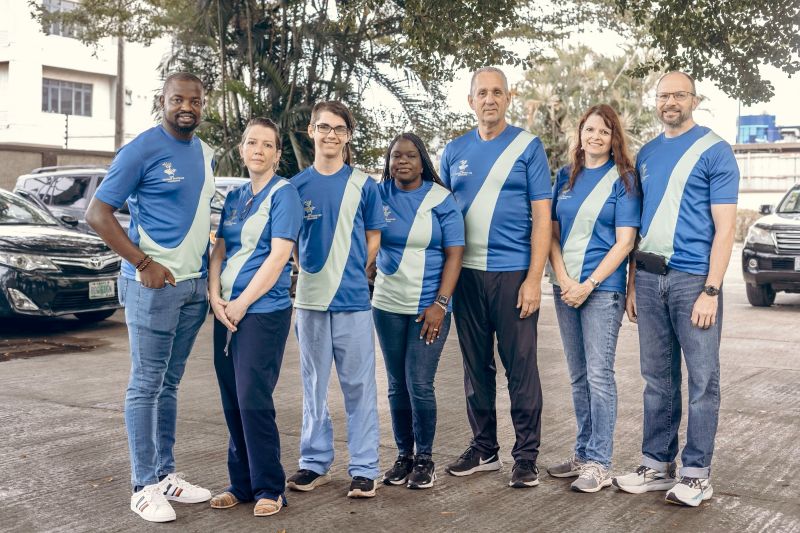
The medical records are maintained locally by our partner organizations. That is important because the patient’s care doesn’t end when the visiting team leaves. Clinical and operative information remains available locally, and we work with our partners to establish appropriate postoperative follow-up for the patients we treat. When concerns arise after a mission, those local relationships also provide a pathway for patients to be evaluated and for our teams to communicate and collaborate when necessary.
We also have to recognize the limitations of the environment in which we are working. One of the most important responsibilities of a surgeon is knowing not only what you can do, but what you can do safely. Just because we are technically capable of performing a particular operation doesn’t mean we should perform it if the facility doesn’t have the resources to safely support that patient during or after surgery. Sometimes good judgment means saying no.
There are certainly logistical and systemic challenges. You are bringing together professionals from different institutions and countries, and working within facilities with varying levels of resources. That requires planning, communication, flexibility, and a great deal of collaboration.
But the principle that guides us is actually very simple: the environment may change when we cross an international border, but our obligation to the patient does not. Patient safety has to remain the foundation of everything we do.
One of the things that distinguishes Shekinah’s model is its emphasis on training local healthcare workers rather than simply bringing foreign-based doctors in, treating patients and leaving. What exactly does the foundation do in terms of training and mentoring local health professionals, and how do you measure whether that knowledge remains after your team has gone?
I believe very strongly that the traditional “fly in, treat patients, and fly out” model has limitations. There will always be tremendous value in directly treating patients, especially when someone needs surgery now and may have no other realistic way to receive it. But if we treat hundreds of patients and leave without strengthening the people who will care for the next several thousand, then we have missed an important opportunity.
Our approach is therefore very collaborative. Local physicians, nurses, and other healthcare professionals work alongside our teams throughout the mission. In surgery, for example, we discuss patient selection, operative decision-making, surgical techniques, perioperative management, and postoperative care. Much of the teaching happens naturally in the operating room and at the bedside, but we also create opportunities for more structured education and case discussions.
At the same time, I am always careful with the word “training,” because I don’t want it to suggest that expertise flows in only one direction. There is tremendous medical and surgical expertise within Nigeria. Many Nigerian physicians and nurses routinely manage complex diseases with far fewer resources than we have available in the United States. So these missions are very much a two-way exchange. We share what we know, and we learn from them as well.
The bigger goal is to make those professional relationships continuous rather than episodic. A one-week mission should not represent the beginning and end of the relationship. We want communication, mentorship, case discussions, and collaboration to continue between missions, so that each mission builds upon the one before it.
Measuring that kind of impact is more difficult than counting operations or clinic visits. We can count how many patients we treated or how many procedures we performed, but capacity building requires looking over time at whether relationships continue, whether knowledge and techniques are being applied after we leave, and whether local teams are increasingly able to expand the services they provide.
For me, the highest measure of success is not how dependent a community becomes on Shekinah returning. It is how much stronger the local capacity becomes because we were there.
Running missions of this scale — flying in volunteers, supplies and equipment — is expensive. Your foundation provides surgery and medical care free of charge to patients. How is the work financed and how do you ensure that the model remains sustainable?
It is expensive, and that is one of the realities people don’t always see behind a free medical mission. The care may be free to the patient, but providing that care is certainly not free. Someone still has to pay for medications, surgical supplies, equipment, transportation, local logistics, patient testing, and many other costs. The fact that the patient doesn’t receive a bill doesn’t mean there was no cost associated with their care.
Our work is financed through a combination of individual donations, organizational partnerships, donated medications and medical supplies, and the generosity of people and companies who believe in what we are doing. We have been very fortunate to develop relationships with organizations that donate products and resources that would otherwise represent significant costs to the foundation.
Another important part of our model is the commitment of our volunteers. Our volunteers are not paid by the foundation, and those traveling internationally generally purchase their own airline tickets. That is an extraordinary sacrifice, particularly when you consider that many are also taking time away from their jobs and families to serve. It also allows us to direct more of the foundation’s resources toward actually providing care on the ground.
But sustainability cannot simply mean raising more money every year so that we can continue shipping everything from the United States to Nigeria indefinitely. I don’t think that is the strongest long-term model. We want to continue broadening our donor base and developing long-term partnerships, but we also want to strengthen local procurement where it makes sense, work more closely with Nigerian institutions and organizations, and invest increasingly in local healthcare capacity. Over time, I would like to see more of what we need sourced locally and more of the infrastructure for these missions rooted within Nigeria itself.
Ultimately, sustainability has both a financial and a capacity-building component. We need the resources to care for the patient who needs us today, but we also have to think about what will make that care more accessible tomorrow. Funding the operation is the easy half. Funding what remains afterward is the harder half, and it is the one that decides whether any of this lasts.
Nigeria’s 2026 National Diaspora Day centred on the theme “Harnessing Global Diaspora Medical Expertise to Strengthen Local Health Systems for National Development,” and the government has floated a Diaspora Health Impact Initiative aiming to engage 50,000 diaspora professionals. Have you or the foundation had any contact with the Federal Ministry of Health or NiDCOM on this initiative and what’s your honest assessment of whether such large-scale government frameworks can actually work?
We have not yet had formal engagement with the Federal Ministry of Health or NiDCOM specifically through the Diaspora Health Impact Initiative, but I have been encouraged by what has already been put in place. The 2026 initiative moved beyond discussion into actual deployment, bringing diaspora medical organizations into different parts of the country for clinical care, training, and health-system strengthening.
I think that is an important step. The launch of the NiDAH Portal and Diaspora Health Registry is also significant because one of the longstanding challenges has been creating a structured way to connect diaspora expertise with specific needs within Nigeria’s healthcare system. For me, the real question now is not whether a national framework can be created. That process has already begun. The question is whether it can become a durable system that functions consistently beyond a single initiative or annual event.
That will depend on several things: clear pathways for participation, efficient credentialing, credible local partnerships, accountability, continuity, and measurable outcomes. It also has to be built in partnership with the healthcare professionals already working in Nigeria. The diaspora should never be viewed as a replacement for the local workforce, but as an additional resource that can support and strengthen it.
From my experience, I don’t believe the diaspora lacks goodwill. Many Nigerians abroad genuinely want to contribute. If these new structures can consistently connect that willingness with clearly identified needs on the ground, I think the potential is enormous.
Nigeria has a very large pool of doctors, nurses and other healthcare professionals abroad. In your experience, what are the biggest barriers preventing more of them from contributing their expertise to Nigeria?
One of the biggest barriers is actually very simple: many people genuinely want to contribute, but they don’t know where to begin. A Nigerian physician in Germany, Britain, or the United States may be willing to give a week or two of their time, but practical questions arise immediately. Which hospital or organization should they work with? What credentials are required? Will the necessary equipment and support staff be available? Who will select the patients before they arrive, and who will provide follow-up after they leave?
Then there are the logistical and professional barriers: licensing and credentialing, transporting medical supplies and navigating customs, funding, time away from work and family, professional liability, and uncertainty about the capabilities of the local facility. Any one of those can discourage someone who has the expertise and the desire to help.
Trust is another major issue. People want to know that the money they donate, the equipment they send, and the time they sacrifice will actually reach the intended beneficiaries and be used effectively. That requires transparency, accountability, and credible partners on the ground.
Coordination is equally important. Having a diaspora professional who wants to help doesn’t necessarily mean you have matched the right expertise to the right need. You may have several surgeons willing to travel, while the greater need in a particular hospital may actually be anesthesia, nursing education, pathology, radiology, biomedical engineering, or stronger postoperative systems.
So I don’t think the central challenge is convincing Nigerians in the diaspora to care about Nigeria because many already do. The challenge is converting that willingness into effective service by matching the right expertise to genuine local needs and building a reliable system around that contribution. If we can reduce those barriers, I think we would see far more diaspora professionals willing to participate consistently over time.
What would you want government do for organisations like Shekinah to make your work more effective?
Some of the commitments government has recently made are actually very encouraging, particularly around simplifying licensing for diaspora professionals, facilitating locum arrangements, and supporting customs and visa waivers for medical missions. Those are exactly the kinds of barriers organizations like ours encounter.
What I would want now is consistent implementation. For a surgeon or other healthcare professional coming to Nigeria for one or two weeks to serve, the credentialing process should remain rigorous, but it should also be clear, predictable, and efficient.
The same applies to donated medical supplies and equipment. Organizations can receive very valuable resources from international partners, but those resources only help patients if we can get them into the country and to the facilities where they are needed efficiently. If the recently announced customs support can work consistently for verified humanitarian organizations, that could make a significant difference.
Beyond that, government can help with coordination and identifying need. Reliable information about surgical backlogs, underserved communities, and workforce gaps would allow organizations like ours to deploy limited resources much more strategically. I would also like to see government encourage multiyear partnerships between credible organizations and particular hospitals or health systems. That creates continuity and makes capacity building much more realistic.
So for me, it is not necessarily about government creating more programs. Some important structures and commitments are already emerging. The next step is making them work consistently, transparently, and in a way that organizations on the ground can actually access.
And if we speak again five years from now, what would success look like for Shekinah Global Healthcare Foundation — not in patient numbers, but in terms of what Nigeria’s health system no longer needs your foundation to do?
This is probably my favorite question because it gets to the heart of what sustainability really means. Five years from now, I would not define success by saying that we performed 5,000 or 10,000 surgeries. I would define success, in many ways, by the things we are no longer needed for.
If a hospital where we once had to bring specialists now has local teams routinely performing those procedures, that is success. If equipment and supply chains that once depended heavily on donations are increasingly available and sustainable locally, that is success. If physicians and nurses we have worked alongside are training the next generation and passing that knowledge forward, that is success. And if communities that once had to wait for a medical mission can access high-quality care within their own healthcare system, that is perhaps the greatest success of all.
I don’t want Shekinah to create dependency. I want us to help build capacity. There will probably always be underserved communities and opportunities to serve, so I don’t imagine that the work itself will simply end. But the nature of the work should evolve. We should move from repeatedly filling the same gaps to helping close those gaps permanently. And as one community or institution becomes stronger, perhaps our role shifts to another place where the need is greater.
My hope is that one day we can return to places where we once had to bring specialists, supplies, equipment, and an entire team, look at what has developed there, and be able to say, “They don’t need us for this anymore.” For an organization like ours, that would not mean we had become irrelevant. It would mean we had succeeded.
_______
Readers can learn more about the work of Shekinah Global Healthcare Foundation on its website https://shekinahglobalfoundation.org/ or contact the Foundation through its email at sghfva25@gmail.com.