 THE AFRICAN COURIER. Reporting Africa and its Diaspora! The African Courier is an international magazine published in Germany to report on Africa and the Diaspora African experience. The first issue of the bimonthly magazine appeared on the newsstands on 15 February 1998. The African Courier is a communication forum for European-African political, economic and cultural exchanges, and a voice for Africa in Europe.

News analysis | The African Courier | 2 October 2026
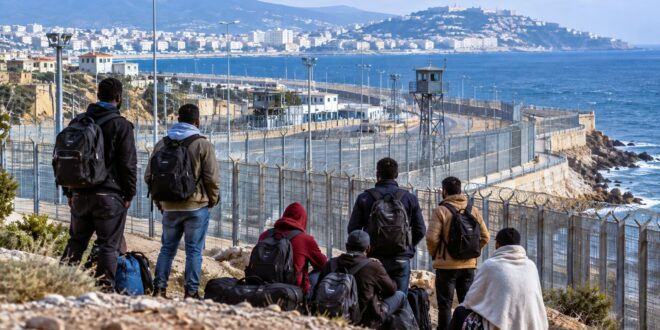
The mass arrival of migrants in Spain’s North African enclave of Ceuta in July has become a catalyst for a new phase in European migration policy. Across the EU, governments are pushing harder for deportations, return hubs outside Europe and stronger border controls, while debate over asylum access and regularisation is becoming increasingly restrictive.
Between 30 and 31 July, tens of thousands of people crossed from Morocco into Ceuta by land and sea. Spanish authorities have cited figures of around 72,000, while the European Parliament later referred to approximately 80,000. The figures remain disputed, partly because the episode involved people entering and subsequently returning to Morocco.
The overwhelming majority of those who crossed were young Moroccan men, and most returned to Morocco within hours or days. A smaller group stayed. Estimates of those remaining on 4 August were 3,000 to 5,000, largely men from sub-Saharan Africa, plus 862 minors. Those who want protection are in legal and practical limbo, with limited support or clear pathways to claim it.
The human cost of the crossing was severe. Spanish authorities reported dozens of deaths, while the NGO Caminando Fronteras put the overall toll at 141, including people who died while attempting to cross or in the surrounding border area. Human Rights Watch and Amnesty International have also raised concerns about conditions, access to asylum and alleged abuses during the response.
What caused the mass crossing?
The causes of the sudden mass crossing remain unclear. Moroccan border forces appeared to be missing at their posts on 30 July, according to media reports, and analysts say a crossing of this scale would be hard without deliberate laxity in controls on the Moroccan side. Government officials in Rabat said they did not intend to facilitate the crossings.
Spain’s own legal context also mattered. A Supreme Court ruling issued on 29 June and published on 8 July limited immediate returns to people who breach a physical border, not those arriving by sea or swimming. Sea pushbacks, the immediate return of people caught in the water, had been systematic in Ceuta for years. The Court held that this summary procedure applies only to people crossing physical containment structures such as fences, and the sea is not one.
After the ruling, Civil Guard agents reportedly stopped the practice. For a would-be migrant, the risk calculation shifted. Swimming around the breakwater no longer meant being turned back within minutes. Subsequently, posts circulated on social media saying there would be no immediate expulsion of migrants who reach Ceuta and Melilla by swimming. If people believe they cannot be returned on the spot, the best strategy is to cross at the same time as thousands of others. Authorities cannot process or even intercept everyone, and each additional person lowers the chance for the rest of being stopped. This helps explain how a trickle in the days following the court ruling turned into tens of thousands in hours.
The ruling was not sufficient on its own. Morocco’s border cooperation is politically conditional, and observers noted that Moroccan forces appeared to be missing on 30 July. In May 2021, about 8,000 people crossed into Ceuta when Rabat loosened controls, and that was under the old pushback regime. This suggests the decisive variable is enforcement on the Moroccan side.
From Ceuta to EU policy
The political repercussions of the mass crossing were swift. On 1 August, Italy and Denmark promoted a letter signed by 22 European heads of government calling for stronger action against irregular crossings, migrant-smuggling networks and factors they said could encourage further arrivals.
The most tangible development has been the acceleration of plans for “return hubs” outside the EU. Germany, Denmark, Austria, Greece and the Netherlands agreed in Copenhagen in September on a common approach and are seeking agreements with non-EU countries. Rwanda and Uganda have been mentioned in media reports as possible partners, although no host country has been officially announced. The five governments say they aim to have the system ready for transfers in 2027.
The idea is significant because it would move part of the EU’s return system beyond European territory. People who have no legal right to remain could potentially be transferred to a partner country while arrangements are made for their eventual return.
The EU has now provided a legal framework for such arrangements. On 1 October, the Council formally adopted new return rules allowing member states to establish return hubs in non-EU countries, provided agreements respect international human-rights standards and the principle of non-refoulement — the prohibition on sending someone to a country where they face persecution or serious harm. Unaccompanied minors are excluded from such arrangements.
A broader hardening of policy
Return hubs are only one part of the shift. The European Commission has proposed an emergency response framework for situations involving large-scale or allegedly “weaponised” movements of migrants and plans to strengthen Frontex, particularly in relation to returns.
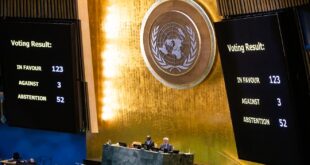
The European Parliament also adopted a resolution on 17 September describing the Ceuta episode as involving the “instrumentalisation” of migrants and calling for stronger protection of the EU’s external borders. The resolution passed by 339 votes to 225, with 16 abstentions.
However, the political narrative around Ceuta remains contested. Human-rights organisations argue that the crisis should not be used to justify restricting asylum or outsourcing European responsibilities. Amnesty International, for example, has rejected claims that Spain’s regularisation policies were responsible for the surge, while Human Rights Watch has stressed that people arriving in Ceuta must have access to asylum procedures and individual assessment.
There is another important piece of context. Frontex reported that irregular border crossings into the EU were 37% lower during the first seven months of 2026 than during the same period in 2025, although its figures did not include the exceptional Ceuta events.
For Africans and other migrants seeking protection or residence in Europe, the significance of Ceuta therefore extends far beyond the Spanish enclave. The episode has strengthened political arguments for a European migration system centred more heavily on deterrence, faster returns and cooperation with countries outside the EU.
The crucial question now is whether these measures will produce a more effective return system while preserving access to asylum and fundamental rights — or whether Europe’s migration controls will increasingly shift the practical burden of migration management onto countries outside the EU.
Why this matters for Africans in Europe
Three consequences stand out for African and diaspora readers.
First, Africa is not only the origin of this debate but the intended location of its solution. Uganda and Rwanda are being discussed as hosts. Uganda already hosts about 1.8 million refugees and asylum-seekers, so the capacity question is real. Past deals also show that Uganda’s foreign ministry has said it prefers to receive people from African countries, which suggests the first people sent could be African nationals. Amnesty International warns EU migrant return hub plans risk human rights abuses in Rwanda and Uganda.
Second, people in Germany are directly involved. Germany is one of the five governments behind the hubs, so rejected asylum-seekers here are the group this system is designed for. We covered the Return Regulation’s effect on them earlier this week.
Femi Awoniyi
READ ALSO EU adopts new return rules: What rejected asylum seekers should know