 THE AFRICAN COURIER. Reporting Africa and its Diaspora! The African Courier is an international magazine published in Germany to report on Africa and the Diaspora African experience. The first issue of the bimonthly magazine appeared on the newsstands on 15 February 1998. The African Courier is a communication forum for European-African political, economic and cultural exchanges, and a voice for Africa in Europe.

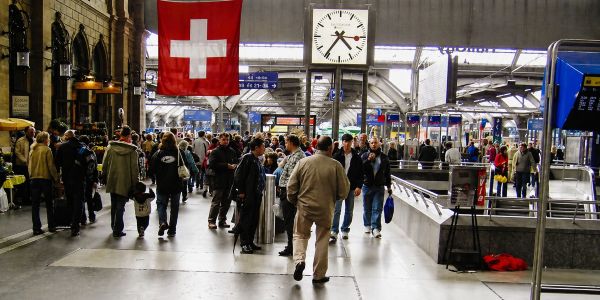
Swiss voters will head to the polls on 14 June to decide on Europe’s most controversial immigration referendum this year: a constitutional initiative that would place a hard ceiling on the country’s population.
The proposal, titled “No to Ten Million Switzerland,” was launched by the right-wing Swiss People’s Party (SVP), Switzerland’s largest political force. It seeks to ensure that the country’s permanent resident population does not exceed 10 million before 2050.
Switzerland currently has around 9.1 million residents, with people born abroad making up roughly 30 per cent of the population. Under the initiative, if the population reaches 9.5 million before 2050, the federal government and parliament would be required to take action to halt further growth.
The SVP argues that rapid demographic growth — a 25 per cent increase since 2000 — has put housing, transport networks and public services under growing pressure in the country.
What a “Yes” Vote Could Mean
If approved, the initiative would trigger far-reaching measures once the population reaches 9.5 million. These could include suspending the right to bring family members from abroad, restricting the asylum system, limiting naturalisation opportunities for permanently admitted refugees, and, as a last resort, renegotiating or even ending Switzerland’s Free Movement of Persons agreement with the European Union.
Migration at the Centre of the Debate
Immigration has long been a politically sensitive issue in Switzerland, where foreign nationals make up one of the highest population shares in Europe. At the same time, the country depends heavily on migrant labour in sectors such as healthcare, hospitality, construction, agriculture and technology.
Opponents warn that a strict population cap could worsen labour shortages and harm the economy. Business organisations, labour unions and the Swiss government have all urged voters to reject the proposal, arguing that Switzerland needs skilled workers and flexible migration policies to remain competitive.
Wider European Significance
The referendum reflects a broader trend across Europe, where migration and integration debates are reshaping political agendas.
For migrants and diaspora communities, the stakes are immediate. A “yes” vote could restrict family reunification, complicate residence renewals and make it more difficult to obtain permanent status.
Recent polling suggests a close contest. A December 2025 survey found 48 per cent in favour, 42 per cent opposed and 10 per cent undecided. Whatever the result, the vote underscores growing political pressure over migration across Europe.
Felix Dappah
READ ALSO Spain’s Amnesty Programme Offers Legal Status to 500,000 Migrants