 THE AFRICAN COURIER. Reporting Africa and its Diaspora! The African Courier is an international magazine published in Germany to report on Africa and the Diaspora African experience. The first issue of the bimonthly magazine appeared on the newsstands on 15 February 1998. The African Courier is a communication forum for European-African political, economic and cultural exchanges, and a voice for Africa in Europe.

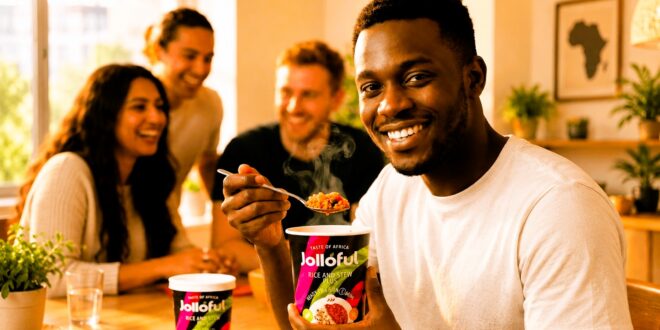
The story of Jolloful Foods began not in a boardroom, but around a breakfast table in Berlin in the 1990s. Every Saturday, a diverse group of professionals from 17 countries gathered at a French restaurant near Savignyplatz, to share stories and explore Berlin. Then one day, a simple question about the absence of African food planted a seed.
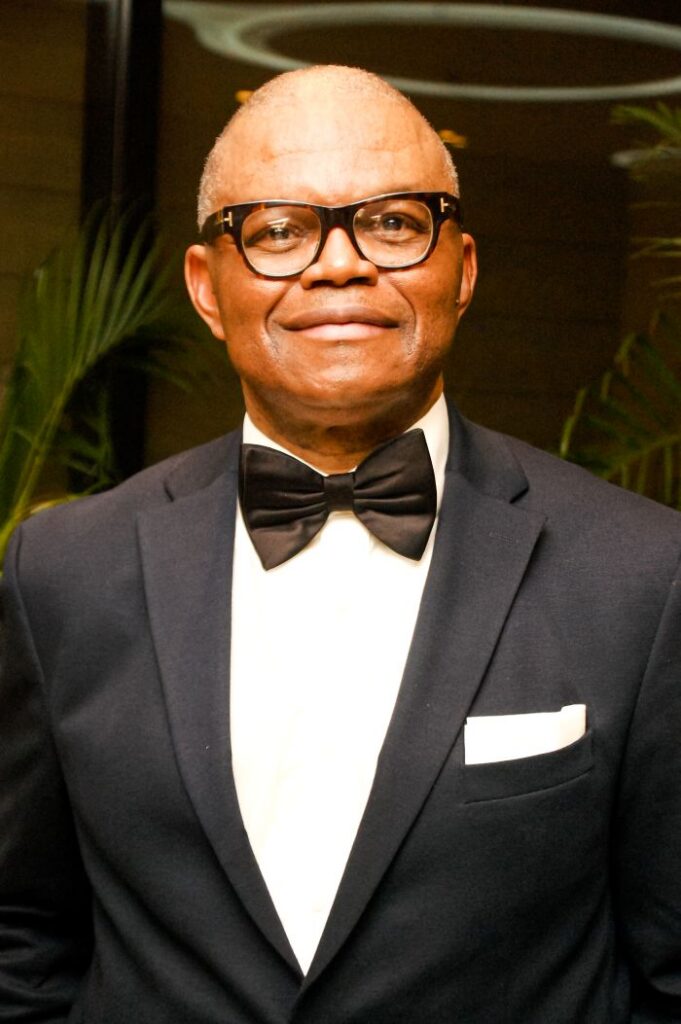
A concert pianist from Denver, a Wall Street Journal reporter and a CNN/CNBC professional from Phoenix asked Chris Osondu, who convened the group: “We come here every Saturday and eat French food. How do we taste African food?”
Osondu took the question seriously. After consulting a West African chef, the group gathered at his home for a tasting. The food was a hit, but it prompted another question: “Where can we find this food in Berlin?”
At the time, African restaurants were relatively few and largely focused on individual regional cuisines. The group decided to explore the continent’s culinary diversity themselves. A gathering brought together food from Cameroon, Zimbabwe, Kenya and Ghana, creating a memorable feast of West, East and Southern African flavours around one table.
The group eventually dispersed and the restaurant closed. Nearly two decades later, some members reunited in Berlin and, remarkably, asked the same question: Where can we get African food? Their search showed that the gap they had identified in the 1990s had still not been fully addressed.
Subsequent research identified two major barriers facing African food: accessibility and trust. African food was not widely available, while inconsistent quality and limited standardisation could make consumers hesitant to try it.
The opportunity became obvious to any astute entrepreneur: standardise African food, produce it at scale and make it convenient without losing its authenticity.
With younger consumers seeking convenience, a growing Afro-curious diaspora and the global popularity of African music, fashion, football and film, food is obviously the next frontier.
That was how Jolloful Foods GmbH came into being. In this interview, CEO Chris Osondu looks back at the journey and explains his ambition to bring African food to tables around the world.

What inspired you to start Jolloful Foods?
Our vision is to build closer understanding between Africa and the rest of the world — food is one of the most direct ways to do that. Our mission is to bring African food to dinner tables everywhere, through standardisation and innovation.
What do you mean by standardisation?
African food in Europe has always struggled with the same problem: quality varies wildly from one kitchen to the next, so people never know what they’re getting. We wanted to fix that. Every Jolloful meal is produced under strict European food regulations, so you get the same great taste every time — no compromise, no long hours in the kitchen, just an authentic African meal, ready when you are.
Beyond the food itself, this is also about integration. When people from different backgrounds share a table, that’s cultural proximity in action — and that’s what we’re ultimately trying to build.
Why did you choose the name “Jolloful”? It immediately reminds many Africans of jollof rice. What does the name represent for you?
Jolloful goes beyond Jollof rice; it’s a way of life. Jolloful stands for overall satisfaction — tasty, trusty, healthy, and plant-based. To “Jollof” means to enjoy, and “Jollofing” captures the thrill of reaching the peak of enjoyment. We named our platform Jolloful because it embodies full enjoyment.
Jollof rice is famous for its cross-border rivalry (Nigeria vs Ghana vs Senegal). Whose Jollof or stew recipe are you ultimately trying to capture?
Driven primarily by our goal to bring African cuisine to the global dinner table, we did not set out to showcase a particular country cuisine, rather we created products that would appeal to the global consumers, while maintaining the authenticity of the flavors. Our product is a blend of all these countries’ recipes, working with an award-winning Chef that understood that the brief of plant-based, healthy and authentic taste.
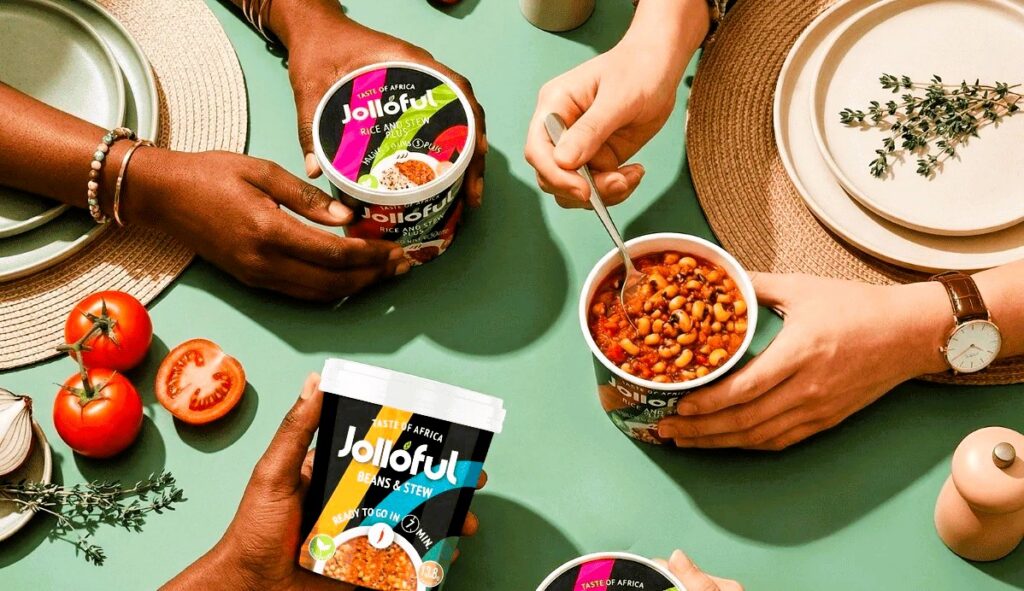
What was the biggest technical or culinary challenge in translating a slow-simmered stew into a 5–7-minute ready meal without losing authenticity?
As pioneers of the African Ready to Eat Meals in this form, we engaged in a very expensive and lengthy Research and Development. The blend of freeze-dry and taste bud technologies is complex and requires extraordinary understanding to strike the right balance.
The easiest access to your products would be to be on the shelves of supermarkets. What are you doing to get Jolloful products into mainstream European retail?
We’re currently working with Hamburg based food retail consulting company that specializes in listing products in large German and Austrian retailer markets – such as Edeka, Rewe, Lidl, Spar, Kaufland etc. The process is rigorous, thorough and it is going well.
Beyond the four current products, what’s next on the menu? Any plans for other iconic dishes — egusi, waakye, injera?
We are a pan-African food maker driving standardization of African foods for globalization. At Jolloful Foods, we unite people from diverse regions and countries through the unique flavors of African cuisine. At Jolloful, we ensure that every visit leaves your taste buds fulfilled with flavors from Cairo to Cape Town, and Nairobi to Dakar.
Our focus is African Ready to Eat Meals, that are based on Rice, Wheat & Legume crops. As most regions of Africa have cuisine made from these crops, we strive to bring as many of them as possible from all the regions to the global dinner table. Currently we have about 17 dishes in our product pipeline.
Every entrepreneur faces obstacles. What were the biggest challenges in turning your idea into a commercial food business?
The biggest challenge is the know-how of the business you’re going into. Most of us dream and do not know how to make it a possibility. Secondly, strong relationship with people – you need to have a sponsor, not necessarily an investor, the real support comes from friends & family. Once they back you, you have a great chance to succeed. Finally, you need a professional team to support you build the dream and manage investors funds.
What advice would you give to Africans in the diaspora who are thinking about launching their own businesses?
It is possible and doable! You need to bring a high level of conviction that titters around stubbornness. You need people, both supporters and professionals as they will change the entire landscape. Money without good people is a gamble!
Finally, if you had just one minute to convince someone who has never tasted African food to try Jolloful, what would you say?
Authentic African cuisine, packed with fiber and protein! Not your overhyped instant noodle with low nutritional value.
Femi Awoniyi
READ ALSO Jolloful brings authentic African flavours to German homes