 THE AFRICAN COURIER. Reporting Africa and its Diaspora! The African Courier is an international magazine published in Germany to report on Africa and the Diaspora African experience. The first issue of the bimonthly magazine appeared on the newsstands on 15 February 1998. The African Courier is a communication forum for European-African political, economic and cultural exchanges, and a voice for Africa in Europe.

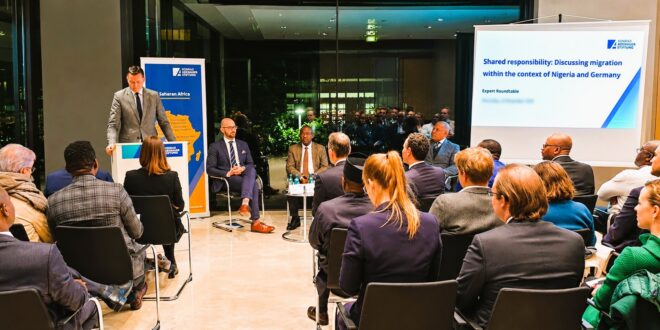
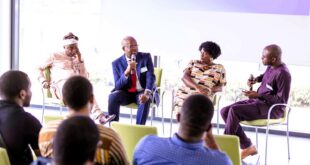
At the 2026 ISD World Summit, which took place on 31 October 2026 in Berlin, Femi Awoniyi, Publisher and Editor-in-Chief of The African Courier, delivered a presentation on the role of African media and diaspora communities in shaping international cooperation. Drawing on his experience in journalism and diaspora engagement, spanning more than three decades, he explains how the diaspora media and communities can become strategic contributors to development and diplomacy. We reproduce his paper below.

Thank you for the opportunity to share my thoughts on this important subject. I speak today from the perspective of a journalist who has spent many years reporting on African affairs and working with African diaspora communities in Germany.
I believe that one of the major challenges facing Africa in its international relations is not simply a lack of resources or opportunities. It is also the question of representation: who speaks for Africa, who defines its interests, and who shapes the narratives through which the rest of the world understands the continent?
This is where I see a critical role for African media and diaspora communities.
1. Who shapes the international narrative about Africa?
International cooperation is not simply about agreements between governments, development programmes or diplomatic exchanges. It is also about who defines the issues, whose interests are represented, whose voices are heard and who has the power to shape the narratives surrounding these relationships.
This brings me to two important actors whose potential is not always fully recognised in international cooperation: African media and African diaspora communities.
My central argument is that Africa must not remain merely the subject of international discussions. Africans must be active participants in defining the questions, shaping the narratives and proposing solutions.
African media and diaspora communities have important roles to play in making this possible.
2. African media: Reclaiming the narrative about Africa
For too long, international narratives about Africa have been dominated by perspectives originating outside the continent, particularly in Western media.
This is not to suggest that Western reporting is necessarily always inaccurate or that African media should avoid critical scrutiny of developments on the continent. Rather, the problem is the imbalance in whose perspectives dominate international public discourse.
Africa is frequently presented through familiar frames: poverty, conflict, corruption, migration, disease and humanitarian crises. These are real issues that deserve serious reporting. But Western media often deliberately leave out the role that Western actors play in these crises.
Moreover, these problems often associated with the continent do not represent the whole African experience. Africa is also a continent of ideas, innovation, entrepreneurship, cultural creativity, economic opportunities and people actively developing solutions to their challenges.
When African perspectives are missing or marginalised, international audiences receive an incomplete picture. This can influence how Western societies understand Africa and, ultimately, how their governments formulate policies towards the continent.
The responsibility of African media
African media must take greater responsibility for presenting the continent’s perspectives on issues that affect its people and its future.
This means:
- Setting the agenda: African media should identify and frame the issues that matter to the continent, rather than simply responding to agendas established elsewhere.
- Providing context: Reporting should explain the historical, political, economic and social circumstances behind developments in Africa.
- Amplifying African expertise: African academics, researchers, entrepreneurs, policymakers, civil society organisations and ordinary citizens should be heard in international discussions.
- Questioning international policies: African media should scrutinise decisions and policies adopted by international partners when these have consequences for African countries.
- Presenting African solutions: The continent should not be portrayed only as a recipient of assistance. Its ideas, innovations and proposals for addressing global challenges deserve international attention.
The objective is not to replace one dominant narrative with another, but to contribute to a more balanced and informed understanding of Africa.

3. African diaspora media: A bridge between Africa and the international public
Diaspora media occupies a particularly important position because it operates at the intersection of two or more societies.
Publications such as The African Courier, which serves African communities in Germany and the wider European diaspora, have an opportunity to bring African perspectives into European public discourse while also explaining European political, social and economic developments to African audiences.
This two-way communication is essential.
Diaspora media should not simply report events concerning Africans living abroad. It should also:
- Explain how policies in Europe affect African countries and their citizens.
- Draw attention to European political positions and public debates that may be detrimental to African interests.
- Provide African perspectives on migration, trade, investment, development cooperation and international relations.
- Challenge stereotypes and misinformation about Africa and its people.
- Encourage informed debate between African communities, European institutions and policymakers.
For example, discussions about migration from Africa to Europe should not be confined to border control, asylum and deportation. They should also examine the economic relationships, historical connections, labour-market needs, development policies and inequalities that influence migration.
Similarly, European development cooperation with Africa should be examined not only in terms of the money committed but also in terms of whose priorities are being served, who determines the conditions and what outcomes are achieved.
Diaspora media can help make these questions part of the public conversation.
4. From cultural representation to strategic engagement
African diaspora communities are often recognised for their contributions to cultural diversity, integration, remittances and the promotion of their countries of origin.
These contributions are important, but the potential of the diaspora goes much further.
African diaspora communities possess valuable resources: professional knowledge, international experience, business networks, language skills, cultural understanding and access to institutions in their countries of residence.
They are therefore strategically positioned to facilitate cooperation between their countries of origin and their countries of residence.
The diaspora as a bridge
Diaspora professionals can connect universities, research institutions, businesses, investors, civil society organisations and public authorities across borders.
They can facilitate:
- Trade and investment partnerships.
- Academic and scientific cooperation.
- Technology transfer and knowledge exchange.
- Cultural diplomacy and people-to-people relations.
- Professional training and skills development.
- Cooperation between local authorities and community organisations.
But there is another role that deserves greater attention.
5. The diaspora as watchdog and unofficial adviser
I believe African diaspora communities should also assume a more active watchdog role in relations between their countries of origin and their countries of residence.
International cooperation is not automatically fair or mutually beneficial. Agreements between countries may be presented as partnerships while the benefits, obligations and risks are distributed unequally.
Diaspora communities, because they understand both societies, are often well placed to recognise such imbalances.
Where policies, agreements or commercial arrangements between their countries of residence and their homelands appear detrimental to the interests of their home countries, diaspora organisations and media should draw attention to them.
They should inform public debate, engage relevant institutions and, where appropriate, alert policymakers in their countries of origin.
This is not about being hostile to the countries in which diaspora communities live. It is about promoting partnerships based on transparency, fairness, mutual respect and shared benefits.
The diaspora as an unofficial adviser
African diaspora communities can also serve as informal advisers to their home governments on relations with their countries of residence.
They understand the political culture, institutional structures, business environment and public debates of their host countries. They can provide insights that may not always be readily available to policymakers in their countries of origin.
For instance, Nigerians living in Germany can help Nigerian institutions understand German business regulations, investment priorities, political debates and opportunities for cooperation. They can also explain Nigerian priorities and realities to German institutions.
This knowledge can be valuable in negotiating partnerships, attracting investment and avoiding misunderstandings.
However, for this role to be effective, home governments must be willing to listen to diaspora voices and involve them in policy discussions. Diaspora engagement should go beyond ceremonial recognition and occasional consultations.
6. What needs to change? Recommendations
To translate these ideas into practical action, I would propose the following:
For African governments:
- Recognise diaspora communities as strategic partners in foreign policy and international cooperation.
- Establish structured channels through which diaspora professionals and organisations can advise relevant ministries and diplomatic missions.
- Involve diaspora experts in trade, investment, education, technology and development cooperation initiatives.
- Support independent African media and facilitate access to reliable information.
For African media and diaspora publications:
- Invest in professional, independent and evidence-based journalism.
- Develop stronger international reporting networks and partnerships.
- Give greater visibility to African experts and perspectives in global debates.
- Scrutinise international agreements and policies affecting African interests.
- Build bridges between African and international audiences through constructive dialogue.
For diaspora organisations:
- Move beyond cultural celebrations and social networking towards strategic engagement.
- Mobilise professional expertise and networks for practical cooperation.
- Build relationships with policymakers, universities, businesses and civil society in both home and host countries.
- Promote accountability and transparency in bilateral relations.
- Work collectively to ensure that diaspora contributions are recognised and integrated into national development strategies.
7. Conclusion: Partnership requires a voice
Ladies and gentlemen,
International cooperation can only be meaningful and sustainable when the parties involved have a genuine opportunity to shape its direction and outcomes.
Africa cannot afford to be a passive participant in decisions that affect its future. Its media must help shape international narratives, while its diaspora communities must use their knowledge, networks and experience to strengthen cooperation and defend the legitimate interests of their countries of origin.
The diaspora must be more than a source of remittances. It must be recognised as a source of expertise, influence, innovation and diplomatic capital.
And African media must be more than observers of international relations. They must be active participants in shaping the conversation.
Thank you.
__________