 THE AFRICAN COURIER. Reporting Africa and its Diaspora! The African Courier is an international magazine published in Germany to report on Africa and the Diaspora African experience. The first issue of the bimonthly magazine appeared on the newsstands on 15 February 1998. The African Courier is a communication forum for European-African political, economic and cultural exchanges, and a voice for Africa in Europe.


Twenty-five years after 9/11, its deepest legacy extends far beyond the wars that followed. The attacks reshaped how the world moves, trades, finances and cooperates, embedding security into the architecture of globalisation. Collins Nweke* examines how that transformation reordered the global system—and continues to shape its future.
Twenty-five years after 11 September 2001, perhaps its most enduring legacy is not simply the wars it triggered or the security institutions it created. It is that September 11 fundamentally altered one of the operating assumptions of globalisation. Before 9/11, the dominant global impulse was towards progressively easier movement: of people, capital, goods and ideas. The 1990s celebrated hyper-globalisation, increasingly porous borders and the promise that economic integration would gradually make geography less consequential. September 11 did not end that era in a single stroke, but it decisively changed its direction. Openness became increasingly conditional on security. Friction was deliberately reintroduced into the global system, and economic efficiency became more explicitly balanced against national resilience. A quarter-century later, we are still living inside that recalibration.
The Structural Shift in Global Mobility
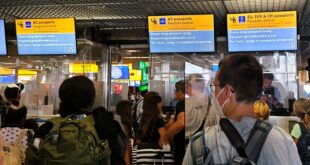
The paradox of September 11 is that it did not stop global mobility. It transformed the terms on which mobility occurs. Commercial aviation provides perhaps the most visible example. Reinforced cockpit security, intensified passenger and baggage screening, expanded no-fly and watch-list systems, intelligence-led risk assessment and increasingly sophisticated digital identity technologies made security an integral part of the travel experience. The airport ceased to be merely a transit point. It became a security frontier. This transformation imposed costs; in time, infrastructure, technology, compliance, and personal convenience; but these costs gradually became normalised. A generation of travellers has grown up knowing no other aviation environment.
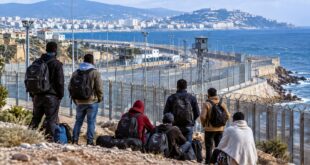
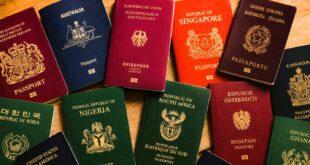
Migration underwent a parallel, and arguably more socially consequential, transformation. The traveller was no longer simply a person crossing a border but increasingly a security subject: someone to be identified, documented, screened, profiled and risk-assessed. The difficulty was that the security logic did not always preserve necessary distinctions between migration, asylum, irregular mobility and terrorism. Muslim communities, migrants and refugees frequently carried the social burden of that conflation. Policies intended to identify genuine threats sometimes contributed to suspicion of entire communities. That tension remains unresolved: how does a state exercise its legitimate duty to protect its citizens without allowing risk management to become indiscriminate profiling?
Diplomacy Acquired a Security Lens
September 11 also transformed diplomacy. Terrorism moved from being treated largely as a domestic security or law-enforcement challenge to becoming a central organising concern of international relations. Intelligence sharing, counter-terrorist financing, sanctions, extradition arrangements, aviation security and border management became embedded in bilateral and multilateral diplomacy. Countries were increasingly judged not only by their formal foreign-policy positions but also by the robustness of their financial systems, the integrity of their borders and their willingness to share intelligence. This created new forms of international cooperation. But it also altered the distribution of power.
States with control over major financial networks, intelligence capabilities, technology platforms and global payment infrastructure acquired additional instruments of influence. Security and economic diplomacy became increasingly intertwined.
When Finance Became a Security Instrument
Perhaps one of the least publicly visible but most consequential post-9/11 transformations occurred in global finance. The campaign against terrorist financing significantly strengthened the international architecture around Anti-Money Laundering and Countering the Financing of Terrorism. Banks, financial institutions and cross-border businesses faced progressively stronger obligations around customer identification, beneficial ownership, transaction monitoring and regulatory compliance. The objective was legitimate: make it harder for terrorist networks to move money through the formal financial system.
But the consequences extended far beyond terrorism. Compliance became a structural cost of participating in international commerce. For businesses and financial institutions in developing economies, particularly those already perceived as higher-risk jurisdictions, the burden could be disproportionate. Correspondent banking relationships became more cautious. Transactions attracted greater scrutiny. Regulatory reputation became an economic asset. The post-9/11 financial order therefore reinforced an important reality of modern economic diplomacy: access to the global financial system is not merely commercial; it is geopolitical.
The centrality of the US dollar and Western-dominated financial infrastructure gave sanctions and financial restrictions extraordinary reach. Over time, this has contributed—alongside broader geopolitical shifts—to efforts by emerging powers to diversify payment arrangements, expand local-currency settlement and construct alternative financial channels. The expansion of BRICS and recurring debates around “de-dollarisation” belong partly within this wider search for strategic financial autonomy.
From Efficiency to Resilience
The deeper legacy of September 11 may lie in a principle that has since travelled far beyond counterterrorism: the most efficient system is not necessarily the most secure system. Before 9/11, the intellectual momentum of globalisation heavily favoured efficiency—lower transaction costs, leaner inventories, frictionless capital flows and globally integrated supply chains. September 11 introduced resilience more forcefully into that equation. Subsequent shocks reinforced the lesson. The global financial crisis exposed systemic financial vulnerabilities. COVID-19 revealed the risks of concentrated supply chains. US–China strategic competition transformed semiconductors and technology into geopolitical assets. Russia’s invasion of Ukraine demonstrated the security implications of energy dependence.
Today, governments speak routinely of supply-chain de-risking, semiconductor sovereignty, energy security, strategic autonomy and critical-infrastructure protection. It would be too simplistic to attribute all of these developments directly to September 11. But 9/11 helped institutionalise the governing logic on which many of them now rest: economic interdependence creates prosperity, but unmanaged interdependence can also create vulnerability. That represents a profound departure from the optimism of the 1990s.
The Security State and Its Democratic Price
There is another legacy that deserves equal scrutiny. The post-9/11 period dramatically expanded the technological and legal capacity of the state to observe, collect, analyse and exchange information. Surveillance systems initially justified primarily through counterterrorism increasingly intersected with broader debates around data, privacy, digital platforms, artificial intelligence and economic governance. Here lies one of the central democratic dilemmas of the post-9/11 world.
Security institutions rarely disappear when the emergency that created them recedes. Powers accumulate. Technologies improve. Databases expand. Exceptional measures can gradually become ordinary administrative infrastructure. The policy question, therefore, is not whether governments require sophisticated security capabilities. They clearly do. It is whether democratic oversight, proportionality, transparency and civil liberties evolve at the same speed as the technologies of surveillance and control.
The Next Quarter-Century
Twenty-five years on, much of the architecture built in response to September 11 remains embedded in how the world travels, trades, finances transactions and conducts diplomacy. The greater lesson, however, is not simply about terrorism. September 11 helped move the international system from an era in which openness was often treated as an unquestioned good towards one in which openness is continuously tested against vulnerability. Borders remained open, but became more intelligent and intrusive. Finance remained global, but more monitored. Aviation continued expanding, but under permanent security protocols. Diplomacy remained cooperative, but increasingly filtered through risk.
The unresolved challenge for the next quarter-century is therefore straightforward, even if the solution is not: how do we keep societies secure and global commerce functional without making openness, human mobility, privacy and economic dynamism casualties of the architecture designed to protect them?
That may ultimately be the most important quarter-century echo of September 11. The attacks lasted hours. The systems they reordered are still evolving.
__________
The author, Collins Nweke, is a Belgian of Nigerian origin, a former Green Councillor at Ostend City Council, and a public affairs commentator.