 THE AFRICAN COURIER. Reporting Africa and its Diaspora! The African Courier is an international magazine published in Germany to report on Africa and the Diaspora African experience. The first issue of the bimonthly magazine appeared on the newsstands on 15 February 1998. The African Courier is a communication forum for European-African political, economic and cultural exchanges, and a voice for Africa in Europe.

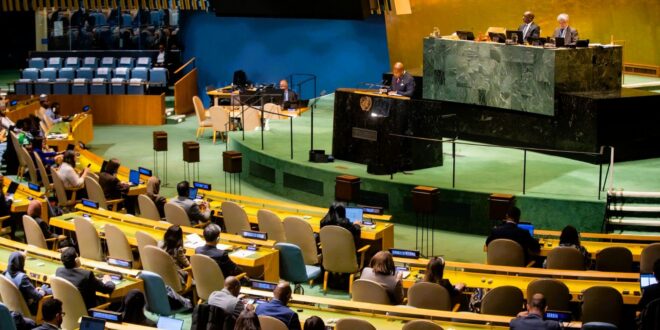
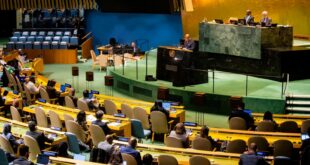
The United Nations General Assembly has elected Austria, Portugal, Trinidad and Tobago, Zimbabwe and Kyrgyzstan as non-permanent members of the UN Security Council for a two-year term beginning on 1 January 2027.
The five countries were elected on 3 June to replace outgoing members whose terms expire at the end of 2026. They will join the Security Council’s 15-member body, which bears primary responsibility for maintaining international peace and security. The Council consists of five permanent members — China, France, Russia, the United Kingdom and the United States — and ten non-permanent members elected for two-year terms.
The election brings a diverse range of regional voices to the Council. Zimbabwe will represent Africa, Trinidad and Tobago the Caribbean, Austria and Portugal Western Europe, and Kyrgyzstan becomes the first Central Asian country ever elected to the body.
Although non-permanent members do not possess veto power, they can influence international diplomacy by shaping debates, sponsoring resolutions, building alliances and drawing attention to issues affecting their regions.
Who will sit on the UN Security Council in 2027?
From 1 January 2027, the 15 members of the UN Security Council will comprise the five permanent members—China, France, Russia, the United Kingdom and the United States—and ten elected members: Austria, Bahrain, Colombia, the Democratic Republic of the Congo, Kyrgyzstan, Latvia, Liberia, Portugal, Trinidad and Tobago, and Zimbabwe.
The composition underscores a long-standing criticism of the Security Council: although Africa will have three elected members in 2027, the continent still lacks a permanent seat and veto power. The African Union’s Ezulwini Consensus continues to call for at least two permanent African seats with all the privileges enjoyed by the current permanent members.
Voices grow louder for reform
The latest vote comes amid growing criticism of the Security Council’s structure. Many countries, particularly from Africa, Asia, Latin America and the Caribbean, argue that the Council no longer reflects contemporary geopolitical realities. Critics point out that Africa, home to 54 countries and nearly one-fifth of the world’s population, has no permanent seat despite being the region most frequently on the Council’s agenda.
The African Union has long advocated the so-called Ezulwini Consensus, which demands at least two permanent African seats with full veto powers, as well as additional non-permanent seats. Similar calls have come from countries such as India, Brazil, Germany and Japan, which seek permanent representation.
Critics argue that the veto power enjoyed by the five permanent members often paralyses the Council, preventing decisive action on major conflicts. Recent divisions over Ukraine, Gaza and Syria have renewed demands for reform and for a more representative and democratic system of global governance.
While the election of new non-permanent members broadens participation in Security Council deliberations, many observers see it as only a partial answer to the larger question of reforming a body whose structure has remained largely unchanged since the end of the Second World War.
As the newly elected members prepare to take their seats in January 2027, debates over the future of the Security Council—and who should have a permanent voice in it—are likely to intensify.
Adira Kallo