 THE AFRICAN COURIER. Reporting Africa and its Diaspora! The African Courier is an international magazine published in Germany to report on Africa and the Diaspora African experience. The first issue of the bimonthly magazine appeared on the newsstands on 15 February 1998. The African Courier is a communication forum for European-African political, economic and cultural exchanges, and a voice for Africa in Europe.

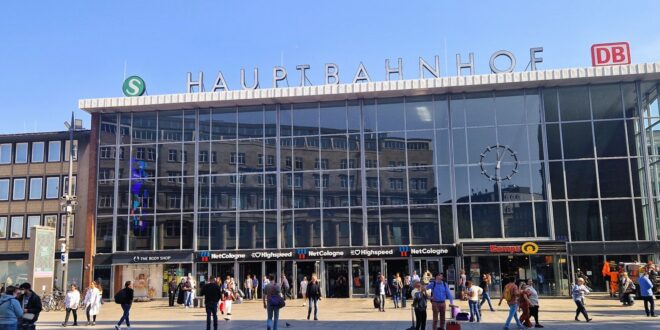
June 2026 brings a number of legal and regulatory changes in Germany that will affect daily life in practical ways — from online shopping and heating systems to salaries, asylum procedures and healthcare. Here’s a closer look at the most important developments and why they matter.

More salary transparency at work
One of the most important workplace changes coming this month is Germany’s implementation of the EU Pay Transparency Directive, which must be transposed into national law by 7 June 2026.
The aim is to reduce gender pay inequality by making salaries more transparent. For many workers — especially women and migrants who often enter the labour market with less bargaining power — this could make a real difference.
In Germany, salary negotiations are still often opaque, and many employees only discover years later that colleagues in similar roles earn significantly more.
Although Germany has not yet fully passed the national implementation law by late May, companies are already preparing for the new requirements.
For employees and job applicants, this could bring these major changes:
- Employers may increasingly have to disclose salary ranges during recruitment
- Companies will no longer be allowed to ask applicants about previous salaries
- Workers may gain stronger rights to compare pay structures within companies
- Large firms will face reporting obligations on gender pay gaps
The directive is expected to particularly benefit women and migrants, who are statistically more affected by unequal pay and opaque salary negotiations.
Expect salary ranges to become more visible in job advertisements over time.

New heating rules in large cities
From 30 June, newly installed heating systems in cities with more than 100,000 inhabitants must generate at least 65 percent of their energy from renewable sources.
The rule mainly affects homeowners replacing old oil or gas heating systems in existing buildings or constructing homes on undeveloped plots in urban areas. Existing heating systems can continue to operate, and broken systems may still be repaired. Hardship exemptions and transition periods also remain available.
For many households, however, replacing heating systems may become more expensive initially, although subsidies for climate-friendly heating technologies continue to exist.
Easier cancellation of online contracts
From 19 June, online businesses must provide a clearly visible “withdrawal button” allowing customers to cancel contracts online with a simple click.
The rule applies to:
- online shops,
- streaming and subscription services,
- digital learning platforms,
- insurers and financial service providers.
Consumers will no longer need to search through terms and conditions or write formal emails to cancel contracts. After clicking the button, users must receive electronic confirmation that the cancellation was received.
The reform is intended to stop so-called “subscription traps” and make cancelling contracts as easy as signing them. Companies that previously relied on complicated cancellation procedures will have far less room to do so.
This may sound minor, but it addresses a very common consumer frustration in Germany: signing up online in two minutes and then spending hours searching for cancellation options hidden deep inside customer portals.
New food labelling rules
Food labelling rules are also changing from 14 June.
For honey, vague descriptions such as “mixture of EU and non-EU countries” will no longer be enough. Producers must now list all countries of origin and indicate their percentage share in the product.
This matters more than many consumers realise. For years, consumer organisations have criticised misleading honey blends that gave the impression of local or premium quality while containing large proportions of imported industrial honey.
New dairy product rules will also tighten definitions for terms such as “fresh”, “pasteurised” and “lactose-free”. Manufacturers will have to label products more clearly, making comparisons easier for consumers.
Up to €6,000 subsidy for electric cars
Germany’s new electric vehicle subsidy programme, introduced in May, continues in June. Buyers and lessees can apply for grants of up to €6,000 through the Federal Office for Economic Affairs and Export Control (BAFA).
The amount depends on:
- income,
- family size,
- and vehicle type.
The programme is especially aimed at helping middle- and lower-income families switch to electric mobility.
New organ donation possibilities
New rules on kidney donation are expected to improve transplant opportunities for thousands of patients waiting for organs in Germany.
One important change is the introduction of “cross-donation” systems for kidney transplants. This allows incompatible donor-recipient pairs to exchange organs with other matching pairs.
Until now, many willing donors were unable to help family members simply because blood groups or tissue types did not match. The new system could significantly increase transplant opportunities.
Anonymous living donations will also become possible under stricter medical oversight. For thousands of patients waiting for kidney transplants, this reform could shorten waiting times considerably. Around 6,400 people in Germany were reportedly waiting for a donor kidney at the end of 2024.
Common European asylum system begins
A major EU-wide asylum reform takes effect on 12 June with the launch of the Common European Asylum System (GEAS).
The system aims to:
- standardise asylum procedures across EU countries,
- speed up decisions,
- reduce multiple asylum applications in different countries,
- and ease pressure on municipalities.
For asylum-seekers, this could mean faster processing but also stricter border procedures and more coordinated returns within the EU.
Public viewing allowed late into the night during the World Cup
Football fans will benefit from temporary exemptions to Germany’s noise protection rules during the 2026 FIFA Men’s World Cup.
Between 20 May and 31 July, municipalities may permit public viewing events to continue after midnight.
This mainly affects restaurants, fan zones and event organisers showing late-night matches from North America due to time-zone differences.
Fuel prices may rise again
Germany’s temporary fuel tax reduction — the so-called tank rebate — is scheduled to expire at the end of June. If the measure is not extended, petrol and diesel prices could rise again in July.
Summer holidays begin
The first summer holidays begin on 26 June in Hesse, Rhineland-Palatinate and Saarland.
Bavaria remains the last state to begin its summer break at the end of July.
As always in Germany, the staggered holiday calendar is designed to reduce travel congestion.
Femi Awoniyi/© AfricanCourierMedia