 THE AFRICAN COURIER. Reporting Africa and its Diaspora! The African Courier is an international magazine published in Germany to report on Africa and the Diaspora African experience. The first issue of the bimonthly magazine appeared on the newsstands on 15 February 1998. The African Courier is a communication forum for European-African political, economic and cultural exchanges, and a voice for Africa in Europe.

Ghana’s president says his country’s forthcoming African Union chairmanship could provide an opportunity to bring Africa, the Caribbean and Latin America closer through trade and economic cooperation
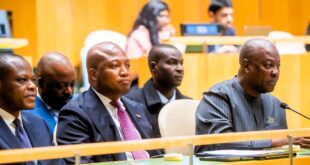
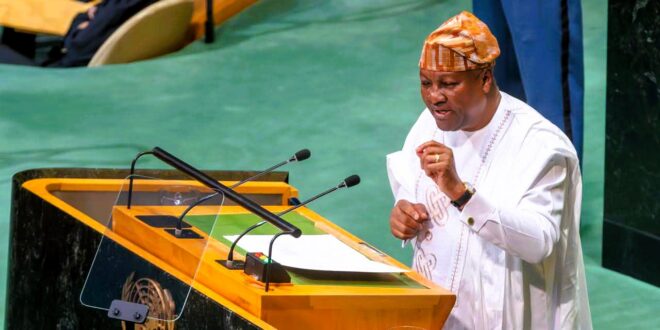
Ghanaian President John Dramani Mahama has proposed closer economic integration between Africa, the Caribbean and Latin America, saying Ghana will use its forthcoming chairmanship of the African Union to pursue stronger links between the three regions.
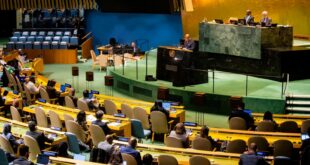
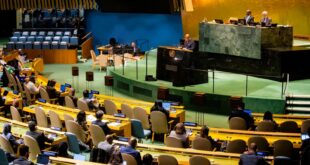
Mahama made the proposal on 23 September 2026 during a bilateral meeting with Suriname’s President Jennifer Geerlings-Simons on the margins of the 81st United Nations General Assembly in New York. Ghana and Suriname also signed a new cooperation agreement during the meeting. The development has been reported by Ghana’s Graphic Online and ModernGhana, with the latter quoting Mahama directly.
Building on AfCFTA
At the heart of Mahama’s proposal is the idea of connecting the African Continental Free Trade Area (AfCFTA) with the Community of Latin American and Caribbean States (CELAC) and the Caribbean Community (CARICOM).
The AfCFTA is already designed to create a single African market for goods and services and is one of the African Union’s principal instruments for increasing intra-African trade and industrialisation.
Mahama suggested that closer economic links with Latin American and Caribbean markets could extend that ambition beyond the continent. He argued that a wider economic grouping could give countries of the Global South greater collective influence in the international economic system.
The proposal is also connected to the growing diplomatic cooperation between Africa, the Caribbean and Latin America on issues including reparatory justice. Mahama said the coalition that supported Ghana’s recent UN initiative brought together countries from Africa, the Caribbean, South America and the wider African diaspora, creating a platform that could now be used for economic cooperation as well.
Suriname sees closer African ties
Suriname occupies a particularly interesting position in this proposed relationship. The South American country has a significant population of African and Asian descent and has maintained historical links with Ghana.
During the New York meeting, Mahama said Suriname had already been working to bring CELAC and the African Union closer together and indicated that Ghana would continue pursuing this objective when it takes over the AU chairmanship.
The two countries’ new cooperation agreement is intended to provide a framework for expanding bilateral collaboration. Suriname’s government confirmed the signing of the agreement on 24 September.
Mahama also expressed the hope that Ghana and Suriname could eventually extend visa-free travel beyond their existing arrangements for diplomatic and service passport holders to ordinary citizens. That remains an aspiration rather than an agreement announced at the meeting.
Ghana prepares to lead the AU
Ghana is scheduled to assume the rotating chairmanship of the African Union in January 2027. In his address to the UN General Assembly, Mahama said Ghana intended to use the position to promote continental integration, accelerate implementation of AfCFTA and strengthen Africa’s collective voice internationally.
The proposed Africa–Caribbean–Latin America economic connection would therefore fit into a broader Ghanaian diplomatic agenda centred on greater economic self-reliance and stronger Global South cooperation.
But the proposal is still a political and economic ambition, not an established three-region free-trade bloc. There is currently no agreement creating a single trading area encompassing the AU, CELAC and CARICOM. Turning the idea into a functioning economic arrangement would require negotiations over tariffs, rules of origin, customs procedures, standards, investment and the movement of people.
For Africa, however, the proposal points to a potentially significant strategic question: can the continent use AfCFTA as a platform for building stronger commercial relationships not only within Africa but also with regions that share historical, cultural and economic ties with it?
Mahama believes the answer should be yes. His forthcoming AU chairmanship will provide an opportunity to test how far that vision can be taken.
Adira Kallo