 THE AFRICAN COURIER. Reporting Africa and its Diaspora! The African Courier is an international magazine published in Germany to report on Africa and the Diaspora African experience. The first issue of the bimonthly magazine appeared on the newsstands on 15 February 1998. The African Courier is a communication forum for European-African political, economic and cultural exchanges, and a voice for Africa in Europe.


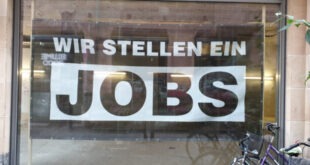
A new analysis from the German Economic Institute (IW) projects that Germany could be short 723,000 skilled workers by 2029 — almost double 2025’s shortfall — with sectors that already lean heavily on immigrant labour, from care work to construction, among the hardest hit.
Germany’s skilled-worker shortage is set to widen sharply over the next three years, according to a fresh projection released Monday by the Institute of German Economy (IW) in Cologne. Extending current labour-market trends through 2029, the institute’s economists calculate a gap of roughly 723,000 workers — nearly double the approximately 370,000 missing in 2025, and 47 per cent above 2024 levels. The institute stresses the figure is a trend projection, not a forecast, but says it signals where policy intervention is most urgently needed.
Retail sales roles top the list, with an estimated 39,100 positions likely to go unfilled, followed by childcare and early education (29,900), social work (23,600), and nursing and healthcare (18,700). Skilled trades tied to Germany’s infrastructure and climate investment plans — construction planning and supervision, automotive technology, electrical engineering and mechatronics — also face steep shortfalls, potentially complicating the rollout of the government’s multi-billion-euro infrastructure fund.
The IW points to the retirement of the postwar “baby boomer” generation as the chief driver, but is blunt about the limits of relying on immigration alone to close the gap. Job growth in infrastructure trades in recent years has been carried almost entirely by foreign workers, the institute notes — yet net migration from other EU countries turned negative in 2024 for the first time since 2008, and Germany’s latest census found roughly 1.4 million fewer residents than previously assumed, a revision the IW attributes largely to unrecorded departures, disproportionately by foreign nationals.
That combination — an ageing domestic workforce and a slowing inflow of workers from abroad — leaves recruitment from outside the EU more consequential than ever, the institute argues. “The skilled-worker shortage will worsen in many areas, and we’ll feel it daily — searching for a care place or a tradesperson,” IW labour economist Alexander Burstedde said, urging policymakers to boost work incentives at home while actively expanding qualified migration from non-EU countries.
For Germany’s African and diaspora communities, long a source of exactly the kind of labour the IW says is now indispensable, the findings sharpen an already familiar argument: that immigration policy and economic necessity are increasingly impossible to separate.
READ ALSO Germany’s labour market increasingly dependent on immigrants — Study