 THE AFRICAN COURIER. Reporting Africa and its Diaspora! The African Courier is an international magazine published in Germany to report on Africa and the Diaspora African experience. The first issue of the bimonthly magazine appeared on the newsstands on 15 February 1998. The African Courier is a communication forum for European-African political, economic and cultural exchanges, and a voice for Africa in Europe.

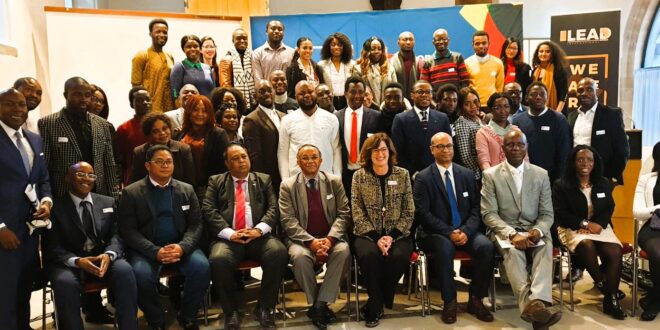
Africa’s diaspora contributes billions of dollars in remittances, but its greatest potential may lie beyond financial support. In this article, US-based civil diplomat and founder of Congo Connexion, Siam D. Yabili, shows how Africans abroad can turn their professional expertise, international networks and access to influential institutions into meaningful, accountable action that strengthens communities and helps shape Africa’s future.
A remittance can keep a family alive. It cannot, by itself, reform the system that made survival so expensive. For decades, the African diaspora’s contribution to the continent has been measured largely by money sent home. That contribution is indispensable. According to World Bank data, sub-Saharan Africa received approximately $41.1 billion in recorded personal remittances in 2025. The Democratic Republic of Congo alone received about $3.3 billion. Behind those figures are school fees, medical bills, food, rent, funerals and small businesses.
But money is only one form of diaspora capital.
Africans abroad also possess professional expertise, institutional relationships, political access, knowledge of foreign systems and the ability to carry African concerns into spaces where international decisions are made. The challenge is to use that access without allowing the diaspora to become detached, self-appointed or unaccountable.
I understand this tension personally.
I was born in Kalemie in the Democratic Republic of Congo. My family fled in 1997 during the Congo wars. After moving through displacement camps, I spent approximately eleven years in Tanzania’s Nyarugusu refugee camp before resettling in the United States in 2008.
Resettlement gave me safety and opportunity, but it did not erase Congo. It changed the nature of my
relationship with it. Distance can provide access, education and perspective. It can also create blind spots. Living abroad does not automatically make someone qualified to speak for people confronting conflict, unemployment or displacement every day. A passport stamp, organizational title or photograph inside an international institution is not a mandate from a community.
This is why the conversation about diaspora influence must include accountability from the beginning.
Through Congo Connexion, I have worked to connect conflict-affected Congolese communities with
international policy spaces. In 2025, I moderated a plenary discussion on decent work and economic
opportunities for young people at the United Nations ECOSOC Youth Forum.
In 2026, I participated in a forum organized by the International Labour Organization, UNHCR and UNICEF concerning forced displacement and economic inclusion. Those experiences taught me that gaining access to a room is not the same as changing what happens inside it.
International forums can amplify neglected issues, create relationships and influence institutional language. They can also become repetitive spaces where the same people discuss communities that remain absent. Representation becomes symbolic when the people most affected cannot shape the message, examine the outcome or hold the representative accountable.
The diaspora must therefore move from visibility to infrastructure.
First, diaspora professionals should build permanent channels between communities and institutions – not temporary campaigns organized around conferences. Before entering a policy forum, advocates should consult affected communities, local civil society organizations and independent specialists. Afterwards, they should report what was raised, what response was received and what will happen next. An invitation should become a pipeline, not a photograph.
Second, economic diplomacy must become more ambitious. Diaspora engagement should not be limited to encouraging people to invest in property or attend government-organized investment summits. Africans abroad can help local businesses understand foreign markets, connect entrepreneurs with technical expertise, encourage ethical procurement and advocate for trade arrangements that create value inside Africa.
For a country such as the DRC, this includes using diaspora networks to demand responsible mineral
supply chains, local processing, stronger labour protections and greater transparency. The world should not be able to trace a battery to a factory while remaining unable – or unwilling – to trace the suffering behind the minerals inside it.
Third, African governments must stop treating diaspora engagement as ceremonial. The African Union has formally recognized the diaspora as an important part of the continent and has invited its participation in building the Union. That recognition must be translated into functioning national and continental mechanisms.
Diaspora advisory councils should have transparent selection processes, rotating representation and clear
responsibilities. Participation should not be reserved for wealthy individuals, political loyalists or those with the most visible organizations. Refugees, women, young professionals, workers and second-generation Africans should also have meaningful representation.
Fourth, diaspora organizations must measure more than attendance and publicity. The number of
conferences attended, officials photographed or speeches delivered tells us little about public impact.
A more serious scorecard would ask:
01 Which community priorities were brought forward?
02 Which institutions responded?
03 What partnership, policy change or resource resulted?
04 Who benefited?
05 What did not work?
06 What will be done differently?
Accountability also requires honesty about failure. Sometimes diaspora initiatives are designed around the personalities of their founders rather than durable institutions. Some organizations consult communities only after their agendas have already been decided. Others speak the language of development abroad while reproducing exclusion, regionalism or political favoritism within their own structures.
Good intentions do not exempt anyone from scrutiny.
Europe’s African communities are particularly well positioned to help build a more strategic model. They live near important centres of diplomatic, commercial and policy influence, including Berlin, Brussels, Geneva, London and Paris. Many understand both African realities and European institutions. That dual familiarity can be powerful when organized responsibly.
But proximity to power must be matched by proximity to people. The diaspora should not try to replace local leadership. Its role should be to strengthen the ability of communities, researchers, entrepreneurs and civil society leaders to reach institutions that might otherwise remain inaccessible.
I do not enter international policy spaces because I believe distance has given me all the answers. I enter
as a courier – carrying experiences, questions and demands that should not be left outside the room. Africa does not need a diaspora that speaks the loudest. It needs one that listens carefully, opens doors
responsibly and returns with something more useful than recognition.
Remittances will remain essential. They help families endure the present. But institutional access, economic diplomacy, professional networks and accountable advocacy can help change the conditions shaping the future. The next stage of diaspora engagement must therefore move beyond how much money Africans send home. The more difficult – and more consequential – question is what systems we are helping Africa build.
________
About the author: Siam D. Yabili is a Congolese-American civil diplomat, peace advocate, former refugee and founder and president of Congo Connexion. Born in Kalemie and displaced during the Congo wars, he spent approximately eleven years in Tanzania’s Nyarugusu refugee camp before resettling in the United States. From the realities of conflict and displacement to international spaces of dialogue and decision-making, Siam D. Yabili’s work is grounded in human dignity, accountability, peacebuilding, and the future of the Democratic Republic of the Congo. Visit his website at: https://siamyabili.com/