 THE AFRICAN COURIER. Reporting Africa and its Diaspora! The African Courier is an international magazine published in Germany to report on Africa and the Diaspora African experience. The first issue of the bimonthly magazine appeared on the newsstands on 15 February 1998. The African Courier is a communication forum for European-African political, economic and cultural exchanges, and a voice for Africa in Europe.


The Berlin International Film Festival (Berlinale) is one of the world’s most important film festivals, standing alongside Cannes and Venice as a key meeting point for global cinema. Held every February, the Berlinale is not only prestigious but also unique in scale: with more than 400,000 cinema tickets sold each year, it is widely regarded as the largest public film festival in the world. Over the course of 11 days, more than 200 films of all genres, lengths and aesthetic styles are screened across numerous cinemas in Berlin, attracting filmmakers, critics, industry professionals and audiences from every corner of the globe.
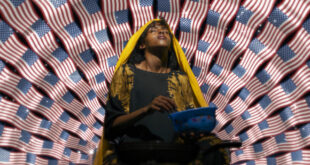
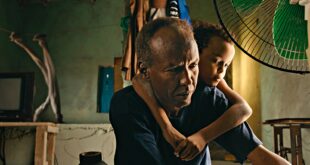
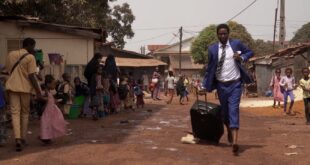
Against this backdrop, Africa’s presence at the 76th Berlinale — running from 12 to 22 February 2026 — is particularly significant. African films and filmmakers are represented across several sections of the festival, including the main Competition as well as Panorama, Forum, Generation and the Shorts programmes. This visibility places African stories at the very centre of global cinematic discourse, not on the margins. It confirms that African cinema is an essential part of contemporary world cinema—artistically ambitious, politically engaged and globally resonant.
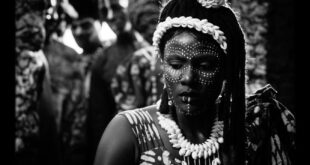
In the main Competition, where around 20 films vie for the coveted Golden Bear, African filmmakers hold several standout entries. These include Dao, a lyrical drama by Alain Gomis (France/Senegal/Guinea-Bissau) that explores family, memory and identity; À voix basse by Tunisian director Leyla Bouzid, a deeply personal drama about returning home and confronting the past; and Soumsoum, la nuit des astres by Mahamat-Saleh Haroun, a mystical story set in the Ennedi mountains of Chad that blends tradition with spiritual vision.
Beyond Competition, African cinema will shine in other sections as well.
South Africa’s Black Burns Fast, directed by Sandulela Asanda, will have its international premiere in the Generation 14plus programme, offering a coming-of-age look at identity and desire within a boarding school setting.
The Panorama section — known for bold and socially urgent films — features Lady, the Nigerian-UK co-production by Olive Nwosu, which follows an independent taxi driver navigating friendship, danger and self-discovery in Lagos. Also screening in Panorama is the documentary Enough Is Enough (Trop c’est trop) by Elisé Sawasawa, a French-DR Congo co-production that examines decades of violence and its impact on everyday life in Goma.
In the Forum section, which often highlights experimental and boundary-pushing cinema, the Nigerian collective The Critics Company co-directs Crocodile, a documentary blending DIY sci-fi filmmaking with everyday realities, while Ethiopian-American filmmaker Haile Gerima presents Black Lions – Roman Wolves, a monumental documentary exploring Italian colonialism’s legacy in Ethiopia.
Short films with African narratives also feature prominently in Berlinale Shorts, such as Les âmes du Fouta (France/Senegal) by Alpha Diallo, reimagining a traditional tale of dignity and mourning.
With this range of African voices — from feature dramas and documentaries to shorts — the breadth and depth of contemporary African cinema will be represented at one of the world’s most influential stages in filmmaking.
The African films selected this year explore themes such as migration, memory, identity, power relations, youth culture and postcolonial legacies. They move between the continent and the diaspora, between intimate family stories and broader historical questions. In doing so, they speak not only to African audiences but to the world at large, offering perspectives that challenge stereotypes and deepen understanding.
The Berlinale is more than a festival — it is a cultural event of exceptional importance. It offers the chance to see African realities reflected on major screens, to engage directly with filmmakers through Q&A sessions and to take part in discussions that link art, politics and society. For young Africans and creatives in the diaspora, it is also a source of inspiration and a reminder that African voices belong on the world’s biggest stages.
Vivian Asamoah