 THE AFRICAN COURIER. Reporting Africa and its Diaspora! The African Courier is an international magazine published in Germany to report on Africa and the Diaspora African experience. The first issue of the bimonthly magazine appeared on the newsstands on 15 February 1998. The African Courier is a communication forum for European-African political, economic and cultural exchanges, and a voice for Africa in Europe.

A package of legislative and regulatory changes come into force in Germany in the new month, affecting everything from how much you pay at the petrol station to how you cross the EU’s external borders. For Africans living in Germany, several of these changes are directly relevant.

Fuel Prices: One Rise Per Day, at Noon
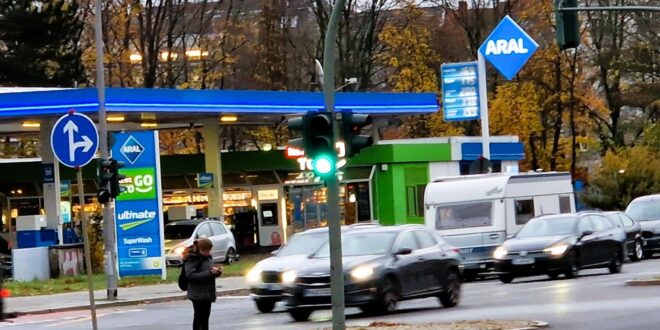
As from 1 April, German petrol stations are legally permitted to raise fuel prices only once per day — at noon. Price reductions remain unrestricted and can happen at any time. The measure, approved by the Bundesrat on 27 March, also strengthens the powers of the Federal Cartel Office to act against unjustified price inflation. The reform is designed to prevent the pattern of sharp morning and evening price spikes that have long frustrated drivers across Germany.
Public Sector Workers Get a Pay Rise
Around 925,000 employees covered by state-level collective agreements received a pay increase of 2.8 per cent from 1 April, with a guaranteed minimum monthly uplift of 100 euros. The agreement, reached between trade unions and employers, disproportionately benefits lower and middle earners — including workers in public administration, schools and childcare facilities. The next scheduled increase follows in March 2027. The deal covers 15 of Germany’s 16 federal states; Hesse negotiates separately.
USB-C Becomes Standard for Laptops
From 28 April, all laptops sold in the European Union must be equipped with a USB-C charging port. The requirement extends a rule already in force since late 2024 for smartphones, tablets, e-readers, headphones and other portable devices. The EU estimates that the previous proliferation of incompatible chargers generated around 11,000 tonnes of electronic waste annually. A single universal charging standard is expected to reduce costs and waste significantly for consumers across the bloc.
Free Lung Cancer Screening for Heavy Smokers: What You Need to Know
Germany has launched a new preventive health programme giving eligible smokers free annual lung cancer checks from 1 April. The examination uses low-dose computed tomography (LDCT) — a specialised scan that produces detailed images of the lungs using minimal radiation.
To qualify, you must hold statutory health insurance, be aged between 50 and 75, and have smoked heavily for at least 25 years. Former smokers qualify only if they quit within the past decade. Other tobacco products are not currently covered.
Lung cancer kills more Germans than almost any other cancer, yet it is routinely caught too late for effective treatment. Early detection through LDCT has been shown in large international trials to significantly reduce mortality among high-risk groups. Germany’s health authorities spent years weighing those benefits against radiation exposure concerns before finally approving the programme for public funding.
Eligible patients should speak to their GP in the first instance.
Private insurance holders should check their individual policy terms.
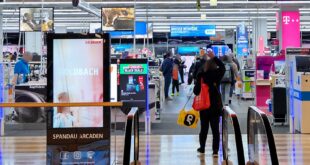
Telekom Price Rise: What Long-Standing Customers Need to Know
Deutsche Telekom, Germany’s largest telecommunications provider, has raised monthly fees for a specific category of existing customers from 1 April. The increase affects households on older DSL-based broadband contracts — specifically those on MagentaZuhause or Call & Surf tariffs originally signed before April 2023. For these customers, the monthly base fee rises by a flat two euros. As an illustration, the popular MagentaZuhause L package, previously billed at €44.95 per month, now costs €46.95.
Telekom has justified the move by citing sustained increases in infrastructure operating costs and service expenses that, in its words, were not passed on to customers for an extended period. Notably, the company points out that even after the increase, long-term customers on these tariffs still pay less than new customers on equivalent packages. No additional services or faster connection speeds come with the higher price.
Importantly, the increase applies only to older VDSL-based contracts — customers on pure fibre-optic tariffs are unaffected by this particular adjustment.
Other Notable Changes
From mid-April, the sale of nitrous oxide (laughing gas) and so-called knockout drops to minors becomes illegal in Germany, with mail-order and vending machine sales also banned. A reform of paternity law strengthens the rights of biological fathers, while ensuring that the best interests of the child remain central.
© The African Courier