 THE AFRICAN COURIER. Reporting Africa and its Diaspora! The African Courier is an international magazine published in Germany to report on Africa and the Diaspora African experience. The first issue of the bimonthly magazine appeared on the newsstands on 15 February 1998. The African Courier is a communication forum for European-African political, economic and cultural exchanges, and a voice for Africa in Europe.

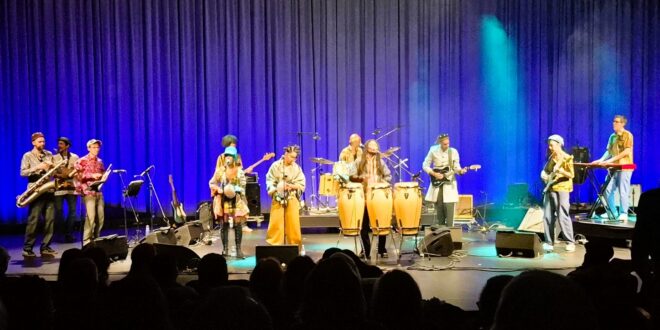
The fifth edition of Berlin’s Felasophical Gathering took place on 15 October 2026 at the House of World Cultures, celebrating the life and legacy of Nigerian Afrobeat legend Fela Anikulapo-Kuti. Featuring performances by Nii Noi Nortey, The Berlin Afrobeat Company and Santrofi, the event brought together music, history and political consciousness.
Berlin’s House of World Cultures (Haus der Kulturen der Welt, HKW) turned into a vibrant celebration of African music and cultural memory on Thursday, 15 October, as the city marked the birthday of Nigerian Afrobeat pioneer Fela Anikulapo-Kuti with the fifth edition of its annual Felasophical Gathering.
Under the thought-provoking theme “What Happens When the Past Is Not Only Remembered, but Sounded?”, the event brought together Ghanaian experimental musician Nii Noi Nortey, Berlin-based musicians The Berlin Afrobeat Company and Ghanaian highlife band Santrofi for an evening that connected musical traditions with questions of history, identity and political consciousness.
The gathering is part of a global tradition of celebrating Fela’s life and legacy, known in Nigeria and many other countries as Felabration. In Berlin, the initiative goes beyond a conventional tribute concert, reflecting Fela’s significance not only as a musician but also as a political activist and thinker. The HKW describes the annual gathering as a meeting place for musicians, scholars, activists, storytellers and others interested in exploring Fela’s music and ideas.
Sound as a form of historical memory
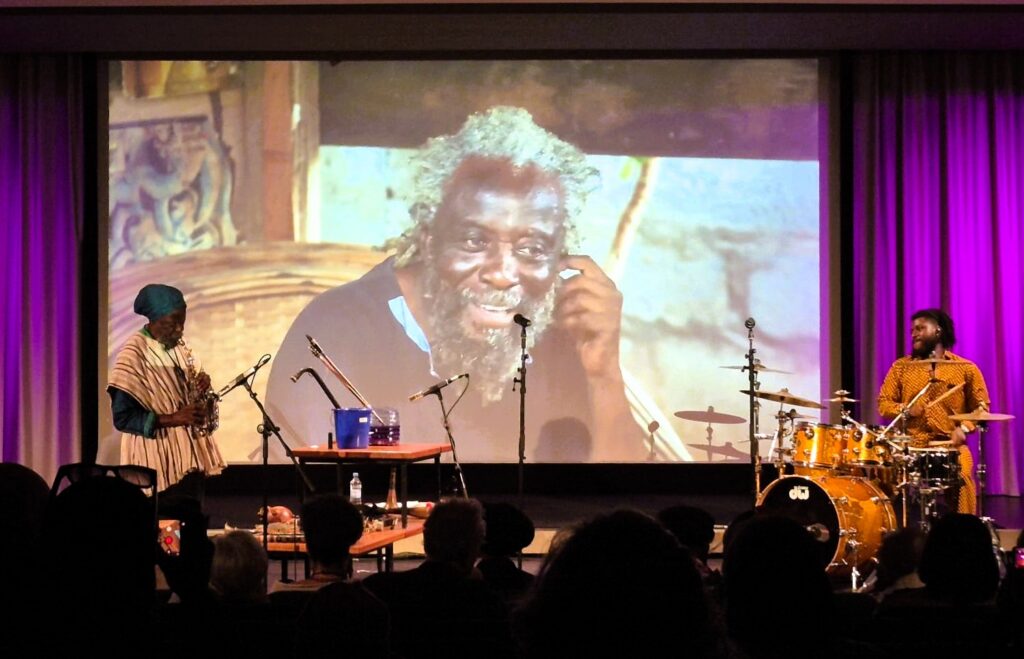
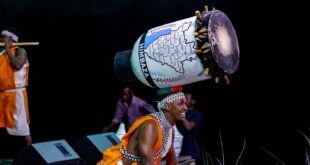
The evening opened with a lecture-performance by Nii Noi Nortey, the Ghanaian multi-instrumentalist, sound artist, sculptor, instrument maker and educator. His performance explored the relationship between sound, history and the continuing consequences of displacement.
Nortey drew on the Senegalese historian Cheikh Anta Diop’s call for recognition of Africa’s historical agency and Fela’s understanding of music as a form of political consciousness. Using inherited, adapted and newly invented instruments, improvisation and experimental techniques, he explored how histories of displacement, rupture and survival remain embedded in objects, bodies and cultural practices.
Rather than simply reconstructing the past, Nortey’s performance invited audiences to encounter history through sound in the present. It provided a thoughtful introduction to an evening in which music became both artistic expression and a vehicle for historical reflection.
Keeping Fela’s Afrobeat alive
The musical programme continued with The Berlin Afrobeat Company, whose history is closely connected to Fela himself.
The band was founded in West Berlin in 1978 following a celebrated performance by Fela Kuti and his Africa 70 band at the Berlin Jazz Days. Several key members of Fela’s ensemble decided to remain in Berlin after the performance, laying the foundations for the local Afrobeat group.
Although the original founders are no longer part of the current line-up, the band has continued to bring together musicians from different backgrounds. Its performances preserve and develop the Afrobeat tradition that Fela helped establish, keeping his distinctive musical language alive for new audiences.
The group’s appearance at the gathering underscored Berlin’s own place in the international history of Afrobeat. The city is not merely a location where Fela’s music is remembered; it is also part of the story of how his influence travelled and took root beyond Nigeria.
Santrofi brings the hall to its feet
The evening reached an exuberant climax with a performance by Santrofi, the Ghanaian ensemble led by producer and bassist Emmanuel Kwadwo Ofori.
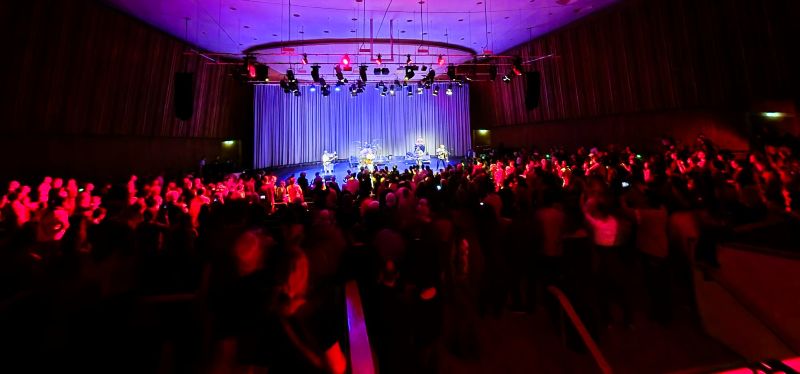
The eight-member group from Accra is known for its energetic interpretation of highlife, drawing on classic Ghanaian grooves while incorporating elements of contemporary music, including hip-hop. Its invitation to the Felasophical Gathering highlighted the musical connections between Ghanaian highlife and Nigerian Afrobeat.
In a performance that electrified the audience, Santrofi blended highlife with Afrobeats, jazz and rhythm and blues. The infectious rhythms soon overcame the formality of the concert setting, drawing audience members out of their seats and onto their feet.
For this correspondent, the sight of almost the entire hall rising to dance was one of the evening’s most memorable moments. The audience was no longer simply watching a performance; it had become part of the music’s energy.
A legacy that crosses borders
The programme demonstrated why Fela’s influence continues to resonate nearly three decades after his death in 1997. His music remains a powerful expression of African creativity and political consciousness, while his insistence on confronting injustice continues to inspire musicians and audiences across generations.
By bringing together Nortey’s experimental sound work, the Afrobeat tradition represented by The Berlin Afrobeat Company and Santrofi’s contemporary interpretation of highlife, the 2026 gathering offered different ways of engaging with the past without treating it as something static.
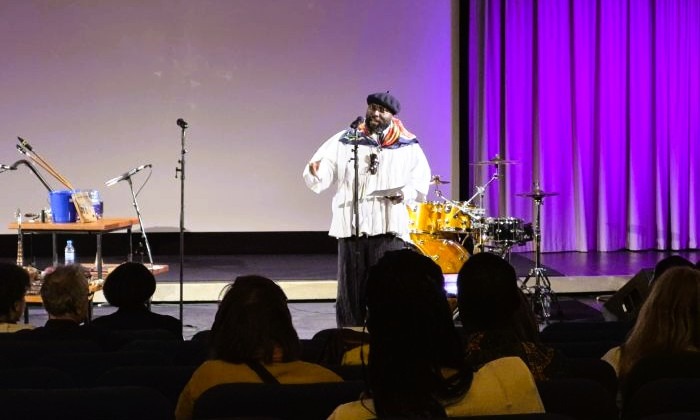
The event also affirmed the importance of cultural spaces such as HKW in creating platforms where African artistic traditions and ideas can be explored on their own terms and in dialogue with wider international audiences.
With this year’s Felasophical Gathering, Berlin once again demonstrated the enduring reach of Fela Anikulapo-Kuti’s legacy. His music continues to travel, evolve and bring people together, proving that the past is not only something to remember, but something that can still be heard, felt and danced to.
Femi Awoniyi
READ ALSO Fela Anikulapo-Kuti’s Legacy Comes Alive in Berlin with Afrobeat and Ghanaian Highlife