 THE AFRICAN COURIER. Reporting Africa and its Diaspora! The African Courier is an international magazine published in Germany to report on Africa and the Diaspora African experience. The first issue of the bimonthly magazine appeared on the newsstands on 15 February 1998. The African Courier is a communication forum for European-African political, economic and cultural exchanges, and a voice for Africa in Europe.

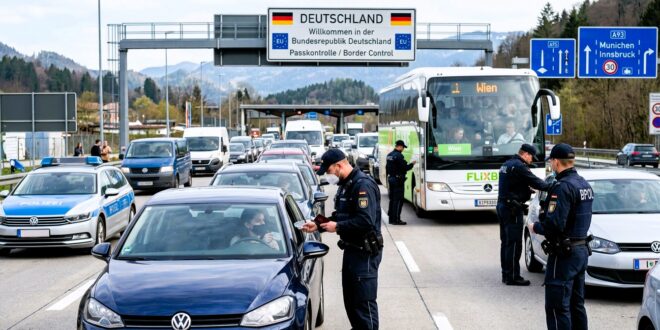
Germany recorded a sharp decline in irregular border crossings during the first six months of 2026, according to new figures released by the Federal Police, suggesting that tighter border controls and stricter migration policies are having an impact. At the same time, a recent court ruling has raised fresh legal questions about the government’s border enforcement measures.
Germany’s Federal Police recorded 24,329 unauthorised border crossings in the first half of 2026 — a 22 percent decline compared to the same period in 2025. The figures, published this week, represent a significant shift: in the first half of 2023, the number stood at 45,338 — nearly double the current figure.
The most common nationalities among those detected were people from Ukraine, Turkey and Afghanistan. Of those apprehended, 13,900 were turned back at the border or in its immediate vicinity, and 1,561 suspected people smugglers were temporarily detained. Of those turned away, 534 were asylum seekers — a figure that has drawn scrutiny from human rights groups who question whether vulnerable individuals are being adequately protected.
June 2026 alone recorded just 3,290 unauthorised entries — the lowest figure for the month of June since 2021, and 42 percent lower than June 2025.
The federal government has pointed to the controls as evidence that its hardline border policy is working. Interior Minister Alexander Dobrindt intensified the checks introduced under the previous coalition government immediately upon taking office in May 2025, and instructed the Federal Police to turn back asylum seekers at the border — with exceptions for vulnerable groups such as the sick and pregnant.
Germany has maintained temporary border controls at all its land frontiers since September 2024, expanding checks that had previously applied only to selected borders. The federal government argues that the measures are necessary to combat irregular migration, human smuggling and cross-border crime.
However, the policy suffered a setback in early July when the Munich Administrative Court ruled that border checks carried out in three cases at the German-Austrian border were unlawful. The court questioned whether the long-running controls remain compatible with the Schengen Borders Code, which guarantees free movement within most of the European Union. The ruling applies only to the individual cases before the court, but it is expected to influence future legal challenges to Germany’s border regime. The government has said it will appeal.
The EU Commission had already criticised the German controls in early June 2026, saying they were insufficiently justified. Every border control that has come before a German court to date has been ruled unlawful.
Germany’s falling numbers may please the Interior Ministry but the courts are sending a different message.
Adira Kallo