 THE AFRICAN COURIER. Reporting Africa and its Diaspora! The African Courier is an international magazine published in Germany to report on Africa and the Diaspora African experience. The first issue of the bimonthly magazine appeared on the newsstands on 15 February 1998. The African Courier is a communication forum for European-African political, economic and cultural exchanges, and a voice for Africa in Europe.


The United Nations General Assembly’s recent recognition of the transatlantic slave trade as the gravest crime against humanity marks a historic moment, but it also raises uncomfortable questions, writes Dr Pierrette Herzberger-Fofana. The muted response and abstentions by many European countries reveal a persistent reluctance to fully confront the legacy of slavery and its lasting consequences, the former European MP argues.

By Dr Pierrette Herzberger-Fofana
On March 25, 2026, the United Nations General Assembly finally acknowledged a long-overdue truth: the transatlantic slave trade was one of the greatest crimes against humanity. The resolution, introduced by Ghanaian President John Dramani Mahama, raises a critical question: who will take responsibility?
For over four centuries, millions of Africans were forcibly displaced, enslaved and exploited. European powers built their wealth on this system of dehumanization. Millions died during the Middle Passage. This was not collateral damage – it was systemic.
Yet, despite this recognition, many of the nations that benefited from this system still hesitate to fully confront their historical responsibility. The abstention of several European countries — including Germany, the United Kingdom and France — during the UN vote sends a troubling political signal. Abstention is not neutral; it is a choice that reflects the persistent difficulty in addressing this past.
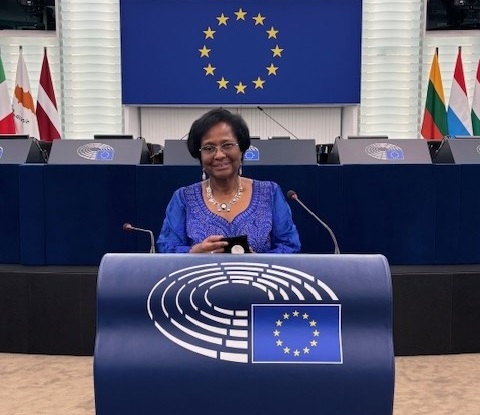
Why has no political party raised this issue with the government? Why did Germany abstain? This is not a question of competing victims, but of recognising that 400 years of slavery was a crime against humanity.
This stands in contrast to earlier commitments. In 2020, the European Parliament officially recognised slavery as a crime against humanity and called for greater inclusion of this history in education and public memory. The resolution was adopted by a large majority of 493 votes in favour, 104 against, 67 abstentions and supported by 5 of the 7 political groups in parliament.
“The European Parliament calls on the institutions and the Member States of the European Union to officially recognise the injustices of the past and the crimes against humanity committed against black people and people of colour; declares the slave trade a crime against humanity and calls for the 2nd of December to be declared as the European Day of Commemoration of the Abolition of the Slave Trade; encourages Member States to include the history of black people and people of colour in their curricula,” — European Parliament.
Why did most European countries abstain at the UN vote?
There remains a significant gap between political declarations and concrete action.
Memory alone is not enough.
Without justice, there can be no true recognition.
READ ALSO UN Vote on Slave Trade Sparks Renewed Reparations Debate