 THE AFRICAN COURIER. Reporting Africa and its Diaspora! The African Courier is an international magazine published in Germany to report on Africa and the Diaspora African experience. The first issue of the bimonthly magazine appeared on the newsstands on 15 February 1998. The African Courier is a communication forum for European-African political, economic and cultural exchanges, and a voice for Africa in Europe.

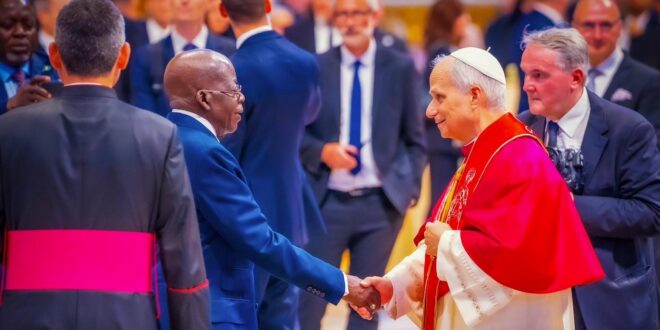
A sense of anticipation is building across Africa as Pope Leo XIV prepares to embark on his first major international journey since becoming pontiff last year — a multi-country visit that is already being seen as both symbolic and strategic.
The visit, scheduled from 13 to 23 April, will take the pontiff to four countries — Algeria, Cameroon, Angola and Equatorial Guinea — in what Vatican officials describe as a journey of “peace, dialogue and solidarity.” While papal trips are often rich in ceremony, this one is expected to carry deeper political, social and spiritual undertones, touching on some of the continent’s most pressing realities.
Africa today occupies a pivotal place in global Catholicism. With its rapidly expanding faithful, the continent is increasingly viewed as central to the Church’s future. Against this backdrop, the Pope’s itinerary appears carefully crafted — blending pastoral outreach with engagement on issues ranging from conflict and governance to inequality and interfaith relations.
The journey begins in Algeria, where Christians are a small minority in a predominantly Muslim society. Here, the Pope is expected to emphasise dialogue and coexistence, reinforcing the Church’s longstanding call for mutual respect between religions. Observers see this leg of the trip as a signal of the Vatican’s commitment to bridge-building in regions where religious identity can be sensitive.
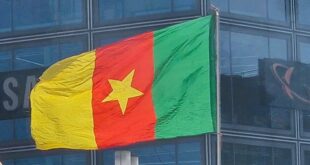
From North Africa, the tour shifts to Cameroon, where ongoing conflict in the Anglophone regions continues to disrupt lives. The Pope’s presence there is likely to spotlight the human costs of the conflict while encouraging reconciliation efforts — a message that could resonate far beyond the country’s borders.
In Angola, a predominantly Catholic country still grappling with widespread poverty despite vast natural resources, attention will turn to social justice and the widening gap between rich and poor. The visit is expected to engage young people and highlight the need for inclusive development in resource-rich African states.
The final stop, Equatorial Guinea, brings another dimension into focus: governance and accountability. Despite vast natural resources, many citizens continue to face economic hardship, and the Pope’s remarks are likely to address issues of fairness, transparency and dignity.
Beyond individual country visits, the broader themes of the tour are clear. Migration, climate pressures and economic inequality are expected to feature prominently in the Pope’s speeches — reflecting challenges that define the lived experiences of millions of Africans today.
For many across the continent, this visit is more than a religious event. It is a moment of recognition — and perhaps an opportunity to reshape global narratives about Africa, from a region often defined by its struggles to one increasingly acknowledged for its dynamism, resilience and growing influence within the global Church.
Adira Kallo