 THE AFRICAN COURIER. Reporting Africa and its Diaspora! The African Courier is an international magazine published in Germany to report on Africa and the Diaspora African experience. The first issue of the bimonthly magazine appeared on the newsstands on 15 February 1998. The African Courier is a communication forum for European-African political, economic and cultural exchanges, and a voice for Africa in Europe.

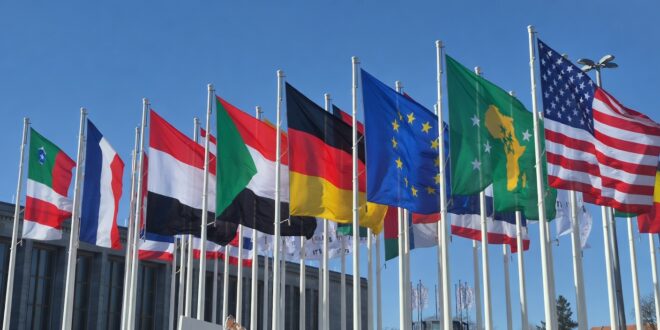
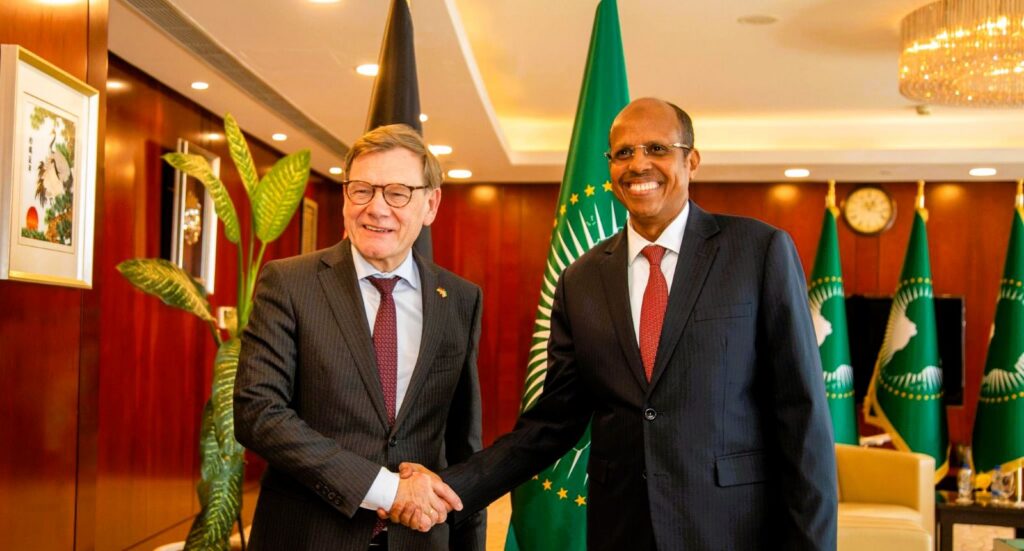
On the third anniversary of the outbreak of the Sudanese civil war on 15 April, the German government will host an international conference on Sudan in collaboration with France, the United Kingdom, the United States, the European Union (EU), and the African Union (AU). Representatives of the United Nations, humanitarian organisations and Sudanese civil society are expected to attend the international parley, the third of its kind. However, both warring parties — the Sudanese Armed Forces (SAF), led by General Abdel Fattah al-Burhan, and the paramilitary Rapid Support Forces (RSF), commanded by General Mohamed Hamdan Dagolo, widely known as ‘Hemedti’ — will not be represented at the Berlin conference.
Therefore, there will be no ceasefire signed at the Auswärtiges Amt in April 2026. What the conference can produce — if it succeeds — is a set of outcomes that shift the conditions for peace in Sudan over the months ahead.
First, and most urgently, the conference must mobilise substantially greater humanitarian funding and — more importantly — secure the access needed to deliver it. With the 2026 humanitarian response plan funded at only a fraction of the required level, and with US aid cuts having caused a cascade of programme closures, additional pledges from European governments, Gulf states and others are essential. But as the London experience showed, pledges are only as good as their delivery. The Berlin conference needs a mechanism for tracking and enforcing commitments.
Second, the conference must inject momentum into the Quintet-led civilian process — supporting the formation of a credible, broadly representative Sudanese steering committee that can set the agenda for a genuine political transition. The Stiftung Wissenschaft und Politik (SWP), Germany’s leading foreign and security policy think, has argued that conference participants should ‘commit not to organise parallel initiatives and instead align existing projects with civilian actors — especially those from the United Kingdom, Norway, Canada, and Switzerland — in support of this process.’ The proliferation of competing international tracks has been one of the major obstacles to coherent engagement.
Third, the conference must signal to both warring parties that the international community’s patience has limits. Both the SAF and the RSF must be made to understand that continued obstruction of humanitarian access, deliberate targeting of civilians and blocking of political processes will carry consequences — including further sanctions, arms embargoes, and international legal exposure. The new atrocity prevention coalition announced at the Human Rights Council in February 2026 must be given teeth at Berlin.
Fourth, and perhaps most importantly for long-term prospects, the conference must take the civilian track seriously — not as a procedural checkbox but as the foundation for the only kind of peace that can endure. As the SWP argued, a power-sharing deal between armed factions — even if achieved — would produce at best a fragile transitional government prone to renewed violence, as South Sudan’s experience grimly illustrates. Sudan’s future requires a civilian-led political order, and the international community must begin building the conditions for that order even while the war continues.
SIGNIFICANCE FOR THE AFRICAN DIASPORA
For the Sudanese diaspora in Germany and across Europe, the Berlin conference is not a distant diplomatic event. Sudanese everywhere have lived with the pain of the war since April 2023 and have been fundraising for Emergency Response Rooms in their home regions, and participating in advocacy events.
The People’s Conference, which takes place in Berlin on 11 April – four days ahead of the international conference, aims to ‘centre Sudanese voices’ and draw attention to perspectives that risk being marginalised in the formal diplomatic process — including those of women and girls, ethnic minorities in Darfur and Kordofan, and civilians living under RSF control who face a different set of risks and needs from those in government-held territory.
READ ALSO Berlin Hosts International Conference on Sudan War
For the broader African diaspora in Europe, the Berlin conference also matters as a test of Germany’s foreign policy commitments on the African continent. Germany has articulated a post-colonial partnership agenda with Africa; co-hosting a major Sudan conference with the African Union is one practical expression of that ambition. The question is whether the partnership extends to genuinely equal decision-making, or whether African voices — AU and civil society alike — are consulted but ultimately overruled.
The Berlin conference takes place at a moment when international aid budgets are under pressure, public attention is divided across multiple crises, and the US — historically a major humanitarian donor and diplomatic actor in Sudan — has dramatically reduced its engagement. Europe, and Germany in particular, faces a choice: step up, or watch the world’s largest humanitarian crisis deepen further. Berlin 2026 is an opportunity. Whether it is seized will be visible in the months that follow.
Sola Jolaoso/The African Courier