 THE AFRICAN COURIER. Reporting Africa and its Diaspora! The African Courier is an international magazine published in Germany to report on Africa and the Diaspora African experience. The first issue of the bimonthly magazine appeared on the newsstands on 15 February 1998. The African Courier is a communication forum for European-African political, economic and cultural exchanges, and a voice for Africa in Europe.

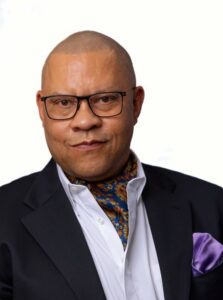
Victor Oladokun*, a renowned Nigerian media professional and strategic communications expert, has used the occasion of President Bola Ahmed Tinubu’s historic visit to the UK to make a clarion call to his countrymen and women to unite. Here’s why he believes that now more than ever, the citizens of Africa’s most populous nation should choose unity over division.
Over the last decade, I have deliberately avoided publicly commenting on Nigeria’s often toxic political discourse.
Two reasons guided this decision:
■ Any stance invites criticism from all sides and
■ My past roles — first as Director of Communication at the African Development Bank Group (#AfDB), then as Senior Advisor to its then President — required strict diplomatic adherence to neutrality on the affairs of member countries.
For the first time in nearly a decade, this rare milestone compels me to speak, as President Bola Ahmed Tinubu and First Lady Oluremi Tinubu receive the full pomp and pageantry of a State Visit from King Charles III at Windsor Castle this week—the first by a Nigerian head of state in 37 years.
For a nation that has long punched above its weight yet sometimes doubted its stride, this is more than ceremonial. It is a powerful invitation for every Nigerian at home and in the diaspora to pause, reflect and choose unity over division.
Without denying Nigeria’s many challenges, and setting aside partisanship, it is time to acknowledge the quiet, determined work underway. President Tinubu’s administration has taken the bull by the horns with bold economic reforms: unifying exchange rates, stabilising a naira once in freefall, removing unsustainable fuel subsidies, overhauling taxation and liberalising key sectors.
Though results remain uneven and are still unfolding, these systemic shifts—designed for macroeconomic stability, investment unlocking and sustainable growth—are gaining recognition. The Economist (January 2026) described Nigeria’s economy as potentially “back from the brink,” with painful reforms showing results: inflation dropping sharply (from a 34.8% peak to around 15%), naira stabilisation, reserves at seven-year highs ($46 billion), and restored investor confidence.
The IMF has called the moves “bold,” praising improvements in forex markets and fiscal management. The World Bank has hailed Nigeria as a “global reference point” for steady, credible reform implementation and results over the past two years.
From the creative industries to agriculture, mining, technology and renewable energy, Nigeria is repositioning itself as a serious global partner with vast potential—not as a perpetual supplicant. Investor interest is also rising.
The question is: if not now, when?
This State Visit to the UK carries deep mutual strategic significance.
For Nigeria, it showcases its reform story and opens doors to fresh capital, technology transfer and market access in infrastructure, energy and the blue economy.
For the United Kingdom, it strengthens ties with one of Africa’s largest economies and most populous nations, while pursuing modern partnerships beyond old colonial lenses.
Bilateral trade has hit a record £8.1 billion (about €9.4 billion) annually. The large Nigerian diaspora in the UK—professionals, entrepreneurs, students and families—is a powerful and mutually beneficial asset. This is, and should be, a genuine win-win roadmap.
Yet, while the red carpet rolls out in London, some voices at home and abroad remain stuck in perpetual de-branding mode. Don’t get me wrong: Nigeria faces real issues, including leadership gaps, insecurity and governance challenges. But we have a built-in cycle of demonisation that ignores progress.
Professional critics seize every headline to paint the nation as hopeless, amplifying setbacks while dismissing strides. Their endless negativity deters investors, demoralises youth and markets Nigeria as a risk rather than an opportunity. Constructive criticism has its place, but weaponised cynicism that de-markets Nigeria at every turn is not patriotism—it is self-sabotage.
Fellow Nigerians, whether in Lagos or London, Abuja or Atlanta, Maiduguri or Manchester, this is our shared moment. The world is watching our response to this historic occasion. Let us choose pride and opportunity over perpetual complaints and a sense of hopelessness.
To the Nigerian diaspora: our skills, remittances and networks already make a difference. Imagine the exponential impact we can create when we collectively amplify Nigeria’s story instead of diminishing it.
To investors and global partners eyeing Africa’s future, the door is wider open than ever. Come and see the real Nigeria—a dynamic nation brimming with innovative youth who are determined and ready to deliver in a stable and reforming environment.
This State Visit, therefore, is not the end of a journey but the beginning of a new chapter. Nigeria is rising—not because the world has suddenly noticed us, but because we are choosing to believe in ourselves again.
My humble plea is simple… Let us move forward together—focused, unapologetically proud, and thankful for all that God has endowed us with.
God bless you, and God bless the Federal Republic of Nigeria.
Victor Oladokun is a respected Nigerian media professional, storyteller and strategic communications expert with an international career spanning journalism, broadcasting and development communication. He is widely known for his work as a television presenter and producer with the Nigerian Television Authority before moving on to the global stage.
Oladokun gained further prominence during his long tenure at the African Development Bank, where he served as Director of Communication and External Relations. In that role, he helped shape the institution’s global image and led major media and outreach initiatives across Africa and beyond.
Renowned for his eloquence, thought leadership and ability to communicate complex development issues to broad audiences, Oladokun continues to be an influential voice in African media and international development circles.

READ ALSO Tinubu’s Historic UK State Visit Opens New Chapter for Nigeria–Britain Relations