 THE AFRICAN COURIER. Reporting Africa and its Diaspora! The African Courier is an international magazine published in Germany to report on Africa and the Diaspora African experience. The first issue of the bimonthly magazine appeared on the newsstands on 15 February 1998. The African Courier is a communication forum for European-African political, economic and cultural exchanges, and a voice for Africa in Europe.
Germany may be one of Europe’s wealthiest nations, but a significant section of its population — especially people with a migration background — continues to struggle with rising living costs, shrinking purchasing power and worsening housing conditions. This is one of the key findings of the Federal Government’s newly approved Poverty and Wealth Report, presented in Berlin on Wednesday.
According to the report, the sharp inflation seen in recent years hit low-income households hardest, forcing many to cut back on essential spending. For people with a migration background, the impact has been particularly severe.
The data shows that the average income of migrants stood at just over €23,500, compared to nearly €29,700 for people without a migration background, an annual gap of more than €6,000. As a result, the poverty risk rate among migrants reached 31.8%, significantly higher than the national average. In fact, this rate has risen by around eight percentage points since 2010.
Participants in the study reported struggling to heat their homes adequately or postponing necessary purchases because of financial strain.
Citizenship Matters
The report also highlights notable disparities within the migrant population itself. People with a migration background who hold German citizenship earned a median net income of €25,770, whereas those without German nationality earned €20,019, a gap reflecting differences in labour market access, job security and qualification recognition.
Migrants Pay More for Worse Housing
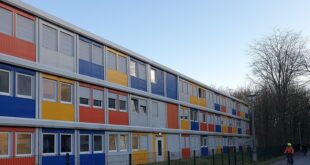
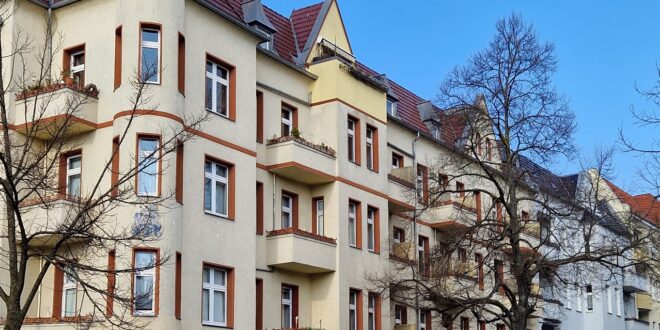
Housing remains a major source of inequality. Migrants spend 28.1% of their household income on rent — far more than the 24.6% spent by people without a migration background. Yet despite paying more proportionally, migrants typically live in smaller homes — with over 10 square metres less living space per person — and often in dwellings of lower quality.
Ownership rates also reveal a stark divide: more than half of Germans without a migration background lived in their own homes in 2021, compared to just one-third among migrants.
A Growing and Younger Migrant Population
The figures take on deeper significance in light of recent demographic data: in 2024, about 21.2 million people in Germany had a migration background, representing 25.6% of the total population — an increase of nearly 1 percentage point over 2023. Another, more expansive estimate puts the number at 25.2 million, or roughly 30.4% of the total population, when including all individuals with foreign-born parents or grandparents.
People with migration backgrounds are also significantly younger than the general population, with median ages around 38 compared to roughly 47 among native-born Germans.
That means economic and social inequalities affect a substantial — and growing — segment of Germany’s citizens and residents.
With as many as one in four — or even one in three — residents of Germany having a migration background, the disparities outlined in the Poverty and Wealth Report represent a national issue, not just a minority concern. Economic disadvantages, disproportionate housing burdens, and uneven access to decent living conditions collectively reinforce structural inequality for a large segment of society.
Advocates argue that addressing this challenge requires more than one-off social welfare schemes. Instead, structural reforms are needed — better labour market integration, recognition of qualifications, targeted housing policies and improved access to affordable, quality housing.
A Broader Picture of Unequal Wealth
Beyond migration, the report underscores deep structural inequality in Germany. The wealthiest 10% of households hold 54% of all net assets, while the lower half of the population owns only 3%. Housing costs are now overwhelming nearly one in eight households, defined as those spending over 40% of income on accommodation.
Due to the increasing and overlapping crises — the COVID-19 pandemic, the explosion in energy prices following the war in Ukraine and inflation, the gap between rich and poor has widened further in recent years.
The government typically publishes the Poverty and Wealth Report once per legislative term. The newly adopted edition builds heavily on work begun during the previous administration and includes input from affected communities, who criticised public discussions on poverty as “disrespectful” and socially excluding.
Sola Jolaoso