 THE AFRICAN COURIER. Reporting Africa and its Diaspora! The African Courier is an international magazine published in Germany to report on Africa and the Diaspora African experience. The first issue of the bimonthly magazine appeared on the newsstands on 15 February 1998. The African Courier is a communication forum for European-African political, economic and cultural exchanges, and a voice for Africa in Europe.

A war thousands of kilometres from Africa is threatening to push millions of the continent’s people deeper into poverty. Four leading multilateral institutions have issued a joint warning that the ongoing conflict between the United States, Israel and Iran poses a serious economic threat to African countries — and that the damage could worsen significantly the longer the fighting continues.
The African Union, the African Development Bank, the United Nations Development Programme and the UN Economic Commission for Africa presented a combined assessment at the 58th session of the Economic Commission for Africa in Addis Ababa on 4 April. Their message was blunt: Africa, already grappling with debt, weak currencies and sluggish post-pandemic growth, faces a compounding external shock it can ill afford.
The Middle East is not a distant concern for African traders. The region absorbs nearly 11 per cent of African exports and supplies almost 16 per cent of what the continent imports. Disruption to those flows — through higher shipping costs, rising insurance premiums, tighter supply chains and elevated fuel prices — ripples quickly through household budgets. The institutions warned that what began as a trade shock could rapidly translate into a broad cost-of-living crisis across the continent.
The numbers already tell a sobering story. Some 29 African countries were experiencing currency depreciation even before the latest escalation. Africa’s total public debt reached $1.9 trillion in 2024, with debt servicing absorbing more than 31 per cent of government revenues across the continent — leaving little room to cushion the blow of rising import costs. The AfDB had projected continental growth of 4.3 per cent for 2026 before the conflict. Chief Economist Kevin Urama now estimates that a war lasting up to three months could shave 0.2 percentage points off that figure — and a six-month conflict could cut growth by as much as 1.5 percentage points.
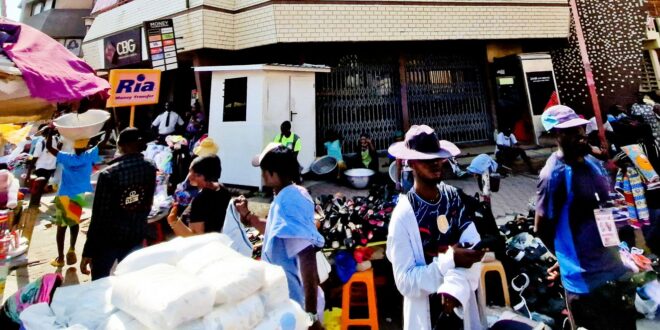
The human costs are already surfacing. Across Africa, fuel price spikes are pushing up transport and food costs for households already living at the margins. Egypt raised fuel prices by roughly 17 per cent within a week of the war’s outbreak. South Africa and the Democratic Republic of Congo have seen fuel costs jump by around a quarter. Gulf states that had pledged over $100 billion in African investments may now delay or redirect those funds toward their own reconstruction needs — a further blow to a continent that has watched official development assistance shrink sharply since the United States dismantled its primary aid agency last year.
Not every country stands to lose equally. Oil and gas exporters such as Nigeria and Angola may see revenue gains from higher crude prices, and states with strategically positioned ports could benefit from rerouted shipping. But the institutions were clear that such pockets of advantage would not offset the continent-wide damage.
Their recommendations call for urgent social protection measures for vulnerable communities, emergency coordination mechanisms for fuel procurement, and a long-term push to reduce African economies’ exposure to external shocks — through energy diversification, strengthened regional trade and more resilient supply chains.
The war in the Middle East was not of Africa’s making. The question, as one analyst put it, is whether millions of Africans will once again pay the price for a conflict they had no hand in starting.
Adira Kallo