 THE AFRICAN COURIER. Reporting Africa and its Diaspora! The African Courier is an international magazine published in Germany to report on Africa and the Diaspora African experience. The first issue of the bimonthly magazine appeared on the newsstands on 15 February 1998. The African Courier is a communication forum for European-African political, economic and cultural exchanges, and a voice for Africa in Europe.


More than 100 days after the new European Union’s Pact on Migration and Asylum entered into force, high-level stakeholders across the EU gathered recently in Malta to assess its first 100 days of its implementation. Nyima Jadama attended the conference and filed this report.
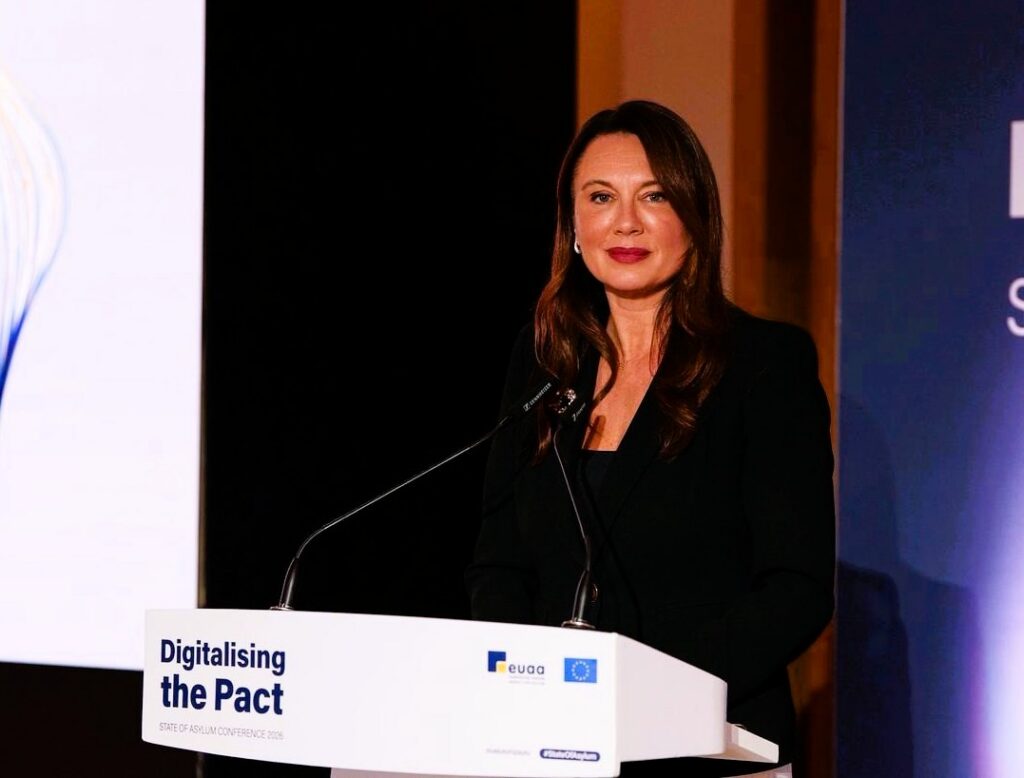
The European Union Asylum Agency (EUAA) hosted its Second Annual State of Asylum Conference on the Mediterranean island of Malta, bringing together policymakers, senior political leaders, technical experts, civil society, academia and media representatives to assess the implementation of the newly introduced European Union’s Pact on Migration and Asylum roughly 100 days into its introduction across member states in the EU.
The conference provides the first high-level forum to assess progress under the new legal framework, evaluate initial outcomes and identify key challenges facing its implementation. This year’s conference, themed ‘Digitalizing the Pact’, discussed the role of AI and technology and how the European multinational asylum system can benefit from these developments while fully respecting fundamental rights and safeguarding the right to an individual assessment.
Advancing Implementation, Digitalization and Innovation
The global protection landscape continues to face growing challenges, with protection space shrinking in many regions. At the same time, asylum applications across the European Union have declined, while recognition rates have evolved, reflecting a more diverse and complex caseload shaped by international developments. These changing dynamics require policymakers and asylum authorities to continuously adapt their systems to remain efficient, effective, fair and credible.
Addressing these challenges was a key focus of the conference, which centered on three major themes shaping the future of asylum governance in Europe: the implementation of the EU Pact on Migration and Asylum, digitalization and artificial intelligence.
A significant milestone highlighted during the conference was the entry into force of the Pact on Migration and Asylum over 108 days ago. The Pact marks the culmination of more than two decades of European cooperation in asylum policy, building on developments that began with the 1999 Tampere Conclusions, progressed through the establishment of minimum asylum and reception standards, and ultimately led to the creation of the Common European Asylum System in 2013.
The Pact represents a long-awaited reform, particularly in light of lessons learned from the 2015–2016 migration crisis and the consequences of Russia’s war of aggression against Ukraine. With implementation now underway, attention is turning from legislation to practice. Discussions focused on progress achieved so far, the challenges that remain, and the steps required to ensure successful implementation in the years ahead.
Strengthening of digital infrastructure
A central component of the Pact is the strengthening of digital infrastructure. This includes the modernization of the Eurodac system and the enhancement of interoperability between large-scale European IT systems. The objective is to create a seamless connection between all stages of the asylum process, from initial screening procedures to integration measures or, where applicable, return procedures. Digital tools are increasingly essential for managing asylum systems effectively.
Case management platforms, data repositories and language recognition technologies help authorities process applications more efficiently, particularly at a time when many Member States are expected to do more with limited resources. Ensuring that all countries can access and benefit from technological innovation remains a key priority. The conference also examined the growing role of artificial intelligence in asylum and reception systems.
While AI has the potential to transform administrative processes much as computers and the internet did in previous decades, participants emphasized that technology must support, rather than replace, human decision-making. Asylum officials across Europe continue to play a critical role in assessing protection needs and making decisions that profoundly affect people’s lives. Officials lamented that AI may offer valuable assistance in this work, but only when accompanied by appropriate safeguards, ethical oversight and clear limitations that preserve the human-centered nature of asylum procedures.
The discussions underscored both the opportunities and responsibilities that come with technological innovation. As Europe moves forward with implementing the Pact, collaboration, knowledge-sharing, and ongoing dialogue among Member States will be essential to building asylum systems that are not only efficient and modern but also fair, humane, and trustworthy.
Implementation, border management and returns
Reflecting on the first 100 days of implementation, member states cautioned that the period was too short to draw definitive conclusions about the Pact’s overall effectiveness. However, they described it as an important opportunity to identify practical challenges, assess existing capacities and understand where procedures are working or require improvement.
Further acknowledged is that migration is constantly evolving, with routes, methods and circumstances changing over time. European migration policies must therefore remain responsive to new realities rather than relying exclusively on assumptions made during the legislative negotiations. Properly managed borders are essential to preventing exploitation by traffickers and smugglers, whose activities often expose migrants and asylum seekers to dangerous and life-threatening journeys.
This requires strengthening provisions within the EU migration framework to improve the effectiveness of returns and accelerate asylum procedures, including changes to the safe third country concept and the establishment of a new EU list of safe countries of origin.
Member states are also concerned that protecting the Union’s external borders is closely connected to safeguarding internal freedom of movement, including Europeans’ ability to travel, study, work, and live across the EU. The conference concluded with a call for active engagement among participants, encouraging continued cooperation, exchange of expertise, and joint efforts to address the evolving challenges facing the European asylum system.
READ ALSO EU’s New Asylum Pact Takes Effect