 THE AFRICAN COURIER. Reporting Africa and its Diaspora! The African Courier is an international magazine published in Germany to report on Africa and the Diaspora African experience. The first issue of the bimonthly magazine appeared on the newsstands on 15 February 1998. The African Courier is a communication forum for European-African political, economic and cultural exchanges, and a voice for Africa in Europe.

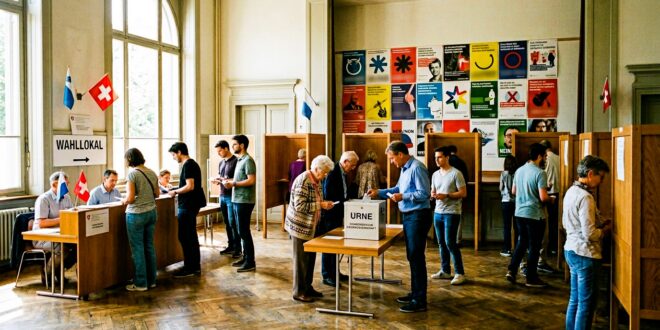
Swiss voters have rejected a controversial proposal to cap the country’s population at 10 million people, delivering a setback to anti-immigration campaigners and reaffirming Switzerland’s reliance on migration to support its economy and labour market.
In a nationwide referendum held on 14 June, about 55 percent of voters opposed the initiative, while 45 percent supported it. The proposal, championed by the right-wing Swiss People’s Party (SVP), would have required the government to take measures to prevent the population from exceeding 10 million by 2050, primarily through tighter immigration controls.
The initiative reflected growing concerns among some Swiss citizens about rising rents, pressure on public infrastructure, traffic congestion and environmental sustainability. Switzerland’s population has grown from about 7.3 million to 9.1 million over the past 25 years, largely driven by immigration. The country has a foreign-born population of 32 percent though the majority of those foreigners are Europeans.
However, opponents argued that the proposal would have damaged Switzerland’s economy and strained relations with the European Union, its largest trading partner. Business groups warned that key sectors such as healthcare, technology, finance and manufacturing depend heavily on foreign workers and skilled migrants.
The SVP’s proposal stipulated that the population must not exceed 10 million before 2050 and that, if it did so for two consecutive years, Switzerland should end freedom of movement with the European Union. Had it passed, the consequences would have been far-reaching: the government would have been compelled to restrict asylum applications, residency permits and family reunification and to scrap Switzerland’s agreement with the EU on the free movement of people.
The vote was widely framed as Switzerland’s defining moment on immigration — likened by some commentators to Britain’s 2016 Brexit referendum. In the end, Swiss voters chose stability over disruption.
While the result was welcomed by the government, business leaders and pro-migration groups, the sizeable minority supporting the measure suggests that concerns about immigration remain politically powerful. Analysts say the vote reflects a broader debate taking place across Europe, where governments are grappling with how to balance economic needs, demographic challenges and public concerns over migration.
Austin Ohaegbu