 THE AFRICAN COURIER. Reporting Africa and its Diaspora! The African Courier is an international magazine published in Germany to report on Africa and the Diaspora African experience. The first issue of the bimonthly magazine appeared on the newsstands on 15 February 1998. The African Courier is a communication forum for European-African political, economic and cultural exchanges, and a voice for Africa in Europe.

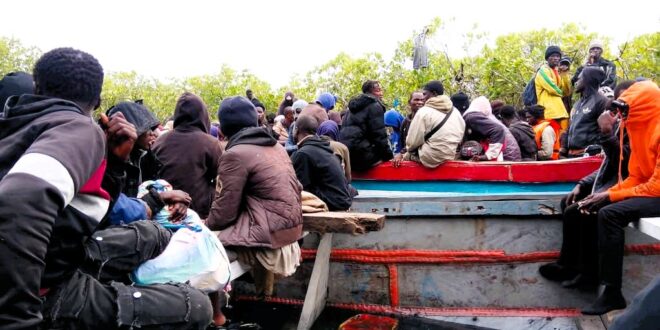
The waters off The Gambia have claimed yet more young lives in a devastating reminder of the perils of irregular migration. On New Year’s Eve, a boat carrying over 200 migrants capsized near Jinak village in the North Bank Region, leaving at least 31 people dead and dozens still missing. For the survivors, hope has come at a steep price: injuries, trauma, and the haunting loss of friends and family.
Among the 102 rescued, 23 are hospitalized with serious injuries, while local fishermen, volunteers, and the Gambian Navy continue to comb the waters for those unaccounted for. Authorities have recovered 15 bodies in The Gambia and 16 in neighbouring Senegal, illustrating how these tragedies ripple across borders.
The boat was reportedly bound for Spain’s Canary Islands, one of the world’s deadliest maritime routes for West African migrants. Over the past year alone, more than 893 Gambians perished attempting to cross seas or navigate perilous desert routes in North Africa, according to migration activist Ebrima Drammeh.
“This is not just a number; these are young men and women with dreams, families, and futures,” Drammeh said in a recent press briefing. “Each loss represents a tragedy for communities across the country.”
Why the Risk?
For many young Gambians, the journey is fueled by limited opportunities at home. High youth unemployment, climate pressures on agriculture, and the lingering economic effects of Covid-19 pandemic have left countless families struggling. The allure of Europe — with its promise of work and security — becomes a beacon, even when the journey carries extreme risk.
Despite the recurring tragedies, the hope for a better life continues to draw young people to these dangerous crossings. The Atlantic route to the Canary Islands has earned a grim reputation as one of the deadliest migration pathways in the world. Previous disasters, such as a Mauritania capsizing in August 2025 that claimed 69 lives, underscore the ongoing dangers.
Government Response
Gambian President Adama Barrow has pledged a full investigation and vowed to strengthen measures to prevent future tragedies. Yet activists and civil society leaders argue that enforcement alone cannot solve the crisis. They call for durable solutions that tackle the root causes: meaningful employment, education, and safer, legal migration opportunities for young people at home.
For the families of those lost, the human cost is clear. As another year begins with grief on the coasts of The Gambia, the story of these young lives serves as both a cautionary tale and a plea: no dream of a better life should come at the price of human life.
Adira Kallo