 THE AFRICAN COURIER. Reporting Africa and its Diaspora! The African Courier is an international magazine published in Germany to report on Africa and the Diaspora African experience. The first issue of the bimonthly magazine appeared on the newsstands on 15 February 1998. The African Courier is a communication forum for European-African political, economic and cultural exchanges, and a voice for Africa in Europe.
The GSMESKILL project represents a timely response to the urgent need for youth employment, green skills, and sustainable entrepreneurship in Sub-Saharan Africa. Funded by the European Union under the Erasmus+ Programme, the initiative seeks to strengthen Vocational Education and Training (VET) systems in Nigeria, Kenya, and South Africa by aligning them more closely with labour market demands. Against the backdrop of high youth unemployment, climate vulnerability, and rapidly evolving economies, GSMESKILL promotes innovation, environmental responsibility, and small business development as drivers of inclusive growth. Central to the project is a newly launched online learning portal designed to equip young people, educators, and entrepreneurs with practical skills for building resilient, green enterprises. Nyima Jadama reports

The EU-funded Erasmus+ Programme for Capacity Building in Vocational Education and Training (VET), GSMESKILL – Green Mindset and Skills for Small Business Development, aims to strengthen collaboration between Nigeria, Kenya, and South Africa by better aligning VET systems with labour market needs.
Context and Rationale
Kenya, Nigeria, and South Africa are among Sub-Saharan Africa’s most significant economies. While diverse in structure and development, they share common challenges, including high youth unemployment, large informal economies, rapid urbanisation, and pronounced vulnerability to climate change.
At the same time, these countries are experiencing growth in key sectors such as renewable energy, agribusiness innovation, digital services, and the circular economy. This convergence of a highly motivated yet underemployed youth population, environmental pressures, and a market shift towards low-carbon and resource-efficient technologies creates a critical opportunity for Vocational Education and Training (VET) to play a transformative role.
When aligned with entrepreneurship and green skills, VET can equip young people with practical, income-generating competencies, foster resilient micro and small enterprises, and contribute to job creation, climate adaptation, and sustainable production—directly supporting Sustainable Development Goals (SDGs) 4, 8, and 13.
About the GSMESKILL Project
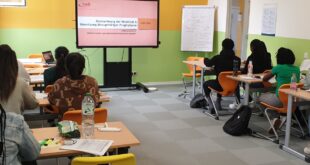
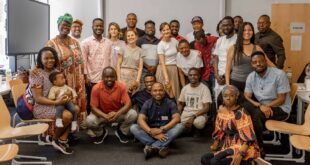
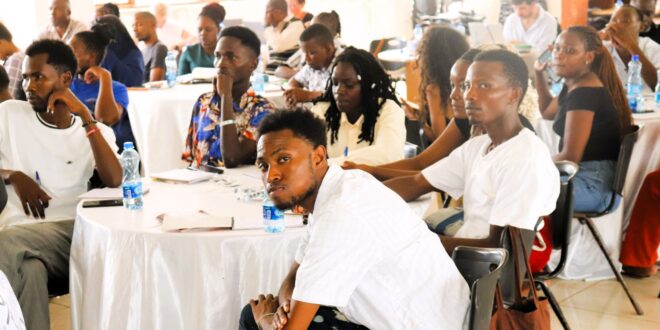
Launched in 2023, the GSMESKILL project was designed to strengthen coordination between VET systems and local labour markets in Nigeria, Kenya, and South Africa. The three-year initiative concluded recently with a final evaluation and partner brainstorming meeting hosted by Pwani University in Kilifi County, Kenya, and organized by USTADI. The event brought together implementing partners from Germany, Serbia, Greece, Slovenia, Italy, and the three African partner countries.
The project’s primary objectives were to:
- Improve alignment between VET curricula and labour market demands
- Enhance the capacity of VET providers and educators in management, governance, inclusion, quality assurance, innovation, and internationalisation
- Strengthen the competencies, employability, and entrepreneurial readiness of VET learners
By raising awareness among institutions bridging education and employment, GSMESKILL targeted VET providers, teachers, learners, entrepreneurs, and policymakers alike.
Key Activities and Outputs
To achieve its goals, GSMESKILL implemented a series of interrelated activities, including:
- Evidence-based research and mapping of skills needs and best practices
- Development of innovative teaching methodologies focused on green entrepreneurship
- Creation of a Training Toolbox to foster entrepreneurial mindsets and small business skills
- Launch of the GSMESKILL E-Learning Platform, offering multilingual, accessible online training
- Formulation of inclusive national policy recommendations
These efforts were supported by targeted dissemination strategies involving the private sector, international exchange initiatives, virtual workshops, and multi-stakeholder working groups linking VET institutions, businesses, and young entrepreneurs.
Partnership and Research Approach
The GSMESKILL consortium consists of nine partners from the European Union and Sub-Saharan Africa, led by NGONest Berlin (Germany). The diverse partnership enabled a comprehensive approach to improving entrepreneurial green mindsets and developing innovative tools for Technical and Vocational Education and Training (TVET) institutions.
A major research component—led by South African partners—focused on identifying skills needs and good practices related to innovation, design thinking, and greening in SMEs and TVET systems across Sub-Saharan Africa and the EU. This research analysed existing VET programmes and digital tools, enabling cross-country comparison and informing the development of improved, digitally based training models tailored to local contexts.
Country Profiles
Kenya
Research conducted in 2023 by Beatrice Amondi Osumbah (Kenya Institute of Curriculum Development) highlights Kenya’s supportive policy environment for green growth and a rapidly evolving private sector, particularly in sustainable agriculture, waste management, and off-grid solar energy.
Despite progress, gaps remain in employer-led apprenticeships and clear pathways from low-skills training to small business creation. The GSMESKILL curriculum in Kenya addresses these gaps by equipping learners with sustainability skills such as environmental accountability, networking, problem-solving, resource mobilisation, and ESG practices. To enhance accessibility, the online portal is also available in Swahili.
Nigeria
Nigeria faces persistent youth unemployment, a highly informal economy, and a fragmented VET system that is often disconnected from labour market needs. Nevertheless, entrepreneurship education remains a critical driver of economic growth and employment creation.
As noted by Akinpade Oyojoke Adunola (College of Education, Lanlate, Nigeria), a more enabling social, political, and economic environment is essential to support entrepreneurial ventures through finance and incentives. In response, the GSMESKILL portal in Nigeria focuses on practical sustainability skills—blending global standards with local realities—to empower entrepreneurs, trainers, and employees to build resilient and impactful businesses.
South Africa
South Africa benefits from a comparatively well-established TVET system and a strong regulatory framework. However, challenges persist, including skills mismatches, graduate unemployment, and limited access to finance and markets for small businesses.
Green sectors such as energy efficiency, sustainable construction, and agribusiness present clear opportunities for TVET-led enterprise development. The GSMESKILL curriculum in South Africa addresses the need for future-oriented skills in a rapidly digitising economy. The online platform—also available in Afrikaans—supports green entrepreneurs, managers, and VET trainers with practical tools in sustainability, innovation, and ESG practices.
Key Gaps and Barriers Identified
During a World Café session at Pwani University, participants identified several challenges:
- Limited integration of green technologies, resource efficiency, and environmental policy into existing curricula
- Weak linkages between VET providers and industry, reducing access to apprenticeships and work-based learning
- Insufficient support for youth-led enterprises to scale innovations
- Barriers faced by women and marginalised groups in accessing finance, training, and markets
Project partners emphasised that the GSMESKILL online learning portal directly addresses many of these gaps by providing accessible, capacity-building resources across regions.
Strategic Focus for Programme Design
Programme design was guided by national and regional research reports, complemented by a second research phase led by EU partners to identify best pedagogical practices for sustainable entrepreneurship. These findings informed the development of tailored skills frameworks and innovative, digital teaching methodologies for each country.
Central to this effort is the GSMESKILL Training Toolbox, which promotes entrepreneurial thinking and practical business skills. The project also strengthens connectivity among stakeholders by providing access to data, policy insights, and strategic resources. Inclusivity is reinforced through multilingual content in German, Italian, Swahili, and Afrikaans.
Conclusion
In a rapidly changing global context, targeted VET programmes that integrate green skills and entrepreneurship—especially for youth and women—can play a transformative role in Kenya, Nigeria, and South Africa. If effectively utilised, the GSMESKILL online portal aligns training with local market needs, improves access to finance and business support, and promotes inclusive green enterprise development.
By translating youth potential into practical, sustainable entrepreneurship, GSMESKILL contributes to climate adaptation, job creation, and the development of resilient local economies across Sub-Saharan Africa.
Visit the GSMESKILL Online Portal: https://gsmeskill.eu/about-gsmeskill/