 THE AFRICAN COURIER. Reporting Africa and its Diaspora! The African Courier is an international magazine published in Germany to report on Africa and the Diaspora African experience. The first issue of the bimonthly magazine appeared on the newsstands on 15 February 1998. The African Courier is a communication forum for European-African political, economic and cultural exchanges, and a voice for Africa in Europe.

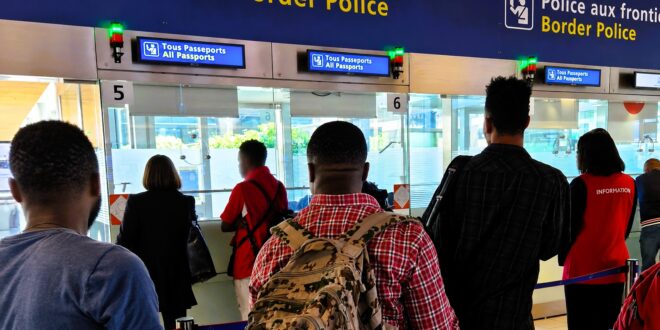
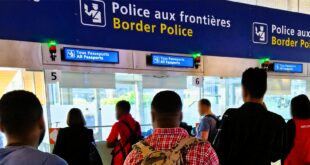
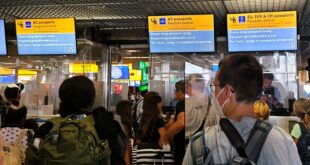
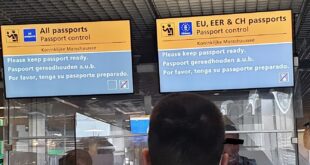
Passengers travelling to the EU from outside the bloc are facing significantly longer waits at passport control following the full implementation of the EU’s new Entry/Exit System (EES), with African travellers among those most exposed.
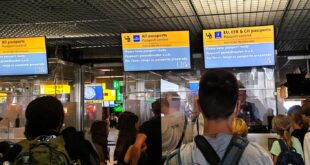
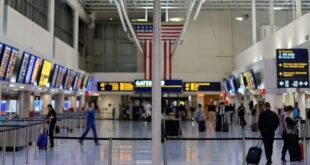
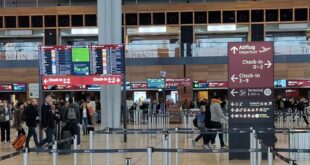
Travellers flying into some of Europe’s busiest hubs this summer have faced waits far longer than in previous years, as the European Union’s new Entry/Exit System (EES) strains under peak holiday traffic.
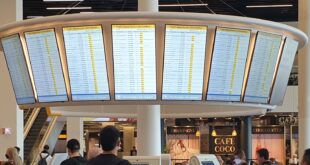
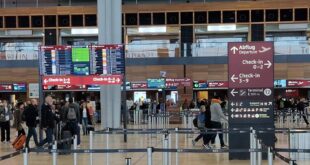
An analysis by the Financial Times, using data from travel analytics firm Qsensor, found that maximum queue times at Frankfurt Airport reached about two hours in July, twice the one-hour wait recorded a year earlier. Munich saw waits climb from roughly half an hour to an hour, while Amsterdam’s Schiphol Airport rose from about 80 minutes to two hours.
The EES, rolled out in stages from October 2025 and fully operational since 10 April 2026, requires non-EU nationals to register fingerprints and a facial scan the first time they enter the Schengen area, replacing the old system of manual passport stamps. For visa holders and visa-exempt visitors alike, that first registration is the slowest step in the process — and it is precisely the group most African passport holders, whether on short business trips or family visits, fall into.
Airlines and airport operators have pressed Brussels to pause the checks during the busy summer months, so far without success, though the European Commission has acknowledged that around 20 of the bloc’s 1,500 border crossing points are struggling to cope. Several member states, alongside Switzerland, have asked for the system to be relaxed until September.
In the meantime, some airports — including Paris and Amsterdam, according to Air France-KLM — have reportedly switched off biometric checks altogether at peak moments simply to keep queues moving.
The EES is intended to strengthen Europe’s external borders and improve the monitoring of short-stay visitors. But as the busy summer travel season demonstrates, the challenge is making the new system work without turning border control into another major source of airport delays.
For travellers with connecting flights through Frankfurt, Munich, Schiphol or similar hubs, the practical takeaway is straightforward: build in significantly more time than the standard minimum connection window, particularly during the European summer season.
Adira Kallo