 THE AFRICAN COURIER. Reporting Africa and its Diaspora! The African Courier is an international magazine published in Germany to report on Africa and the Diaspora African experience. The first issue of the bimonthly magazine appeared on the newsstands on 15 February 1998. The African Courier is a communication forum for European-African political, economic and cultural exchanges, and a voice for Africa in Europe.

The European Union’s landmark Pact on Migration and Asylum enters into force on 12 June 2026, ushering in the most comprehensive reform of the Common European Asylum System (CEAS) in decades. Designed to address longstanding weaknesses exposed during previous migration crises, the pact consists of ten interlinked legislative acts that reshape how the EU manages migration and processes asylum claims. It introduces mandatory screening at external borders, accelerated border procedures and a permanent solidarity mechanism among member states. The new framework will determine how asylum applications are handled, which countries bear responsibility for examining claims and what procedures apply to migrants and asylum-seekers arriving at the EU’s external frontiers.

What the Pact Is
Adopted by the European Parliament in April 2024 after years of negotiation, the EU Pact on Migration and Asylum is the most sweeping overhaul of European migration law since the original Dublin Regulation.
It comprises eight regulations and one directive, grouped under a Common Implementation Plan of ten building blocks. Member states have had two years and €3 billion in EU support to build the infrastructure — screening technology, reception facilities, judicial capacity — required to make it operational. On 12 June 2026, it becomes the law of the land across all 27 member states.
New screening process at the EU’s borders
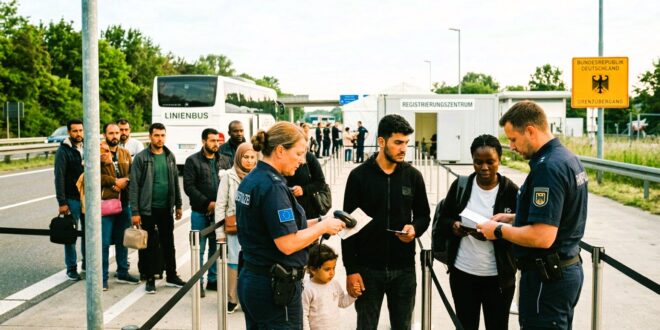
One of the most immediate changes is the introduction of mandatory pre-entry screening for people arriving irregularly at the EU’s external borders or rescued at sea.
During this screening, which should normally be completed within seven days, authorities will verify identities, conduct health and security checks, collect biometric data such as fingerprints and facial images, and determine which procedure applies next.
Migrants should understand that this screening is not an asylum decision. Rather, it is an initial assessment designed to sort new arrivals into one of three pathways: the standard asylum procedure, a fast-track border procedure or a return procedure.
Faster asylum procedures
The pact introduces a unified asylum system with common standards across EU member states.
Applicants from countries with generally low recognition rates for asylum claims, particularly those from countries designated as ‘safe countries of origin’, will be channelled into an accelerated mandatory border procedure rather than the regular asylum process.
Under the revised Asylum Procedures Regulation, these cases must be resolved within twelve weeks, including any appeal, after which a twelve-week return border procedure can apply if the claim is refused. Crucially, during this period applicants are not formally considered to have ‘entered’ the member state’s territory, even if they are physically present.
For asylum seekers, this means decisions may come sooner, reducing lengthy periods of uncertainty. However, rights organisations have expressed concerns that faster procedures could affect access to legal assistance and adequate preparation of cases.
Changes to the Dublin system
The pact modifies the existing Dublin rules, which required asylum seekers to apply in the first EU country they entered, a rule that burdened Greece, Italy and Spain disproportionately while encouraging irregular secondary movement..
Responsibility for examining an asylum application will still often lie with the country of first entry. However, new solidarity mechanisms require other member states to contribute by relocating asylum seekers, providing financial support or offering operational assistance to countries experiencing high migratory pressure.
Under the new Asylum and Migration Management Regulation (AMMR), responsibility criteria now give greater weight to family links and existing connections to a specific member state. Asylum seekers must still apply in their country of first entry and remain there until the country responsible for determining their application is determined, but the new rules are designed to produce fairer outcomes. Secondary movement — moving to a second EU country before a decision is made — remains prohibited and can affect the assessment of a claim.
Expanded use of biometric data
The upgraded Eurodac database will store additional biometric information, including facial images, alongside fingerprints.
The system will also record whether individuals have previously applied for asylum, been relocated within the EU or received return decisions.
For migrants, this means movement between member states will be more closely monitored, making multiple asylum applications in different countries significantly more difficult.
Special protections for vulnerable groups
The pact contains provisions requiring authorities to identify vulnerable individuals during screening.
Children travelling alone, victims of trafficking, pregnant women and people with serious medical conditions should receive additional safeguards and appropriate support throughout asylum procedures.
However, humanitarian organisations continue to stress the importance of ensuring these protections are consistently implemented in practice.
Rights, Legal Aid and What Has Not Changed
The pact formally preserves the right to asylum and the principle of non-refoulement. Free legal advice is guaranteed at every stage of the procedure, including appeals, for those without their own resources.
Each member state must establish an independent monitoring mechanism to oversee compliance at the border. Reception standards — covering housing, healthcare and material conditions — are harmonised under a recast Reception Conditions Directive.
The European Union Agency for Asylum (EUAA) is mandated to support national authorities and monitor standards across the bloc.
What the Pact means for refugees and migrants
For many asylum seekers, the new system may lead to quicker decisions and more standardised procedures across Europe. At the same time, migrants will encounter stricter border management, enhanced identity checks and increased data sharing between member states.
People seeking international protection should ensure they:
- Clearly explain any family connections within the EU;
- Seek legal advice whenever possible;
- Inform authorities of any vulnerabilities or special needs;
- Keep copies of all official documents received during the process.
A new chapter in European migration policy
Supporters argue that the pact creates a fairer system by combining responsibility with solidarity among member states. Critics, however, warn that the emphasis on border procedures and returns could weaken access to asylum and increase pressure on frontline countries.
Ultimately, the pact represents a fundamental reshaping of Europe’s approach to migration management. How effectively it balances border control with the protection of fundamental rights will become clearer as the new rules begin to be implemented across the European Union.
Femi Awoniyi/© AfricanCourierMedia
READ ALSO Germany Tightens Asylum Rules: What Refugees and Asylum‑Seekers Need to Know