 THE AFRICAN COURIER. Reporting Africa and its Diaspora! The African Courier is an international magazine published in Germany to report on Africa and the Diaspora African experience. The first issue of the bimonthly magazine appeared on the newsstands on 15 February 1998. The African Courier is a communication forum for European-African political, economic and cultural exchanges, and a voice for Africa in Europe.

The United Nations General Assembly has taken a significant symbolic step in confronting one of the darkest chapters in human history.
On 25 March 2026, the Assembly adopted a resolution recognising the transatlantic slave trade as “the gravest crime against humanity,” a move widely welcomed by advocates of historical justice and reparative action. The occasion was the UN Plenary to commemorate the International Day of Remembrance of the Victims of Slavery and the Transatlantic Slave Trade.
It’s the first time that the global body would officially reckon with a trade that has stunted the development of the African continent and made its peoples victims of racism all over the world.
Proposed by Ghana and backed by the African Union and the Caribbean Community, the resolution goes beyond moral acknowledgment.
It calls on UN member states to consider issuing formal apologies for their roles in the “Transatlantic Trafficking of Enslaved Africans and Racialised Chattel Enslavement” and to contribute to a reparations fund aimed at addressing its enduring consequences.
Although the resolution does not specify financial commitments, its language marks a renewed push to bring the issue of reparations from the margins into the centre of international discourse.
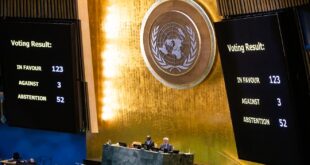
The vote revealed both broad support and persistent divisions. A total of 123 countries voted in favour, signalling a growing global consensus on the need to reckon with the legacy of slavery. However, three countries — the United States, Israel and Argentina — voted against the resolution. Meanwhile, 52 countries abstained, including the United Kingdom and member states of the European Union. European governments justified their abstention by arguing that describing slavery as the “gravest” crime against humanity risked establishing a hierarchy of suffering. United States representatives also objected to what they framed as the retroactive application of international law.
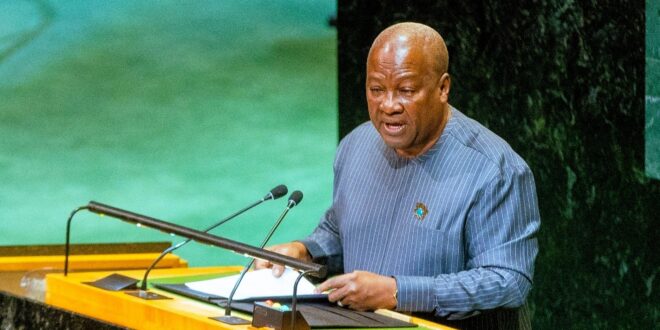
“Let it be recorded that when history beckoned, we did what was right for the memory of the millions who suffered the indignity of slavery. Let our vote on this resolution restore their dignity and humanity,” Ghana’s President John Dramani Mahama told the assembly ahead of the vote.
For many observers, the resolution represents an important moral victory, even if it lacks binding force. It acknowledges the scale and brutality of the transatlantic slave trade, which forcibly displaced millions of Africans and underpinned centuries of economic development in Europe and the Americas. By classifying it as the gravest crime against humanity, the UN elevates the historical narrative to one that demands not only remembrance but also accountability.
Advocates argue that such recognition is long overdue. They point to the continuing socio-economic disparities affecting people of African descent worldwide — disparities that can be traced, in part, to the structural inequalities created by slavery and colonialism. For them, the resolution is not merely about the past but about addressing present injustices that are rooted in that history.
This perspective underscores the belief that official recognition by a global body like the United Nations can help legitimise longstanding demands for reparations and restorative justice.
Yet, the path from symbolic recognition to concrete action remains uncertain. Countries such as the United States and the United Kingdom have consistently resisted calls for reparations, arguing that contemporary governments and institutions should not be held liable for actions carried out centuries ago. This position reflects a broader reluctance among former colonial powers to discuss the issue of compensation, even as they increasingly participate in commemorative and educational initiatives.
Critics of this stance contend that it overlooks the continuity of benefit. They argue that the wealth generated through slavery contributed to the economic foundations of many Western states and institutions, while its victims and their descendants continue to bear the costs. From this perspective, reparations are not about assigning personal blame but about addressing systemic imbalances that persist across generations.
The abstentions by the EU member states highlight the political sensitivity of the issue within Europe. While there is growing recognition of the need to confront colonial histories, consensus on reparations remains elusive. Some governments fear the financial and legal implications of such commitments, while others face domestic political pressures that make the issue contentious.
For African countries and diaspora communities, however, the resolution provides renewed momentum. Ghana’s leadership in advancing the proposal reflects a broader effort by African states to shape the global conversation on historical justice. It also aligns with initiatives within the African Union and Caribbean Community (CARICOM), which have been advocating for reparations frameworks in recent years.
Ultimately, the resolution’s impact will depend on what follows. Will member states translate its language into policy? Will it lead to formal apologies, educational reforms, or financial contributions? Or will it remain largely symbolic, a statement of intent without tangible outcomes?
What is clear is that the debate over slavery, memory and justice is far from settled. The UN’s recognition of the transatlantic slave trade as the gravest crime against humanity may not resolve these questions, but it raises their urgency. For many, it represents a step — however modest — towards a more honest reckoning with history and a more equitable future.
As discussions continue, the resolution serves as both a milestone and a challenge: a reminder that acknowledging the past is essential, but insufficient without meaningful action to address its enduring legacy.
Adira Kallo
READ ALSO The UN Slavery Resolution and the Limits of Western Moral Politics