 THE AFRICAN COURIER. Reporting Africa and its Diaspora! The African Courier is an international magazine published in Germany to report on Africa and the Diaspora African experience. The first issue of the bimonthly magazine appeared on the newsstands on 15 February 1998. The African Courier is a communication forum for European-African political, economic and cultural exchanges, and a voice for Africa in Europe.
The German Bundestag has passed a major overhaul of asylum laws that affect many refugees and asylum‑seekers living or planning to come to Germany. The new rules — enacted on Friday, 27 March 2026 — implement a European Union asylum reform but also go further in changing how people arriving in Germany are processed, where they stay and how long their procedures may take. The laws aim to process asylum claims faster and return people who are not eligible more efficiently. They also create new rules for people arriving via other EU countries. Here is what you should understand in clear terms:
1. What Is the EU Asylum Reform (GEAS)?
Germany’s new laws are part of a European Union asylum reform called the Common European Asylum System (in German, Gemeinsames Europäisches Asylsystem – GEAS). The EU agreed on this reform in 2024 to harmonise asylum procedures across member states.
The core idea of the EU reform is:
- To create asylum procedures directly at Europe’s external borders (airports and seaports),
- To decide quickly whether a person has a real chance of protection, and
- To send back — more quickly — those found not to be refugees or in need of protection.
Countries must complete these new systems by mid‑2026.
Important: Because Germany does not have land borders with countries outside the EU, these external border procedures apply only at air and sea entry points — which only account for a very small number of people seeking asylum in the country.
2. What Happens to People Who Enter Germany Through Other EU Countries?
Most refugees now enter Germany not through airports or ports, but through land borders with other EU countries. Under the long‑standing Dublin system, the first EU country where a person is registered is usually responsible for their asylum claim. That means many people who arrive in Germany via Italy, Greece, Spain or Eastern European countries are not supposed to be processed in Germany.
But in practice, returning people to those countries often faces challenges — because:
- Other countries do not accept the return quickly,
- Administrative systems are slow, or
- People fear danger in the first country of registration and want to stay in Germany.
To respond to this “secondary movement,” Germany has added new national measures on top of the EU reform.
3. New “Secondary Migration Centres”
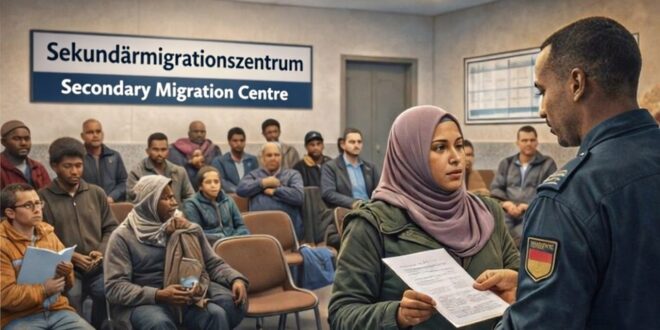
Under the new law, German federal states (Länder) can set up “secondary migration centres” (Sekundärmigrationszentren). These centres would be places where people entering Germany via other EU countries are taken for processing.
Key points about these centres:
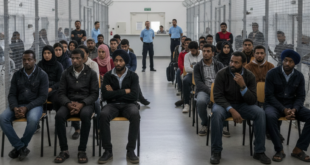
- People who are not legally allowed to stay in Germany could be forced to remain inside the centre without permission to leave.
- Children and caregivers could be allowed to leave at certain times, but adults would not leave at all.
- The federal states — not the national government — decide whether to open these centres.
This represents a major shift: instead of living freely during their asylum procedure, people might be kept under restricted movement until their case is decided.
Many human‑rights advocates strongly criticise this. Some politicians said the plan could amount to “de facto detention” without clear constitutional justification and that it could strip people of their dignity.
4. How Long Could People Be Held in These Centres?
The law sets different maximum periods depending on where the process happens:
- At EU external borders (airports or seaports): Up to 12 weeks maximum.
- In secondary migration centres inside Germany: Up to six months, and under certain conditions up to two years.
For families with children, the maximum is shorter — generally one year.
This means some people could remain under restricted conditions for many months, while their asylum cases are processed or while authorities determine which EU country is responsible for their claim.
5. Faster Decisions and Potential Returns
According to the federal government, the overall goal of the law is to make asylum procedures faster and make it easier to return people who are not eligible for protection. German Interior Minister Alexander Dobrindt (CSU) said in parliament that the reforms would “sharpen and harden” Germany’s migration policy — aiming for more efficient procedures and firmer enforcement of rules.
However, critics argue that quick processing should not come at the expense of fair protection or humane treatment. They point out that the EU reform and German implementation must still respect rights guaranteed under German and international law.
6. Rights to Work and Access Services
The law also includes changes related to employment and services for refugees:
- For people coming from other EU countries under Dublin rules, access to the labour market is limited. These individuals generally cannot start paid work until six months after arrival — even though the government had initially discussed reducing that to three months.
Other improvements previously negotiated (like better healthcare access for children) remain part of the system, but overall the emphasis is on stricter processing and clearer enforcement.
7. What This Means for You
If you are a refugee or asylum‑seeker currently in Germany or planning to come here:
- Your way of entering Germany matters:
– Arrival by air or sea and direct registration at the border will follow one system;
– Arrival through another EU country could subject you to procedures in secondary migration centres. - You could be placed in a centre where your movement is restricted while your claim is decided.
- Decisions on whether Germany is responsible for your asylum claim may be made faster — but this also means less time to prepare your case.
- If authorities determine that another EU country is responsible, you may face transfer (“Überstellung”) back to that country.
This is a significant change from previous practice. For people already living freely while their cases are pending, the new law could feel like a sharp shift toward restriction and control.
8. Final Note
The law passed the Bundestag by a parliamentary majority but was rejected by opposition parties. Some argue that the rules go too far; others argue they do not go far enough. Now the federal states will decide how — and whether — to implement the centres.
This reform reflects broader debates in Europe on how to manage migration — balancing fairness and responsibility, protection and enforcement. As these laws begin to take effect, refugees and asylum‑seekers in Germany should stay informed and consider seeking legal advice to understand how their own situation may be affected.
Femi Awoniyi