 THE AFRICAN COURIER. Reporting Africa and its Diaspora! The African Courier is an international magazine published in Germany to report on Africa and the Diaspora African experience. The first issue of the bimonthly magazine appeared on the newsstands on 15 February 1998. The African Courier is a communication forum for European-African political, economic and cultural exchanges, and a voice for Africa in Europe.


Germany’s upper house has approved legislation to implement the EU’s reformed Common European Asylum System, bringing faster border procedures, stricter Dublin transfers, and new detention-like centres for migrants who must leave Germany — with rights organisations warning of serious consequences for vulnerable people.

Germany has taken a decisive step towards one of the most significant tightenings of European asylum law in decades. The Bundesrat, Germany’s upper house representing the federal states, approved on 27 March 2026 the final legislative package needed to transpose the EU’s reformed Common European Asylum System (CEAS) into national law. The reforms take effect across all 27 EU member states on 12 June 2026.
The CEAS overhaul — agreed by EU member states and the European Parliament in spring 2024 and formally entered into force in June of that year — represents the most sweeping revision of the bloc’s common asylum framework in its history. It standardises procedures across the EU, revises the Dublin rules on which country is responsible for processing a claim, and introduces mandatory identity checks on arrivals at the EU’s external borders.
What Changes from June 2026
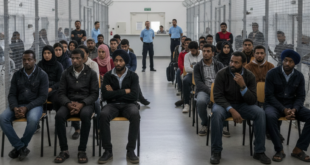
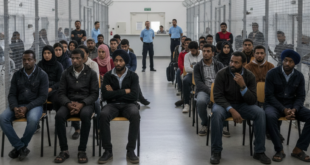
For people arriving at German international airports or seaports — the entry points where Germany is considered to sit on an EU external border — the new rules introduce mandatory border procedures. Asylum-seekers from countries with a EU-wide recognition rate below 20 per cent will have their applications processed on the spot, and if rejected, may be deported directly from those points of entry. Germany’s federal and state governments have agreed to treat these border procedures as a shared responsibility.
The reformed Dublin rules will also shorten procedures for people who have previously applied for asylum in another EU member state, while extending the window during which a person can be transferred to the country responsible for their application — including in cases where the individual has gone underground in the interim. Federal states will be permitted to establish so-called secondary migration centres — residential facilities with a compulsory presence requirement — for people who are subject to transfer to another EU country.
Border Controls and Declining Arrivals
The legislation comes as Germany’s existing internal border controls — currently in place at all land borders until September — remain a point of political and legal friction within the Schengen area. Interior Minister Alexander Dobrindt (a member of the CSU) has repeatedly stated that he will only consider winding down those checks once an effective EU external border protection mechanism is in place. He has also, since taking office, extended the practice of turning back asylum-seekers at the border — a departure from the previous policy, which only allowed returns of people without a protection claim or those subject to a re-entry ban. Exceptions apply for vulnerable groups including pregnant women, children and those who are ill.
According to federal government figures, German federal police recorded approximately 62,959 irregular border crossings in 2025 — a decline of around 25 per cent compared to the previous year. Almost two thirds of those detected were turned back. Among those returned were 996 individuals who had expressed a desire for protection.
Solidarity Mechanism and Germany’s Exemption
The CEAS framework includes a solidarity mechanism designed to ease pressure on EU states at the external border, such as Greece, Italy and Bulgaria, by redistributing a portion of asylum seekers to other member states. Germany has been exempted from mandatory intake under this mechanism for 2026, given the large numbers of asylum applicants and Ukrainian war refugees it received in recent years.
What This Means for African Asylum Seekers
The new rules carry direct implications for African nationals seeking protection in Germany. The accelerated border procedure — applied to people from countries with a recognition rate below 20 per cent — is likely to affect applicants from many sub-Saharan and North African states where approval rates have historically been low. Under the reformed system, such applicants arriving via an international airport could face a fast-tracked process of up to 12 weeks with fewer procedural safeguards, followed by swift deportation if their case is rejected.
Rights organisations including Pro Asyl and Amnesty International have raised serious concerns about the reforms. They argue that the legislation goes beyond what EU rules strictly require and risks breaching constitutional protections — particularly for vulnerable groups such as families, children and unaccompanied minors. Pro Asyl has indicated it expects key elements to face scrutiny from both German courts and the European Court of Justice.
African refugees and asylum seekers already in Germany are not directly affected by the new border procedures but should be aware that Dublin transfer timelines and secondary migration restrictions may affect people who have previously registered in other EU countries. Legal advice from qualified refugee counselling services is strongly recommended for anyone whose case involves more than one EU member state.
Sola Jolaoso
Germany Tightens Asylum Rules: What Refugees and Asylum‑Seekers Need to Know