 THE AFRICAN COURIER. Reporting Africa and its Diaspora! The African Courier is an international magazine published in Germany to report on Africa and the Diaspora African experience. The first issue of the bimonthly magazine appeared on the newsstands on 15 February 1998. The African Courier is a communication forum for European-African political, economic and cultural exchanges, and a voice for Africa in Europe.

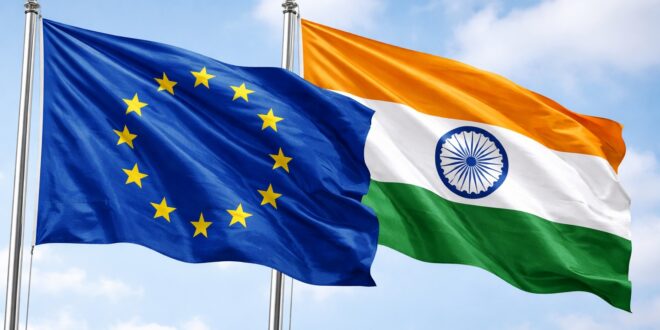
The European Union and India formally signed a far-reaching Free Trade Agreement (FTA) at a high-level summit on 27 January 2026 in New Delhi, after almost two decades of intermittent negotiations.
Once ratified by the European Parliament, EU member states and India’s institutions — a process expected to run through 2026, with entry into force likely in 2027 — the agreement will gradually lower or remove most tariffs between the two economies over a transition period of several years.
For people living in Europe, this deal could influence prices, jobs and business opportunities in very concrete ways.
What the agreement is about
The India–European Union Free Trade Agreement (simply called the India–EU FTA) aims to liberalise trade in goods and services and make investment flows easier, safer and more predictable. It is widely described as one of the most ambitious trade agreements either side has ever concluded, linking a combined market of nearly two billion people and close to a quarter of global GDP.
Under the agreement, India will cut or eliminate duties on around 96–97 per cent of EU goods exports, while the EU will open more than 99 per cent of its tariff lines to Indian products over time. Beyond tariffs, the deal includes chapters on services, digital trade, customs simplification, public procurement and the protection of intellectual property. These provisions are designed to reduce red tape and give companies clearer, more stable rules for cross-border business.
Possible effects on prices and consumer choice
For ordinary residents in Europe, one of the most visible effects could be on prices and the variety of goods available in shops. Lower tariffs reduce import costs, and the European Commission estimates that EU exporters could save around €4 billion per year in customs duties once the agreement is fully implemented. Increased competition may also push prices down for consumers.
Indian textiles, clothing, leather goods, pharmaceuticals and IT-related products are among the sectors expected to benefit most from easier access to the EU market. This could mean a wider range of affordable clothing, household goods and generic medicines in Europe — an important issue for low- and middle-income households, including many African families.
At the same time, European exports such as machinery, vehicles, chemicals and agri-food products will gain improved access to India’s fast-growing consumer market, supporting jobs and incomes across Europe.
Jobs, business and migration links
EU–India trade already supports hundreds of thousands of jobs in Europe, and the FTA is expected to increase that number as bilateral trade expands further after 2027. Key sectors likely to benefit include automotive manufacturing, mechanical engineering, chemicals, pharmaceuticals and business services.
For Africans living in Europe who work in these industries or related supply chains, stronger EU–India economic ties could translate into more stable employment and new job opportunities over time. The agreement’s provisions on services — including finance, maritime transport, IT and professional services — also deepen cooperation between European and Indian companies.
Opportunities for migrants and the African diaspora
Many people in the African diaspora in Europe are active in small and medium-sized businesses, particularly in trade, logistics, fashion, food and IT. The India–EU FTA places special emphasis on helping smaller firms benefit from simplified customs procedures and clearer regulations.
This creates new opportunities for African-owned businesses to source competitively priced goods from India, or to develop triangular trade links connecting Europe, India and African markets. In the longer term, closer EU–India ties may help diversify global supply chains, reducing over-dependence on a few countries and making prices and supplies more stable — something that often benefits migrant and low-income communities first.
While the full impact will only become clear as the agreement is rolled out over the coming years, the India–EU FTA is set to reshape the economic environment in which all residents of Europe — including migrants — live, work and do business.
Adira Kallo