 THE AFRICAN COURIER. Reporting Africa and its Diaspora! The African Courier is an international magazine published in Germany to report on Africa and the Diaspora African experience. The first issue of the bimonthly magazine appeared on the newsstands on 15 February 1998. The African Courier is a communication forum for European-African political, economic and cultural exchanges, and a voice for Africa in Europe.
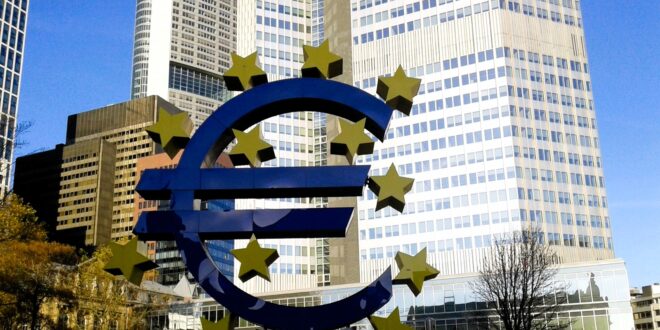
Bulgaria officially joined the Eurozone on 1 January, adopting the euro as its national currency and becoming the 21st EU member state to share the common European currency. This development represents a major milestone not only for Bulgaria, but also for the broader European integration project.
With Bulgaria’s accession, 21 of the European Union’s 27 member states now use the euro, while six countries remain outside the Eurozone. These are Denmark, which has a formal opt-out, and Sweden, Poland, Hungary, the Czech Republic and Romania, which are legally obliged to adopt the euro at a later stage but have not yet done so.
The euro replaces Bulgaria’s former national currency, the lev, which had long been pegged to the euro through a fixed exchange rate. While the transition may seem largely symbolic for everyday transactions, its economic and political significance is substantial. By joining the Eurozone, Bulgaria moves closer to the core of EU decision-making and demonstrates long-term commitment to fiscal discipline, monetary stability and shared European rules.
For Bulgaria, euro adoption is expected to deliver tangible benefits. These include lower transaction costs for businesses and consumers, greater price transparency, and increased investor confidence. Membership in the Eurozone also reduces currency risks and strengthens Bulgaria’s position in trade and financial relations with its European partners.
At the EU level, Bulgaria’s entry underlines that European integration remains an open and evolving process. The Eurozone is widely regarded as the economic backbone of the Union, and each new member strengthens its coherence. Bulgaria’s accession shows that convergence is achievable for newer member states that meet the required criteria.
At a time of geopolitical and economic uncertainty, Bulgaria’s move sends a clear signal of stability and unity. It reinforces the euro’s role as a key pillar of European integration and highlights the EU’s continued capacity to bring diverse economies closer together.