 THE AFRICAN COURIER. Reporting Africa and its Diaspora! The African Courier is an international magazine published in Germany to report on Africa and the Diaspora African experience. The first issue of the bimonthly magazine appeared on the newsstands on 15 February 1998. The African Courier is a communication forum for European-African political, economic and cultural exchanges, and a voice for Africa in Europe.

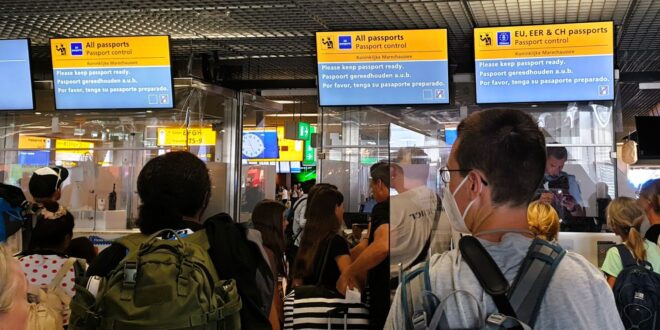
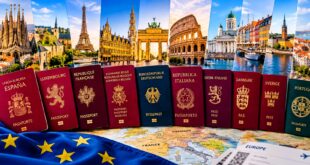
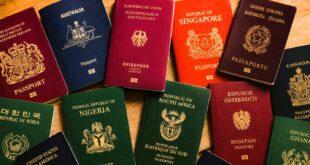
The newly released Henley Passport Index 2026 once again highlights the deep inequalities that shape global mobility, showing how nationality continues to determine who can move freely across borders and who cannot. The annual ranking, based on data from the International Air Transport Association (IATA), assesses passports according to the number of destinations their holders can enter without obtaining a visa in advance.
At the top of the index, Singapore retains its position as the world’s most powerful passport, granting visa-free or visa-on-arrival access to 192 countries. Japan and South Korea follow closely, with access to 188 countries each. Five European countries — Denmark, Luxembourg, Spain, Sweden and Switzerland, ranked number three, offering their citizens visa-free access to 186 destinations.
Top Ten Passports from the Henley Passport Index 2026:
- Singapore – 192 destinations
- Japan, South Korea – 188 destinations
- Denmark, Luxembourg, Spain, Sweden, Switzerland – 186 destinations
- Austria, Belgium, Finland, France, Germany, Greece, Ireland, Italy, Netherlands, Norway – 185 destinations
- Hungary, Portugal, Slovakia, Slovenia, United Arab Emirates – 184 destinations
- Croatia, Czech Republic, Estonia, Malta, New Zealand, Poland – 183 destinations
- Australia, Latvia, Liechtenstein, United Kingdom – 182 destinations
- Canada, Iceland, Lithuania – 181 destinations
- Malaysia – 180 destinations
- United States – 179 destinations
In stark contrast, the bottom of the ranking tells a different story. Afghanistan once again occupies last place, with access to fewer than 30 countries. Other passports with severely restricted mobility include those of Syria, Iraq and Somalia, underscoring how conflict, political instability and weak international relations translate directly into limited freedom of movement for ordinary citizens.
African countries are largely clustered in the lower half of the index, though with notable variations. Seychelles and Mauritius continue to lead on the continent, ranking relatively high due to broad visa-free access. Botswana also performs comparatively well, positioned around the 60th mark, while South Africa sits slightly lower but remains among the stronger African passports.
By contrast, many African nationals still face significant barriers. Ghana and Senegal are typically ranked in the 70s, Kenya and Tanzania in the 70s to 80s, while Cameroon and Zimbabwe fall further down the list. Nigeria, Africa’s most populous country, remains around the high-80s, highlighting the persistent mobility challenges faced by millions.
The 2026 index underscores a widening global mobility gap. While citizens of wealthy, politically influential countries enjoy near-unrestricted travel, many Africans and others in the Global South remain constrained by visa regimes. Beyond tourism, these limitations affect access to education, business opportunities and global exchange — making passport inequality one of the quiet but powerful forces shaping today’s unequal world.
Collins Obi
Check how your passport ranks and how many countries you can travel to without a prior visa HERE